
Cybersecurity Challenges in CNC Machines and CAM Systems: Protecting the Digital Factory
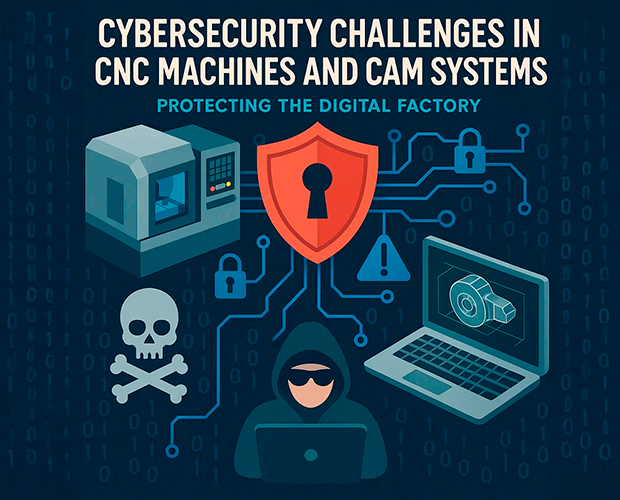
In a high-tech manufacturing plant in Norway, machines that usually hum with precision grinding and cutting suddenly went silent one morning. A ransomware attack had digitally paralyzed the computerized equipment on the shop floor, forcing a halt in production. Incidents like this underscore a growing reality: as factories embrace the Industry 4.0 model – connecting everything from CNC machines to CAM software in a vast digital ecosystem – they have opened the door to cyberattacks with real-world consequences. This integration of IT and OT (operational technology) has revolutionized productivity and efficiency, but it also means that a cyber intrusion can do more than steal data; it can literally stop assembly lines or sabotage products. The challenge of protecting the digital factory is now front and center for manufacturers worldwide.
Industry 4.0 Connects the Factory – And Opens New Threats
In the era of smart factories, CNC machines and CAM systems are no longer isolated stand-alone tools. They are now key nodes in an interconnected production network, linked with design workstations, inventory systems, and cloud-based platforms. Modern CNC machines – the automated lathes, mills, and other precision tools that execute repetitive tasks – often stream performance data to analytics dashboards and receive production instructions directly from CAM programs. CAM software, which converts digital designs into the machine instructions that CNCs use, may pull in models from cloud storage or update parameters remotely. This seamless connectivity enables just-in-time manufacturing and rapid reprogramming of lines for new products. A car factory, for instance, can update the machining instructions for an engine part across multiple plants overnight via networked CAM updates.
However, the same pathways that send efficiency-boosting data can let in attackers. Many CNC machines were originally designed as closed systems and were never intended to be exposed to network threats. Now that they’re networked, vulnerabilities are coming to light. The push toward Industry 4.0 means even legacy machinery is being retrofitted with sensors and network interfaces. Every new connection – an Ethernet port on a drill press, a wireless link to a robotic arm, a software bridge between design and production – potentially expands the attack surface of the factory. The result is that the once strictly physical world of machining and assembly now must deal with digital hazards ranging from malware infections to sophisticated espionage.
Manufacturing has consequently become a prime target for cybercriminals. Recent industry reports show that by 2021 and 2022, manufacturing overtook all other sectors as the most attacked industry globally. Attackers are drawn by the sector’s combination of high-value intellectual property and low tolerance for downtime. In a factory running 24/7, an hour of halted production can mean millions in losses – a fact not lost on ransomware gangs hoping to extort quick payments. The digital factory’s interdependence, where a single compromised component can ripple across an entire supply chain, raises the stakes even higher.
Vulnerabilities on the Shop Floor: Outdated Firmware, Open Doors, and Exposed Secrets
The vulnerabilities facing CNC machines and CAM systems are a mix of the familiar and the unexpected. On one hand, these systems suffer from many classic IT security weaknesses; on the other, their unique role in controlling physical processes introduces new risks.
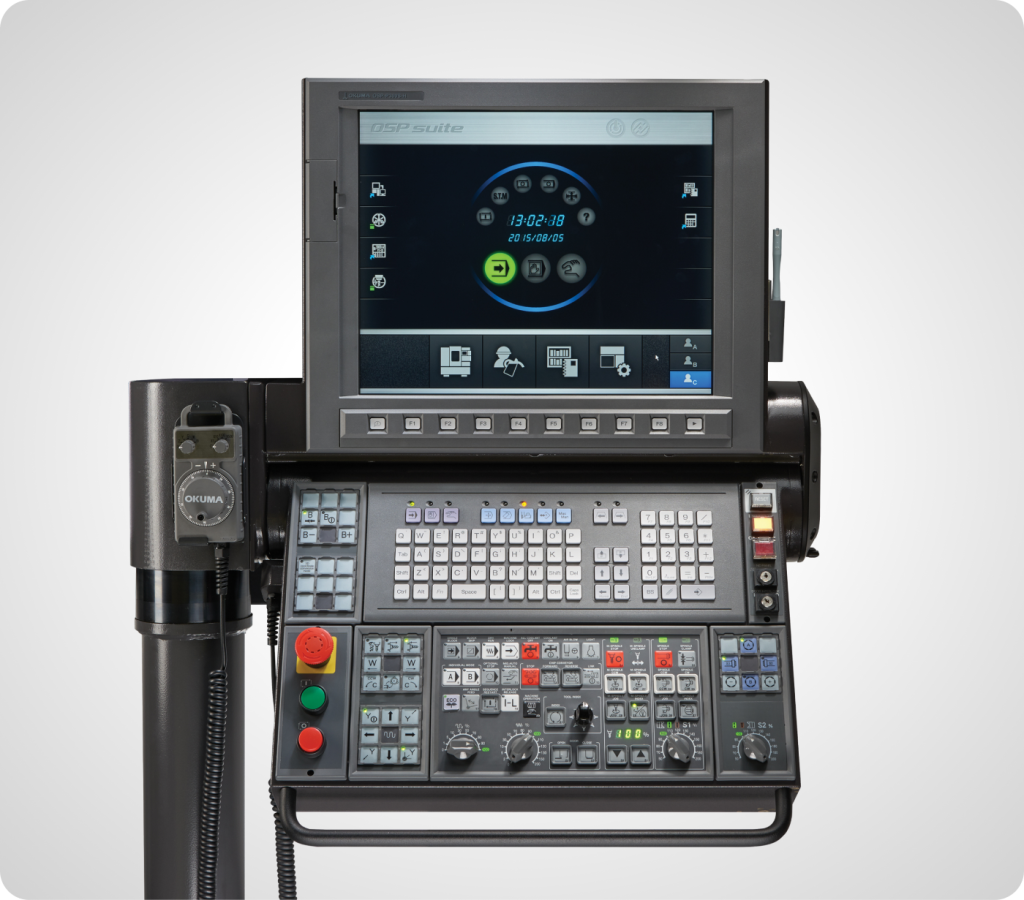
One major challenge is outdated software and firmware. It’s not uncommon to find a CNC machine running on an old operating system – for example, a precision cutting machine might still rely on a customized version of Windows XP or similarly obsolete platforms. Such legacy systems often lack modern security patches. Manufacturers are hesitant to tamper with a machine that “ain’t broke,” and vendors may have gone out of business or stopped providing updates. The result is that critical production equipment can be rife with unpatched vulnerabilities. In the IT world, that’s a known problem – but in an OT setting, patching is sometimes neglected due to fear of disrupting operations. A vulnerability that would be a minor nuisance on an office PC (like an old SMB file-sharing bug) can become a gateway for worms and ransomware on the factory floor if that machine is networked. In fact, the infamous WannaCrymalware outbreak of 2017, which leveraged an SMB vulnerability, famously infiltrated manufacturing environments – one variant hit a major semiconductor plant, temporarily knocking out 10,000 manufacturing machines in a supplier’s facility and delaying shipments of critical components.
Another glaring issue is that basic security controls are often missing from CNC and industrial equipment. Research analysts who have studied modern CNC installations found that many lacked features commonplace in standard IT systems, such as robust user authentication, access controls, and encrypted communication. In practical terms, this means an attacker who breaches the factory network (through phishing, a rogue laptop, etc.) might find CNC controllers that trust any command sent their way, or interfaces that still use default passwords. In some cases, industrial machine protocols are “chatty” on the network – broadcasting data in the clear. A savvy eavesdropper could capture proprietary CNC programs (the code that tells the machine how to make a product) or even intercept credentials, because the traffic isn’t encrypted. CAM workstations, often high-powered PCs used by engineers, can be another weak link. If a CAM software suite isn’t kept up to date, known software bugs could allow an attacker to hijack it, potentially altering the G-code output before it’s sent to the machines or exfiltrating sensitive design files without anyone noticing.
The physical nature of what CNC machines do adds a dangerous dimension to any cyber vulnerability. A manipulated CNC machine is a cyber-physical weapon: if attackers gain control, they can potentially damage the machine or the product it’s making. For example, by subtly altering the parameters of a CNC milling process, a hacker could cause a tool to cut slightly too deep or at the wrong angle. The resulting flaw in each manufactured part might be microscopic – a tiny weakness introduced into an airplane component or automotive part – yet it could slip past quality inspections. Over time, those parts might fail in the field, leading to product recalls or safety hazards. Such sabotage scenarios, once purely theoretical, have been demonstrated by security researchers in controlled settings. And more bluntly, an intruder could simply wreck a machine: forcing a CNC lathe to spin out of its safe limits or disabling cooling systems could physically break costly equipment.
Even without overt sabotage, denial-of-service attacks on production equipment can be devastating. Many CNC controllers have safety interlocks and alarm systems designed to protect the machine and operator – for instance, halting operation if a sensor indicates a problem. An attacker, however, can abuse these features. By repeatedly triggering false alarms or sending malformed commands, they can stop a machine repeatedly, effectively choking the production line. Imagine a factory where every few minutes a critical robot or CNC station inexplicably errors out and requires a manual reset – productivity would plummet. Some ransomware attacks take this approach: rather than encrypting files, the malware simply locks up the user interface or logic of a machine, demanding payment to restore normal function. In a sense, the line between a software crash and a cyberattack blurs here, except the disruption is deliberate.
Intellectual property (IP) theft is another silent but significant threat. CNC machines often store the digital crown jewels of a manufacturing firm: the code and schematics for how to produce their products. A sophisticated adversary who gains network access can quietly siphon off these recipes of production. In 2016, for example, a major European steelmaker discovered that hackers had infiltrated its network and stolen technical trade secrets for specialized manufacturing processes. Such breaches are often the work of state-sponsored or economically motivated groups seeking competitive advantage. The CAM files and CNC programs pilfered could be used by a competitor or a foreign entity to recreate high-tech components without investing in the R&D. In other cases, attackers might target production data to learn a company’s exact output volumes, client orders, or other strategic information – a form of corporate espionage that can undercut a business in the market.
It’s worth noting that network exposure is not always intentional. Sometimes manufacturers inadvertently leave machines accessible. There have been cases where a factory’s CNC interface was left open to the internet for remote maintenance with only a weak password in place, or an engineer set up a simple file-sharing server to transfer programs and unknowingly made it visible beyond the plant. Attackers actively scan for such misconfigurations. Legacy communication protocols used by machine tools – like older versions of SMB, Telnet, or FTP – can be an open door if not locked down. And even the humble USB drive remains a nemesis: plugging an infected USB into a CNC machine to update a program can introduce malware directly into a highly trusted environment, bypassing network defenses entirely.
When Hackers Hit the Factory: Real-World Incidents
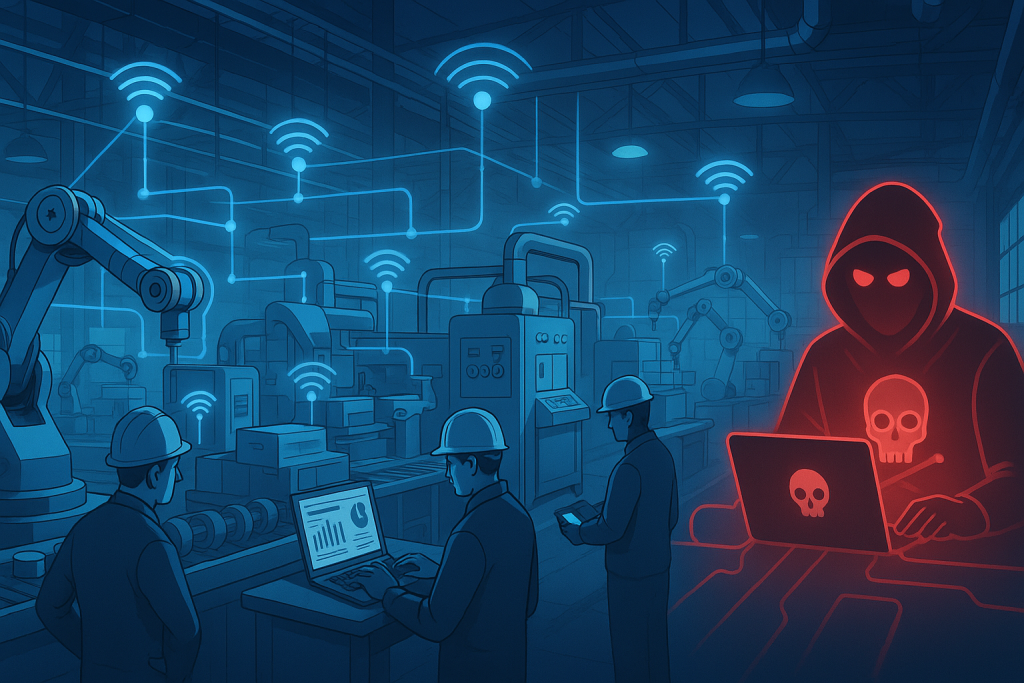
Not long ago, cyber threats to manufacturing were dismissed as hypothetical. That complacency has vanished as real-world incidents have piled up. A turning point came with the wave of ransomware and malware attacks in the late 2010s that spilled over into industrial operations. Factories from Europe to Asia found themselves collateral damage of global cyberattacks. The WannaCry ransomware mentioned earlier didn’t just hit office computers – it forced companies like Renault and Nissan to temporarily suspend some production lines as the worm spread through their networks. Similarly, the 2017 NotPetya malware outbreak (initially a geopolitical attack in Eastern Europe) ended up inflicting $10 billion in global damages, incapacitating the operations of multinational companies. One pharmaceutical giant had to stop making vaccines and relied on emergency stocks, while a snack food manufacturer saw production and shipping snarled for weeks. These were wake-up calls that even if manufacturing companies aren’t the intended target, poorly secured systems can make them victims of wider cyber chaos.
Some attacks, however, have clearly taken direct aim at industrial control systems. The most notorious example remains Stuxnet, the 2010 worm that sabotaged Iran’s nuclear enrichment facility. Stuxnet targeted PLCs (programmable logic controllers) to make centrifuge machines tear themselves apart – a dramatic illustration that malware can cause physical destruction. While that was a covert operation against a specific target, it proved the concept that code can cross from the digital realm to wreak havoc on machinery. Not long after, in 2014, a German steel mill suffered a cyber intrusion that resulted in the blast furnace being unable to shut down properly, causing massive damage. According to reports, attackers had penetrated the corporate network via phishing emails and then worked their way into the plant’s control systems. Once in, they reportedly disrupted the control systems so badly that a furnace overheated beyond control. This was one of the first publicly confirmed cases of a digital attack causing physical destruction in heavy industry.
Even if full-on destruction is rare, operational disruption has become commonplace in cyber incidents. In 2019, Norsk Hydro, a global aluminum producer, was hit by a strain of ransomware known as LockerGoga. Within hours, the company had to switch several smelting plants and rolling mills to manual operations or shut them down entirely. Employees suddenly found computer screens locked and instructions inaccessible. Production in some facilities stopped for nearly a week, and the firm estimated financial losses of tens of millions of dollars. Norsk Hydro’s proactive decision to refuse paying the ransom and instead painstakingly restore systems earned praise, but the incident was painful and costly – and it could have been far worse if fallback manual processes weren’t available. That same ransomware campaign affected other manufacturing-related targets, from a French engineering consultancy to U.S. chemical makers, revealing how attackers were intentionally striking industrial players presumably deemed likely to pay to avoid downtime.
Theft of sensitive data from manufacturing firms is another type of incident often kept quieter, but it’s rampant. Nations and competitor companies have been implicated in hacking schemes to steal proprietary designs and formulas. Aerospace and defense manufacturers, for instance, have reported breaches where designs for cutting-edge aircraft components or CNC machine code for complex engine parts were illicitly accessed. In one high-profile U.S. case, federal indictments alleged that hackers working for a foreign government stole blueprints for nuclear plant components and railroad systems from engineering firms – and one target was a company making advanced alloy pipes, indicating interest in industrial manufacturing processes. Similarly, the ThyssenKrupp breach in Germany mentioned earlier was attributed to professional hackers believed to be from East Asia, who focused on stealing steel production formulas and manufacturing plant layouts. These incidents might not grab headlines like a factory shutting down, but their impact unfolds over years as stolen IP erodes a company’s competitive edge.
Perhaps most unsettling for factory operators are the smaller-scale incidents that hint at what could be coming. Security researchers have shown, for example, how a malicious insider or intruder might introduce “microdefects” into production. In one demonstration, a team covertly altered the CNC code used to mill a critical metal component, causing a slight internal weakness. The part passed visual quality checks and initially performed as expected, but under stress testing it failed prematurely. This kind of sabotage, difficult to detect and attributing to a cyber source, could be a means to damage a company’s reputation or prompt costly recalls. There have not yet been public reports of this being done maliciously in the wild, but the technical feasibility is no longer in doubt.
All these cases drive home the point: cybersecurity is not an abstract concern for manufacturers – it has material, dollars-and-cents consequences. Whether it’s extortion through ransomware, stolen product designs ending up in a rival’s hands, or the nightmare scenario of tampered products causing safety failures, the threats are diverse and very real. Every incident, from a halted automotive assembly line to a breached pipeline valve system, adds urgency for companies to bolster their defenses.

Defending the Digital Factory: How Companies Are Fighting Back
Manufacturers are learning from these hard lessons and increasingly adopting a layered defense approach to secure their digital factories. Protecting CNC machines and CAM systems requires a blend of technological solutions, process changes, and human vigilance. Companies are beginning to treat their factory equipment with the same level of cyber hygiene that they do their office computers – and then some, given the physical stakes.
A fundamental step is implementing network segmentation and proper access controls in the industrial environment. Rather than having every machine and workstation on one flat network, firms are breaking them into zones. For example, the CNC machines might sit on a dedicated subnet segregated from the corporate IT network, with only a controlled bridge server passing necessary data (like design files or production updates) across. This way, if an office computer gets compromised by malware, it can’t directly reach the machines on the shop floor. Likewise, an infected CNC in one cell of the factory might be contained from spreading to the entire plant. Along with segmentation, manufacturers are deploying industrial-grade firewalls and data diodes – devices that strictly govern or even physically restrict what communications flow in and out of critical equipment networks.
Intrusion detection systems (IDS) tailored to industrial protocols are another growing component of defense. These specialized security tools monitor network traffic among machines, looking for anomalies that might indicate malicious activity. For instance, if a CNC machine typically only communicates with the local CAM server but suddenly starts sending large chunks of data to an unknown IP, the IDS will flag it. Some advanced setups employ machine learning to baseline normal operations so they can catch subtle deviations – a possible sign that someone is manipulating a machine’s behavior. These detection systems, when combined with 24/7 monitoring from a security operations center, give early warning of cyber threats before they fully unfold. In the case of a ransomware attack, for example, an IDS might notice a burst of unusual file encryption activity on an engineering workstation and allow the team to isolate that system before the malware spreads to machine controllers.
Another key strategy is strengthening the devices themselves. Large CNC vendors and industrial automation companies have started to respond to the security imperative by hardening their products. Some modern CNC controllers now come with built-in user authentication, so only authorized personnel can load programs or change settings on the machine. Others support encryption for data in transit, meaning the link between the CAM computer and the CNC can be secured to prevent eavesdropping or tampering. After researchers revealed serious flaws in certain popular CNC control models in recent years, there’s been a push for firmware updates and security patches even for machines already in the field. Manufacturers are increasingly applying available patches to their equipment during scheduled maintenance windows, acknowledging that ignoring updates is no longer acceptable. Proper patch management – once a rarity in OT environments – is slowly becoming routine as companies realize the cost of an unpatched vulnerability can far exceed a brief planned downtime to update a machine.
Companies are also addressing the risk of outdated and unsupported systems in a more proactive way. This can mean upgrading hardware – for example, replacing an old CNC controller that runs on Windows 2000 with a newer model that runs a supported, modern OS or an embedded system with security support. In cases where replacement is impractical, some firms are using wrapper solutions: placing an old machine behind a secure gateway or running it within a contained environment that filters its communications (sometimes called “virtual patching”). For instance, if a critical machine only supports the insecure SMB1 protocol for file transfers, the company might install a small industrial PC as a mediator that speaks SMB1 to the machine but communicates outward using secure protocols, thus shielding the machine from direct network exposure.
Procedural defenses and policies are just as important as technical measures. Many manufacturers have instituted strict rules for how data moves in and out of the production network. Portable media use is tightly controlled – USB ports might be locked down or scanned, and only vetted software updates are allowed. To prevent the nightmare of tampered design files, companies are using digital signatures and checksums for CNC programs. That way, if a file was maliciously altered in transit, the mismatch would be detected before execution. Change management processes that are standard in IT (like tracking every modification made to a server) are being adapted for OT: any change in a machine’s configuration or a production recipe ideally should be logged and, if possible, require dual approval.
An emerging best practice is to conduct regular cybersecurity audits and penetration tests in factory environments. Enterprises are hiring specialists to probe their own defenses – attempting to hack into CNC controllers or trick CAM software – in order to find the weak points before real adversaries do. These assessments often reveal surprising vulnerabilities, such as a forgotten maintenance backdoor account on a machine, or a programming terminal that was connected to the internet for convenience. By finding and fixing these issues, companies can continuously harden their posture. Some organizations have even set up honeypots that mimic industrial systems to lure and study attackers, helping them stay ahead of the tactics that might be used against their actual production systems.

Humans: The First and Last Line of Defense
Technology alone can’t secure the digital factory – people and corporate culture play a pivotal role. Many breaches in manufacturing begin with a phishing email or an unsuspecting employee clicking something they shouldn’t. Recognizing this, companies are investing in extensive training programs for both office staff and factory floor workers. A CNC operator who might never have thought about cybersecurity a few years ago is now being taught to spot the signs of an attack – for example, if the machine starts acting erratically or displaying unusual messages, it could be a malware issue and should be reported, not just rebooted. Engineers and maintenance technicians are being trained on the risks of plugging in unknown USB devices or installing unapproved software to “get the job done.”
Crucially, there’s an effort to bridge the traditional gap between IT departments and manufacturing operations teams. Interdisciplinary response teams are being formed so that if an incident occurs, everyone knows how to coordinate. This means the IT security folks who understand malware and network breaches are in communication with the plant engineers who understand what a safe machine state is. Drills and tabletop exercises are increasingly common: for instance, a plant might run a simulation of a ransomware attack that takes out the production scheduling system, forcing the team to practice fallback procedures and response steps. Such exercises highlight whether backup systems are truly available and whether communication channels (including to law enforcement or national cyber emergency agencies) are in place.
Another cultural change in some forward-thinking manufacturing firms is a “top-down” commitment to cybersecurity. In the past, plant managers and executives might have regarded cybersecurity as an IT problem or a low priority. Now, especially after seeing peers suffer costly shutdowns, many CEOs and boards are pushing cyber risk to the forefront of business continuity. When leadership actively prioritizes security – allocating budget for upgrades, insisting on incident response plans, and asking tough questions about risk – it shifts the whole organization’s attitude. Employees on the shop floor are more likely to follow security protocols when they know it’s backed by management. There’s also a growing recognition that safety and cybersecurity are intertwined. Just as no factory manager would tolerate broken safety guards on a machine, they’re starting to view unpatched software or lax network rules as an unacceptable hazard.
Human-centered defenses also include vetting the people who have access to critical systems. Companies are reexamining insider threat risks and putting in measures like two-person rules for critical actions (e.g., one person shouldn’t be able to alone modify a production recipe for a sensitive process without a second set of eyes). They’re also closely managing third-party access. CNC machines often are serviced by external vendors; instead of letting a technician plug in their own laptop freely, some plants now require that any remote support session be supervised and done through a secure jump-host that records the activity. This way, the trust granted to outsiders is limited and monitored.
Ultimately, empowering employees to act as an informed defense layer – from the design office where a CAD engineer might catch a suspicious irregularity in a file, to the loading dock worker who might notice an unusual device plugged into a controller – adds a layer of resilience that technology alone can’t provide. In the digital factory, every person needs to understand that they have a role in keeping the operation secure.

Future Outlook: Toward a Secure, Resilient Digital Manufacturing Ecosystem
As the manufacturing sector hurtles further into digital transformation, the cybersecurity challenges will continue to evolve. Future factories will likely be even more connected – envision fully “lights-out” facilities where AI systems coordinate robotics and machines with minimal human intervention, or widespread use of 5G wireless networks on the shop floor to link hundreds of devices in real time. This increased connectivity and automation could introduce new vulnerabilities. For instance, if machine learning algorithms adjust manufacturing processes on the fly, an attacker who manipulates the input data could potentially cause products to be built incorrectly without immediate detection. The rise of digital twins (virtual models of physical factories and processes) might become a target as well – compromising a digital twin could mislead operators or hide signs of a cyber-physical attack.
On the flip side, future technology also promises new defensive tools. Artificial intelligence is being harnessed to enhance cybersecurity, potentially predicting and blocking novel attack patterns in industrial settings faster than a human could. We may see more self-healing networks that can automatically isolate a compromised machine or reroute operations to backups if a threat is detected. The concept of “zero trust” architecture, which is taking hold in corporate IT, is likely to extend into OT: no device or user, no matter if inside the traditional perimeter, will be inherently trusted. Every communication a CNC machine makes could be continuously verified and authenticated, greatly limiting what an attacker who sneaks in can actually do.
Regulation and industry standards are also poised to play a significant role in shaping a more secure manufacturing landscape. Governments and international bodies have started to recognize that factories are part of national critical infrastructure and need better protection. In the European Union, for example, new directives such as NIS2 (an update to the Network and Information Security directive) are broadening their scope to include many manufacturing companies, enforcing requirements like reporting significant cyber incidents and adopting risk management practices. The EU is also moving forward with a Cyber Resilience Act that will require manufacturers of digital products – potentially including industrial control systems – to meet basic cybersecurity criteria before their products can be sold in the single market. Even regulations not explicitly about cybersecurity, like an updated EU Machinery Regulation, now include provisions that machinery must be designed safely with regard to cyber risks as well as physical hazards.
International standards are providing guideposts, and many manufacturers are aligning with frameworks like IEC 62443 (which sets out security measures for industrial control systems) and the ISO 27000 series for information security management. Adhering to these standards can not only improve security but also demonstrate due diligence to partners and insurers. Indeed, cybersecurity insurance for factories is becoming more common, and insurers are demanding that clients have certain protections in place – much as a property insurer would insist on fire alarms and sprinklers.
We can also expect closer collaboration between the cybersecurity community and industrial equipment makers. Just as the auto industry now works closely with security researchers to find and fix car software vulnerabilities, CNC and robotics manufacturers may build formal programs to accept vulnerability reports and issue patches regularly. A cultural shift is underway from viewing downtime as the ultimate evil to viewing insecure systems as equally dangerous. In the near future, a scheduled security update might be seen as just as important as a scheduled oil change on a machine.
In conclusion, protecting the digital factory is becoming an integral part of running a modern manufacturing business. The same ingenuity that gave us smart factories must now be applied to safeguarding them. Companies that invest in strong cybersecurity practices are not only defending their own assets but also contributing to the stability of supply chains and the safety of end consumers. The lesson of recent years is clear: the benefits of Industry 4.0 can only be fully realized if matched with an equally advanced commitment to security. In the factories of tomorrow, productivity and protection will have to go hand in hand. Those who grasp this will be well-positioned to innovate without fear, keeping their automated cutting machines whirring and robotic arms swinging – securely and safely – in the face of whatever cyber threats emerge.