
Insights on CAD/CAM, CNC Machines, and Industrial Robots
How CAM Systems Work: The Digital Brain Behind Modern Machining
- Andrew Lovygin
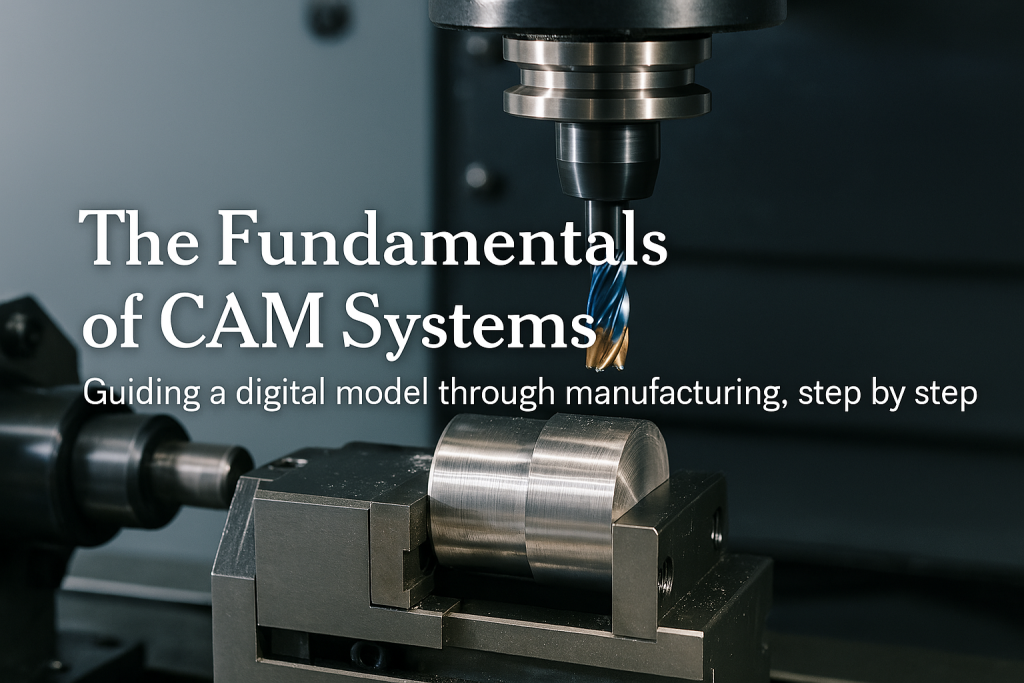
On a quiet morning inside a training lab at a vocational college in Stuttgart, a group of engineering students crowds around a monitor. On screen: a complex aluminum part with intersecting slots and radiused edges. With a few clicks, the instructor selects a cutting strategy - and like magic, a multicolored toolpath appears, dancing across the surface. Minutes later, a CNC machine hums to life, its spindle spinning at 12,000 RPM, as it begins to carve the physical part from a raw aluminum block.
What bridges the digital with the mechanical? A CAM system.
2. From Drawings to Drills: The Rise of CAM
CAM, short for Computer-Aided Manufacturing, refers to software that converts digital part models into precise instructions for CNC (Computer Numerical Control) machines. While CAD (Computer-Aided Design) defines what a part looks like, CAM determines how it will be made.
The evolution of CAM mirrors that of modern manufacturing itself: from manual labor to digital automation. In the early days, machinists would manually write G-code - the language of CNC machines - line by line. CAM systems now do this automatically, analyzing geometry, selecting tools, and optimizing toolpaths for speed, accuracy, and efficiency.
3. The CAM Workflow: Step by Step
Let’s break down the typical CAM workflow, especially in the context of milling and turning - the heart of subtractive manufacturing.
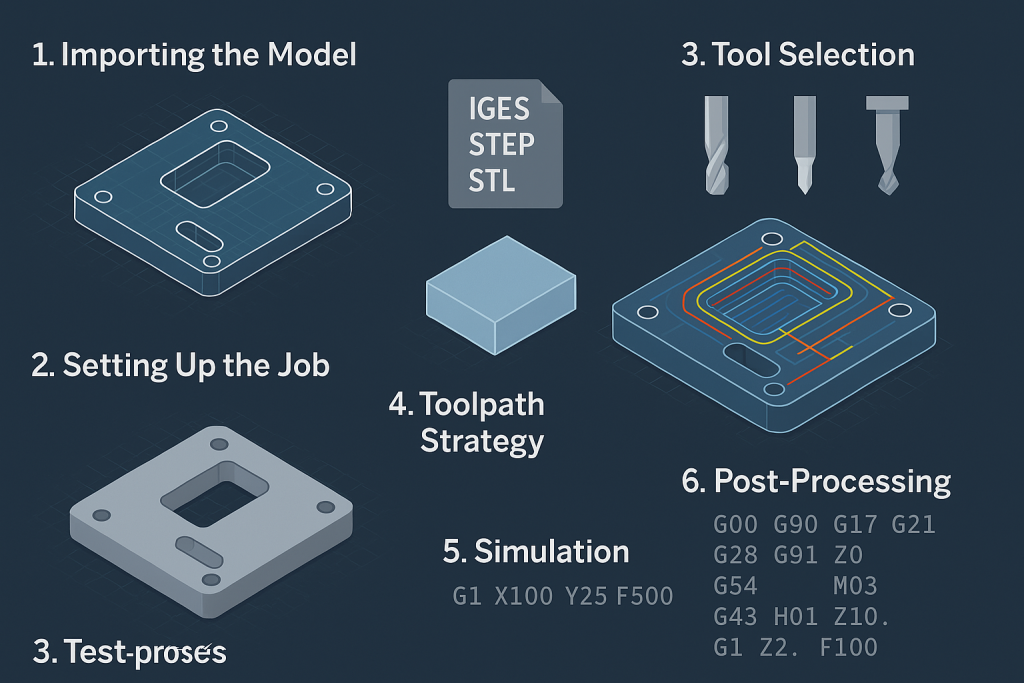
Step 1: Importing the Model
The process begins by importing a 3D model from CAD software. Formats like STEP or IGES preserve the geometry, ensuring accurate interpretation of features.
Step 2: Setting Up the Job
Engineers define:
- Stock material dimensions (block, bar, or casting)
- Workholding method (e.g., vises, clamps)
- Machine origin (usually the top left corner or center of a part)
CAM software provides a virtual library of tools: end mills, drills, chamfer tools - each with defined dimensions, coatings, and cutting data. Choosing the right tool is critical for efficiency and surface finish.
Step 4: Toolpath Strategy
Here’s where the magic happens:
- Facing: cleaning the surface of the stock
- Pocketing: clearing interior cavities
- Contour milling: following outer profiles
- Drilling & tapping: creating holes
- Adaptive roughing: high-speed material removal
- Finishing passes: precise detail work
- These strategies are visualized as color-coded paths on the model.
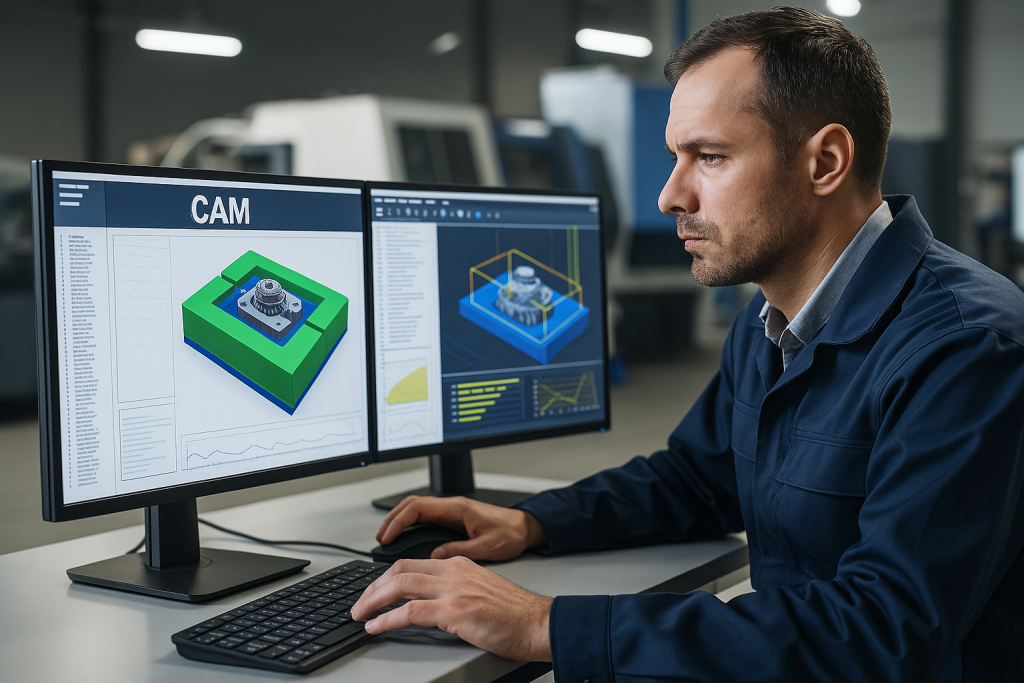
Before real cutting begins, CAM allows for full 3D simulation - spotting collisions, inefficiencies, or gouges. This step saves time, tools, and material.
Step 6: Post-Processing
Finally, the CAM system outputs G-code, tailored to a specific CNC machine through a component called a post-processor. This is the language the machine understands:
G1 X100 Y25 F500 — move the tool to X100, Y25 at feedrate 500 mm/min.
4. Beyond Code: CAM and Human Expertise
Though highly automated, CAM still relies on human decision-making. A skilled programmer balances material knowledge, cutting dynamics, machine capabilities, and tolerances. For example:
- Cutting titanium requires low speeds, high rigidity
- Plastics need sharp tools and minimal heat
- Soft aluminum benefits from high-speed adaptive toolpaths
5. CAM in Action: A Real-Life Case
In a small shop outside Milan, Italy, a team is building custom motorcycle parts. Their workflow is pure digital:
CAD model → CAM setup → CNC machining → test ride.
They produce high-precision triple clamps from billet aluminum in hours - parts that once took days by hand.
The shop’s owner, Davide Rizzo, credits CAM with their competitive edge. “We’re a small team, but with CAM and CNC, we compete with global brands,” he says. “It’s like having a digital factory in your garage.”
6. CAM, the Classroom, and the Future
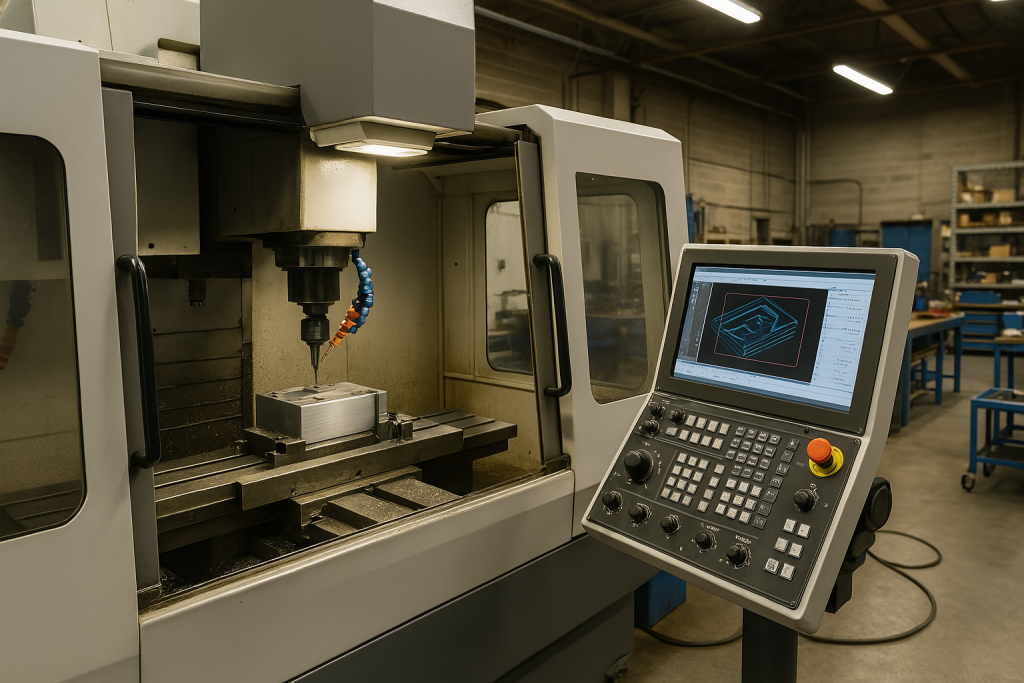
Educational institutions around the world are integrating CAM into engineering and technical curricula. Understanding CAM not only improves digital literacy - it bridges the gap between theoretical design and practical engineering.
New trends like cloud CAM, AI-assisted toolpath optimization, and real-time machine feedback are shaping the next generation of machinists and designers.

Conclusion: More Than Code
At its core, CAM is more than code generation. It’s a system of logic, intuition, and precision - the quiet intelligence that turns ideas into matter, pixels into parts. In every engine, airplane, implant, or high-performance bicycle frame, a CAM system has played its part. It is the unseen craftsman of the digital age - exacting, fast, and utterly transformative.