
Almacam CAD/CAM: A 45-Year Journey of Innovation in Manufacturing Software
Overview of Almacam and Alma
Almacam is a comprehensive CAD/CAM software system designed to optimize production processes like cutting, sheet metal fabrication, and robotic welding. It is the flagship product range of Alma, a French software company with over 45 years of history in manufacturing technology. Alma (often stylized as ALMA) is unique in the industry as an independent, employee-owned cooperative founded in 1979. The company’s mission from the outset was to develop advanced automatic nesting algorithms – software that efficiently arranges parts to be cut from raw materials – to reduce waste and improve manufacturing productivity. Today, Almacam represents the culmination of that mission, offering an integrated suite of CAD/CAM solutions that serve thousands of users worldwide. The company behind Almacam, Alma, remains 100% owned by its employees and has grown into a global provider of industrial software with operations spanning Europe, Asia, and the Americas.
Almacam software is best known for its strength in optimizing material usage and streamlining the programming of cutting machines and robots. Manufacturers use Almacam to take designs from CAD (computer-aided design) and generate the instructions (CAM, computer-aided manufacturing) needed for machines to cut metal sheets, tubes, wood panels, and more. By leveraging Alma’s sophisticated nesting technology and process-specific modules, Almacam helps companies minimize scrap material, reduce programming time, and maximize the throughput of cutting and welding equipment. The system acts as a critical link between design, production planning, and the shop floor – often integrating with enterprise systems to create a seamless digital workflow. Alma’s official tagline for Almacam is “software solutions for production optimization,” reflecting the core aim of boosting efficiency for manufacturers.
Key Applications and Industries
Originally developed for sheet metal cutting, Almacam today covers a wide spectrum of applications in fabrication and robotics. Its modular software range can program nearly any cutting or welding process used in industry. Key application areas include:
-
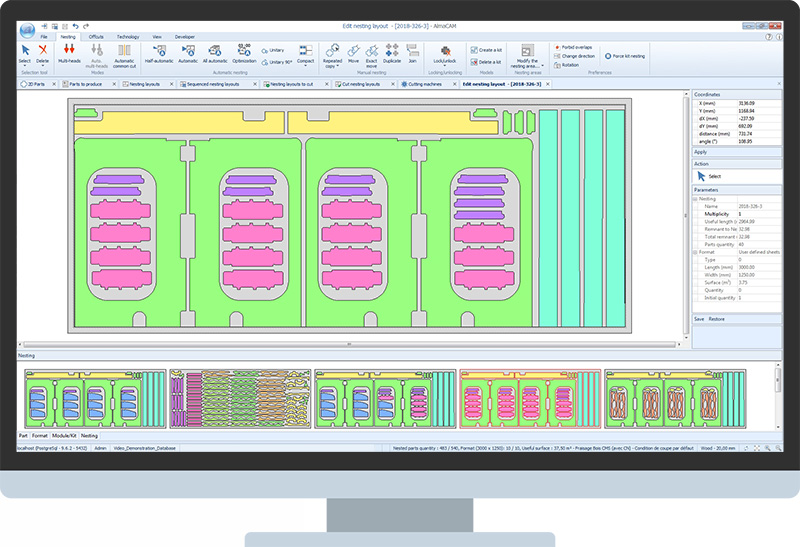
2D Cutting & Sheet Metal Fabrication: Almacam’s core strength is in programming sheet cutting machines – supporting technologies like laser cutting, plasma cutting, oxy-fuel (flame cutting), waterjet, and punching. The software automatically nests part shapes on metal sheets or plates to minimize waste and generates CNC code for cutting machines. It handles intricate cutting paths and optimizes the cutting sequence for efficiency.
-
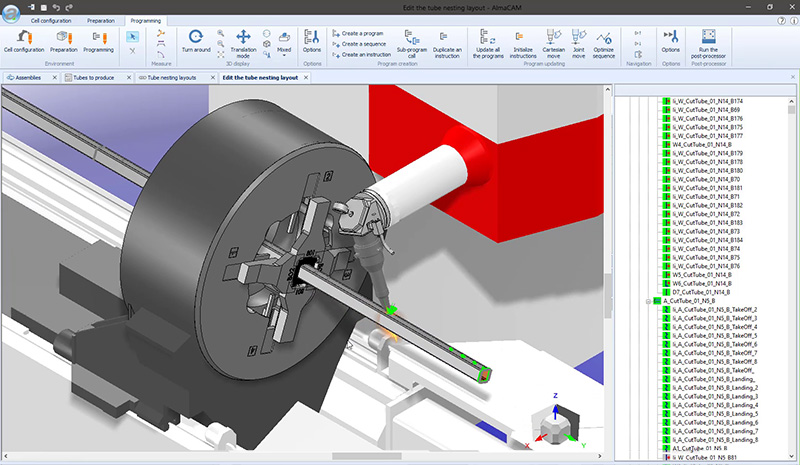
Tube and Profile Cutting: Specialized modules (formerly known as act/tubes, now part of Almacam Tube) address the cutting of pipes, tubes, and structural profiles. These tools import 3D tube designs and create cutting programs for tube laser cutters or 5-axis machines, considering the unique geometry of cylindrical and rectangular stock.
-
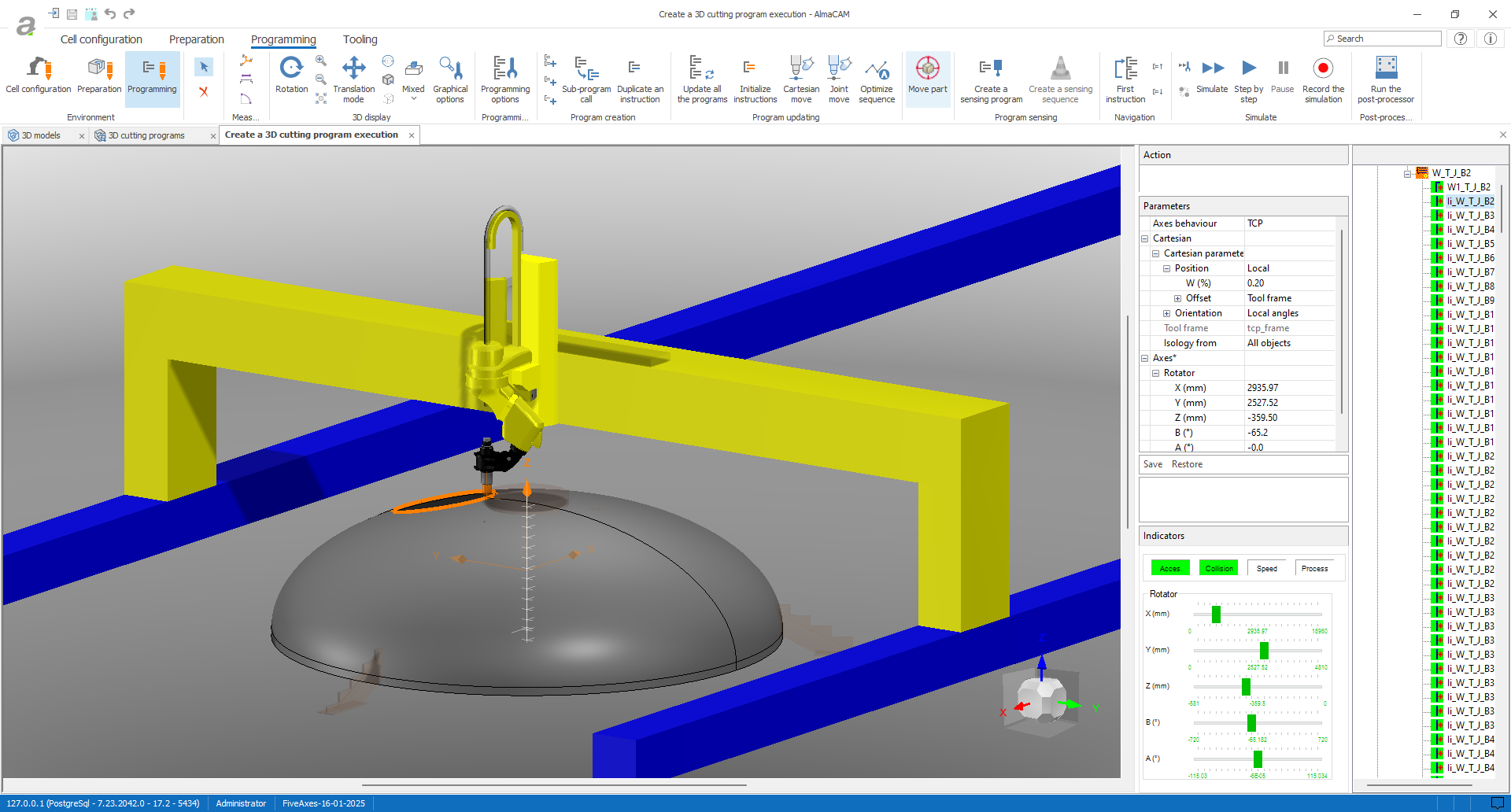
3D Shape Cutting: Almacam extends to 3D cutting of complex shapes, such as cutting openings in formed metal parts or trimming molded components. Its Almacam Space Cut module programs robotic or 5-axis cutting of 3D parts, useful in automotive and aerospace applications where curved panels or hydroformed parts need trimming.
-
Punching and Combination Machines: For sheet metal shops using CNC punch presses or combined punch/laser machines, Almacam provides modules to program punching operations (tool selection, hit sequencing) alongside profile cutting. This is critical for fabrication processes that involve both cutting and forming features (like louvers or embossed details) on sheet metal.
-
Bending and Unfolding: Alma’s software suite includes solutions for sheet metal bending (under the Almacam Bend line) and for generating flat patterns from 3D designs (Unfold module). While not a bending machine controller itself, these tools integrate with the cutting process – ensuring that cut flat patterns will bend correctly into the intended 3D shape.
-
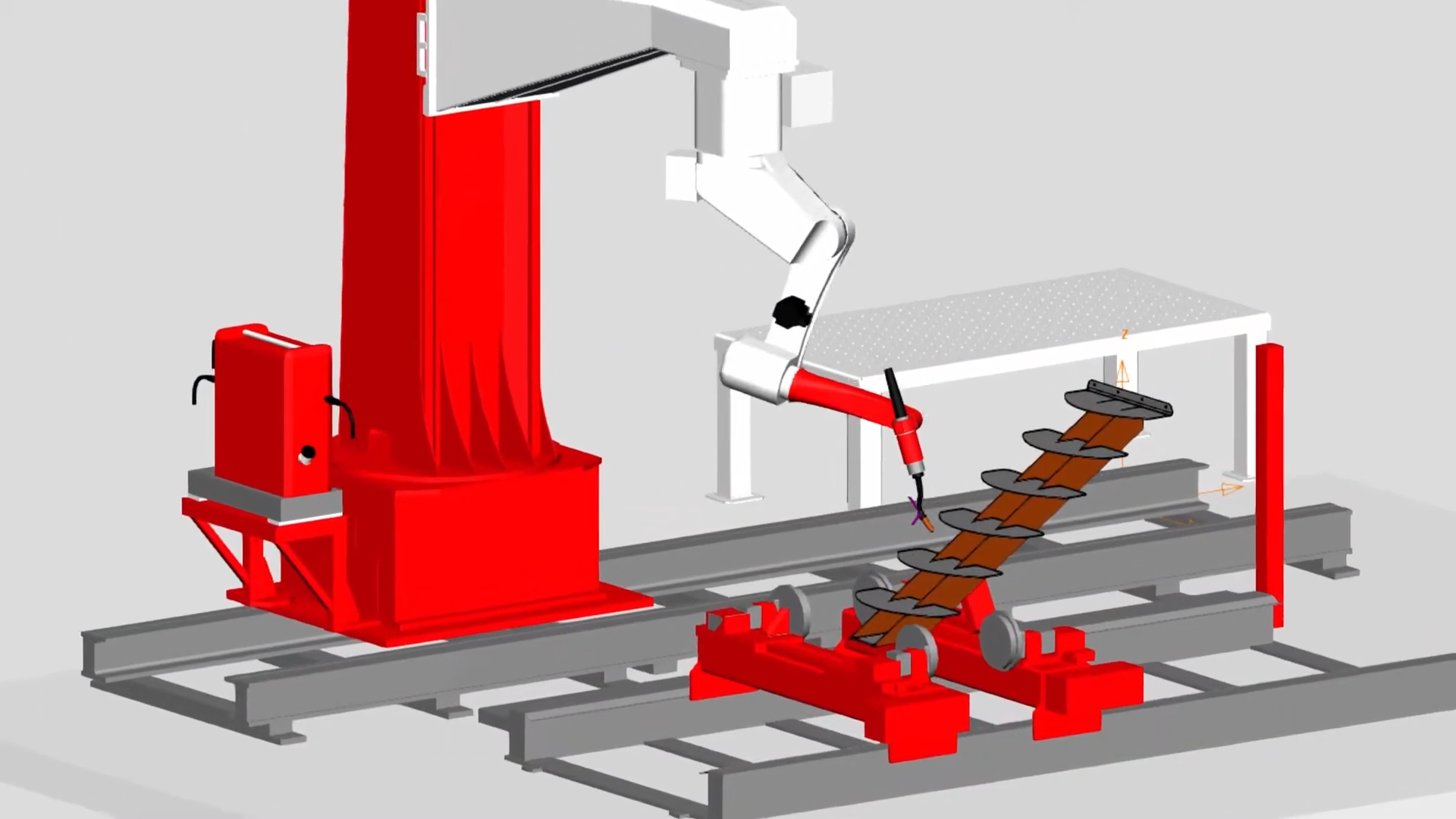
Robotic Welding (OLP): A significant extension of Almacam is into robot offline programming for welding. The Almacam Weld module allows users to program welding robots on a computer, rather than by teaching points on the robot itself. This is especially valuable for complex welded assemblies or when frequent changeovers make manual programming inefficient. Almacam Weld can simulate robot motion, avoid collisions, and calculate optimal weld paths and parameters, helping automate arc welding in industries like heavy equipment and automotive.
Across these applications, Almacam is utilized in a broad range of industries. Its user base spans job shops and contract manufacturers (who cut metal parts for various clients) as well as in-house production at large industrial firms. Major sectors include:
-
Agricultural and Construction Machinery: Manufacturers of farm equipment and construction machinery use Almacam to cut thick steel plates and components. Notably, companies such as John Deere (agricultural machinery) and Volvo (construction equipment and trucks) have been cited as Almacam users, relying on its nesting and cutting optimization for their parts production.
-
Automotive and Ground Transportation: The system is used for cutting sheet metal parts in the automotive supply chain and for producing buses, trucks, and rail equipment. Almacam’s support for high-volume laser cutting and robotic welding suits the automotive industry’s needs. For example, Siemens (which has rail and mobility divisions) is listed among Alma’s clientele, indicating the software’s role in transport engineering.
-
Aerospace: In aerospace manufacturing, where materials like aluminum and titanium are expensive, Almacam’s nesting algorithms help save material on sheet metal and plate cutting for aircraft parts. Its ability to handle complex shapes and integrate with CAD systems is valuable for aerospace suppliers. Alma reports supporting customers in the aeronautics sector, where quality and optimization are paramount.
-
Shipbuilding and Offshore Construction: One of Alma’s early landmark projects was in the shipbuilding industry – back in 1983, the French shipyard Chantiers de l’Atlantique adopted Alma’s nesting software (then called RIMBAUD). Ever since, shipbuilders have been key users, leveraging Almacam to lay out massive steel plates for hulls and structures with minimal scrap. The software’s capacity to handle very large parts and complex layouts is crucial in this field. Offshore platform construction and energy sector fabricators also use it for similar reasons.
-
Industrial Equipment and Steel Fabrication: Almacam is widely used by steel fabricators and manufacturers of industrial goods – from boiler and pressure vessel makers to steel structure fabricators. These industries cut heavy gauge steel and often require meticulous nesting to manage material costs. Almacam’s support for oxy-fuel cutting and plasma on thick plate, and its integration with quoting (via Alma’s Almaquote/Webquote tools), helps these companies plan jobs efficiently.
-
Precision Sheet Metal and General Manufacturing: Smaller-scale sheet metal shops (producing enclosures, cabinets, ducts, etc.) benefit from Almacam’s ease of programming and support for punching and laser cutting. The software’s flexibility means it can be configured for shops with a single laser cutter or a mix of different machines. It is also not limited to metal – the nesting and cutting functions can be applied to wood, plastics, and other materials, making it useful for furniture manufacturing and other domains where panel cutting is needed.
This broad applicability – from heavy industries like shipbuilding and mining equipment to high-tech domains like aerospace – underscores Almacam’s versatility. The software is machine-agnostic, supporting equipment from virtually all major machine tool manufacturers. In fact, Alma often partners with machine builders to ensure its software works seamlessly with their CNC controllers and robot systems. (For instance, Alma’s collaborations with cutting machine OEMs like Mazak and with robot makers like Yaskawa mean Almacam can come pre-configured for those machines’ specific requirements.) The result is that Almacam has a presence in many factories worldwide, acting as a bridge between design engineering and automated fabrication.
History and Evolution of the Almacam Software
The story of Almacam is deeply intertwined with Alma’s history as a pioneering CAD/CAM developer. Alma was founded in 1979 in Grenoble, France, by a team of researchers in applied mathematics. These founders set out to solve a pressing industrial problem: how to optimally arrange (nest) shapes on raw material to minimize waste during cutting. Their early work led to one of the first automatic nesting software programs in the world, initially applied to textiles and then to metal cutting. This innovation gave Alma its name (which fittingly stands for Atelier Logiciel de MAtrice, roughly “software workshop for nesting” in French) and a technical edge that it still maintains.
Key milestones in the software’s evolution include:
-
1980s – Early Adoption: Alma’s nesting software gained traction in the early 1980s through projects in various industries. A breakthrough came in 1983 when the major shipbuilder Chantiers de l’Atlantique chose Alma’s system (known then as RIMBAUD) for cutting optimization. This successful deployment in shipbuilding firmly established Alma in the sheet metal working market. By 1987, Alma had also begun selling its software in other European countries, securing clients in Italy, the Benelux region, and Germany.
-
1990s – Expansion and New Domains: In 1990, Alma opened its first international subsidiary in Turin, Italy, recognizing the need for local presence in key markets. As the decade progressed, Alma kept innovating; in 1996the company made a strategic acquisition of Aleph Technologies, a French firm specializing in robot programming. This move expanded Alma’s capabilities beyond 2D cutting into 3D cutting and robotic arc welding – essentially planting the seeds for what would become Almacam’s robotics modules later on. By the late 1990s, Alma embraced the PC and Windows era: in 1999 it launched act/cut, a new-generation CAM software for Windows that modernized the user interface and programming workflow for 2D cutting. The same year, Alma set up a subsidiary in Germany (Alma GmbH) to better serve German-speaking markets, and even opened an additional office in Nantes, France, reflecting domestic growth.
-
2000s – Product Line Growth: The early 2000s saw Alma broadening its product line and market leadership. In 2001, it introduced act/tubes, a dedicated software for programming tube-cutting machines and robots, anticipating the growing use of laser tube cutters. The following year, 2002, Alma acquired Sapex, another longstanding French CAD/CAM vendor – a deal that solidified Alma’s position as the French market leader in sheet metal CAM. With Sapex’s expertise (notably in “fine sheet metal” fabrication software), Alma integrated and enhanced its solutions. Throughout the mid-2000s, Alma forged new distribution partnerships across the globe – from Canada and Poland to India – extending its reach. Subsidiaries were established in China (2007)and Brazil (2009), tapping into Asia-Pacific and South American markets as industrialization in those regions accelerated.
-
2010s – The Birth of Almacam and Globalization: A pivotal development came in the 2010s. After years of incremental improvements to its “act/…” software series, Alma embarked on a major overhaul to unify its offerings. In 2014, the company launched Almacam, branding it as its “new generation” sheet metal CAM system. Almacam was not just an update – it provided a single, integrated platform that could encompass all of Alma’s prior solutions (cutting, punching, routing, bending, welding, etc.) under one architecture. This made it easier for customers to adopt a comprehensive solution as opposed to separate programs. The timing coincided with a new wave of global expansion: Alma had opened subsidiaries in the USA (Chicago) in 2010 and in Spain in 2015, and a representative office in Singapore (2015) to cover Southeast Asia. The company also kept growing via acquisitions; in 2017, Alma acquired ASCO Data, a German CAM software company known for automated programming of complex punching and routing machines. This further enhanced Alma’s product depth and gave it a stronger foothold in Germany. Meanwhile, distribution agreements extended Almacam’s availability to places like Vietnam, Japan, New Zealand, and Malaysia by 2016–2017. During this era, Alma’s workforce and sales were on the rise, and it proudly remained a “40-year-old startup” of sorts – keeping its cooperative, innovative spirit even as it matured.
-
Late 2010s to Present – Cloud Era and Industry 4.0: In the late 2010s, manufacturing software began shifting toward the cloud and smart factories. Alma was early to explore cloud-based solutions: in 2018 it launched Nest&Cut, an online nesting application offered in a Software-as-a-Service (SaaS) model. Nest&Cut allows users to perform automatic nesting through a web browser, a sign of Alma’s commitment to leveraging cloud computing and even machine learning for industrial applications. In 2019, Alma celebrated its 40th anniversary, marking four decades of continuous operation and innovation. At that point the company reflected on its journey and looked ahead to the future (more on that in later sections). In the early 2020s, Alma introduced Almacam Pass (launched globally in 2021), a flexible subscription model for its CAD/CAM software, indicating a shift in business model to accommodate customers who prefer subscription licensing over traditional perpetual licenses. By embracing subscriptions, Alma opened up its high-end CAM capabilities to smaller firms or project-based usage, who can now “pay as they go” monthly without long-term commitment.
Throughout its evolution, the Almacam system has continuously incorporated new manufacturing techniques and technology trends. From supporting 5-axis laser cutters and multi-head machines to integrating with enterprise software, Almacam’s development has been guided by real-world industry needs. The cooperative structure of Alma likely played a role in this steady, long-term R&D focus – with employees as stakeholders, the company has consistently re-invested a significant portion of its revenue (around 25–30% in recent years) into research and development. This has enabled Almacam to keep pace with – and often pioneer – the cutting-edge of CAD/CAM innovation.
Business Footprint and Market Presence
Almacam may not be a household name to the general public, but in the manufacturing software market it has a significant presence and track record. As of the late 2010s, Alma reported approximately 160 employees dedicated to its CAD/CAM software division, and an annual consolidated revenue of around €16–17 million. Notably, the company achieved about 50% growth in sales over the five years leading up to 2019, reflecting strong demand for its solutions. As a privately held cooperative, Alma doesn’t publicly disclose detailed financials on a quarterly basis, but this 2019 figure provides a benchmark of the company’s scale. It’s a mid-sized software firm, smaller than some corporate giants in CAD/CAM, but it punches above its weight in specialized expertise and global reach.
In terms of user base, thousands of companies worldwide rely on Almacam software in their production processes. Alma has indicated that its nesting and CAM solutions help “thousands of companies to save on material consumption” across many sectors – underscoring the widespread adoption of its technology. While exact license or installation counts aren’t published, we know that usage ranges from small job shops with one or two machines up to multinational corporations with multiple factories. Impressively, about 75% of Alma’s software licenses are sold outside of France, the home market. This export ratio speaks to Alma’s internationalization: even though the company began in Grenoble and still has its headquarters and core development team there, it is truly a global player now.
Geographically, Alma and its Almacam product line have a direct presence in at least 8 countries. The company has wholly-owned subsidiaries or joint ventures in France, Italy, Germany, Spain, the United States, Brazil, China, and Singapore. These offices handle local sales, support, and customization, bringing Alma closer to its customers in those regions. Beyond those, Alma’s reach extends via a network of distributors and resellers in dozens of other countries – earlier reports mentioned representation in about 15 additional nations through partnerships. This includes agents or distributors in markets like Japan, South Korea, India, Turkey, Poland, and many others. For example, distribution agreements in the early 2000s brought Alma’s software to Japan and Korea, and by the late 2010s the company added partners in Vietnam and other Southeast Asian countries.
Such global coverage means Almacam is used on virtually every continent where there is a significant manufacturing base. It also means the software has to support multiple languages and local standards – something Alma has managed over the years (the software and documentation are available in numerous languages, and local teams adapt it to regional needs). The diverse user base also drives Alma to keep the software flexible and open – since fabrication practices can vary (e.g. European vs. American machine post-processors, metric vs. imperial units, etc.), Almacam’s architecture is made to be highly configurable.
One indicator of Almacam’s market standing is its client list. According to information released via partners, Alma’s customers include well-known industrial names: John Deere, Volvo, Siemens, Mitsubishi Heavy Industries, among others, are cited as users of Alma’s software. These are major corporations in agriculture, transportation, technology, and heavy industry, respectively – highlighting that Almacam is trusted for mission-critical production by top-tier manufacturers. Moreover, Alma has long-standing relationships with many small and medium enterprises, especially in Europe, where its cooperative ethos and personalized support have resonated. The company often emphasizes “human-centric” service, noting that as an independent player it focuses on close customer relationships. Many users have been with Alma for decades, upgrading from the old DOS or Unix-based nesting systems all the way to today’s Almacam platform – a testament to customer loyalty and product reliability.
It’s also worth noting Alma’s stability and independence in an industry that has seen considerable consolidation. Over the past decades, many CAD/CAM companies were acquired by larger corporations (for instance, the CAM market now includes giants like Hexagon, Autodesk, and others as consolidators). Alma stands out as one of the last independent CAD/CAM software publishers of its size, and its cooperative ownership model means it cannot be bought out in the usual way. The company has explicitly stated that its SCOP (cooperative) status guarantees the group’s independence – selling the company is essentially impossible under that structure. This independence is positioned as a strength: Alma can pursue long-term product strategies without pressure from outside investors, and customers can trust that their software vendor won’t abruptly change hands. In an interview, Alma’s CEO Laurence Ruffin highlighted that independence, saying “The only company on the market that is independent, now and forever, and 100% employee-owned. This makes all the difference!” – implying that this model results in honest relationships and committed employees focused on customer success. For users of Almacam, this stability provides confidence that the software will continue to be supported and evolved by the same dedicated team for years to come.
Mergers, Acquisitions, and Partnerships
While Alma has remained independent, it has not been stagnant in building alliances or expanding via acquisitions. The company has a history of targeted acquisitions to broaden its expertise and product portfolio. Three notable acquisitions stand out in Alma’s timeline:
-
Aleph Technologies (1996): This French company specialized in robotics software, particularly trajectory calculation and offline programming for robots. Acquiring Aleph allowed Alma to immediately enter the robotic CAM arena, adding capabilities for programming robotic welding and cutting. In fact, Alma cites that it became a pioneer in robot programming as far back as 25 years ago – likely due to Aleph’s technology (like obstacle avoidance algorithms and robot path optimization). This move positioned Alma ahead of the curve just as robotics began booming in manufacturing.
-
Sapex (2002): Sapex was another CAD/CAM software vendor with a long presence in France. By taking over Sapex, Alma effectively consolidated the French market, becoming the national leader in sheet metal CAM. Sapex brought in additional expertise in sheet metal punching and CAD integration, and probably a roster of customers that Alma could then introduce to its new Almacam generation down the line. This acquisition also exemplified Alma’s strategy of external growth complementing organic growth – by merging with a peer, Alma could extend its customer base and technical know-how.
-
ASCO Data (2017–2018): ASCO Data was a German developer known for CAM software in punching and routing, with strength in the German automotive supply chain. Alma’s acquisition of ASCO Data gave it a direct entry into Germany’s market via an established brand and team in Bremen. It also added new features to Alma’s products (ASCO’s automation in punching, for instance). This deal underscores Alma’s commitment to being strong in Europe’s biggest manufacturing economies. With it, Alma gained not just technology but also closer relationships with German machine tool builders and users.
In addition to acquisitions, Alma has actively formed partnerships and collaborations with other industry players. Many of these partnerships are strategic and mutually beneficial, aimed at integrating Almacam with other technologies or expanding its market reach. Some of the most notable collaborations include:
-
Machine Tool OEM Partnerships: Alma works closely with cutting machine manufacturers to ensure Almacam supports their equipment optimally. For example, Mazak, a leading machine tool builder, has been referenced as a partner – suggesting that Almacam may be recommended or bundled for programming certain Mazak cutting systems. These kinds of partnerships are win-win: the OEM can offer a proven software solution to its customers, and Alma gains access to the OEM’s sales channels. Similar ties likely exist with other laser and plasma machine makers, given Alma’s long presence in the field.
-
Yaskawa (Robotics): In December 2022, Alma announced a major partnership with Yaskawa Europe, the regional arm of one of the world’s largest industrial robotics companies. Under this agreement, Alma’s Almacam Weld became a reference offline programming solution for Yaskawa’s Motoman welding robots. In practical terms, Yaskawa will promote Almacam Weld to its robot customers in Europe, and Alma will support Yaskawa’s team in implementing the software. This partnership formalized years of cooperation – dozens of Yaskawa robot users were already using Almacam Weld, and the two companies had worked together informally in markets like Spain and the Netherlands. By partnering, Yaskawa can offer its welding automation clients a top-tier programming software (rather than developing its own from scratch), and Alma secures a prestigious endorsement and broader market penetration. A Yaskawa manager, Richard Tontsch, noted that thanks to Alma, Yaskawa can “provide a turnkey solution to our customers,” highlighting the added value this brings to robot sales. From Alma’s perspective, Christelle Savorgnani (head of Alma’s CAD/CAM division) said the agreement “formalizes the strong ties we have established with Yaskawa… It is the concretization of our expertise of more than 25 years in off-line programming software and of our capacity to innovate continuously.” This partnership is a strong validation of Alma’s robotics competency and should help drive further adoption of Almacam in the robotics domain.
-
Hexagon/ESPRIT (Additive Manufacturing): Another cutting-edge collaboration is with Hexagon’s ESPRITteam. ESPRIT is a well-known CAM software for CNC machining (milling/turning), owned by Hexagon. In 2019, Alma and ESPRIT embarked on a partnership to combine their strengths for robotic additive manufacturing. The result was a dual-software solution: Alma’s software could utilize ESPRIT’s additive Direct Energy Deposition (DED) toolpaths, and conversely ESPRIT could leverage Alma for robot control. In essence, Alma enabled robots (like Yaskawa, ABB, Fanuc, KUKA robots) to perform 3-axis, 4-axis, and 5-axis additive manufacturing (welding/deposition), with ESPRIT handling the CAM side of generating those paths. This unique link allowed, for example, a user to plan an additive manufacturing job in ESPRIT and then simulate and post-process it for a robot via Alma. It opened new possibilities, such as wire-arc additive manufacturing with robotic arms, combining Alma’s expertise in robot programming with ESPRIT’s CNC and additive capabilities. This partnership is an example of Alma cooperating with another software vendor (rather than a hardware OEM) to push into a new technological frontier. It underscores Alma’s openness and agility in the Industry 4.0 era – rather than viewing each other as competitors, two software firms combined forces to tackle the emerging market of robotic additive manufacturing.
-
ESAB / InduSuite (Cloud Nesting): In 2022, Alma also collaborated with ESAB, a global manufacturer of welding and cutting equipment, on ESAB’s new cloud platform called InduSuite. InduSuite is a suite of brand-agnostic industrial applications that ESAB offers to fabricators (covering areas like welding management and cutting). Alma contributed its expertise to develop EasyNest Online, a cloud-based nesting software that became part of InduSuite. Launched in late 2022, EasyNest Online is essentially a white-labeled version of Alma’s Nest&Cut technology, tailored for ESAB’s ecosystem. It allows fabricators to perform automatic nesting of parts for cutting through a web interface, supporting all common profile-cutting machines (laser, plasma, oxy-fuel, waterjet) regardless of brand. This partnership benefits both sides: ESAB can offer its customers a state-of-the-art cloud nesting tool (without developing it from scratch), and Alma gets its technology in front of ESAB’s large customer base, capturing users who might prefer a web app or who are drawn to ESAB’s InduSuite platform. It’s another example of Alma’s components being sold through OEMs or third parties – a model the company has emphasized as a unique strength. In fact, Alma’s CEO has pointed out that Alma is the only player in the market that develops and sells its own nesting algorithms as software components to other CAM or ERP vendors. The EasyNest partnership exemplifies this: Alma’s algorithmic engine working inside someone else’s software offering.
Beyond these, Alma maintains a wide network of technology partners and integrators. The company works with ERP/MES providers to integrate Almacam into broader production management systems (for example, enabling automatic quoting or shop scheduling based on Almacam’s data). It also cooperates with educational institutions (some technical universities use Alma’s software in training) and industry consortia focused on smart manufacturing. All these collaborations and partnerships have a common thread: leveraging Alma’s core strengths in nesting and CAM while extending its reach either through new functionality or new markets. This strategy has allowed a relatively small firm to have an outsized influence in the manufacturing tech landscape.
Technological Innovations and Core Strengths
At the heart of Almacam’s success are the technological innovations and distinctive features that the system offers. From its inception to its latest version, the software has consistently introduced capabilities that set it apart in the CAD/CAM arena. Some of the core strengths and innovations of Almacam include:
-
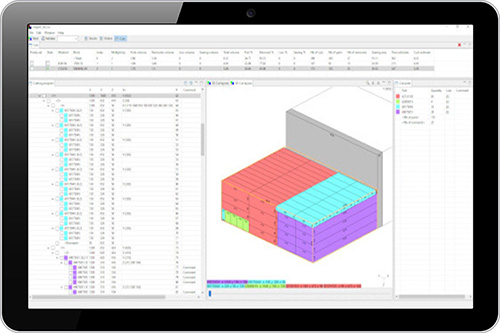
Advanced Automatic Nesting: Alma’s founding expertise in nesting algorithms remains one of Almacam’s crown jewels. The software can automatically arrange a multitude of part shapes on raw material (sheets, plates, or coils) with remarkable efficiency, often achieving material utilization rates superior to manual methods. The nesting engine considers part geometry, required quantities, material grain direction, machine cutting constraints, and more to produce an optimal layout. This saves users money on material and reduces scrap. What’s distinctive is that Alma’s nesting technology is 100% proprietary – developed in-house over decades – and is renowned enough that other software companies have licensed it. Almacam’s nesting can handle irregular shapes and mix different part sizes intelligently, and it supports common-line cutting (sharing cut lines between parts) to further save time and material. In recent years, Alma has been exploring cloud computing and AI to push nesting even further, as CEO Laurence Ruffin noted: “with the prospects offered by cloud computing and artificial intelligence, we are opening up new horizons in the field of cutting optimization.” This hints that future versions might utilize machine learning to improve nesting or leverage cloud servers to compute extremely complex nests quickly.
-
Comprehensive Process Coverage: One of Almacam’s selling points is that it’s a one-stop solution for all cutting and welding processes. Many CAM software packages focus on one type of machine (say, laser cutting only, or only punching). Almacam, by contrast, offers modules for laser, plasma, waterjet, oxy-fuel, punching, routing/milling, tube cutting, 5-axis and robot cutting, bending, and robotic welding – all within a unified environment. This breadth is unusual in the industry and means a manufacturer can standardize on one software platform for multiple fabrication departments. It simplifies training (since the interface is consistent) and allows for easier data sharing between, for example, a laser cutting station and a welding robot station in the same factory. Each module is optimized for the specifics of that process (for example, the punching module will handle tool turret management and hit sequencing, while the laser module handles kerf width and lead-in optimization), but the modules share common features like nesting and a central database.
-
Integration and Industry 4.0 Readiness: Almacam is designed to integrate seamlessly into a company’s digital ecosystem. It can import part geometries from all major CAD systems (through standard formats like DXF, DWG, STEP, and specific CAD interfaces), and it outputs machine-ready programs for an extensive list of CNC controllers. More impressively, Alma has developed connectors to link Almacam with ERP (Enterprise Resource Planning) and MES (Manufacturing Execution Systems). This means job orders, material inventory data, and scheduling info can flow between the business management software and Almacam. For example, an ERP system could send a list of parts to cut, and Almacam would generate the nests and NC programs, then return information like cutting time and material used back to the ERP for costing. This closes the loop for Industry 4.0, enabling automated and data-driven production. Alma’s team explicitly works on embedding Almacam into enterprise information systems and developing modules for workshop planning and data flow processing. By doing so, Almacam can serve as a key component in a smart factory, not just a standalone programming tool. The software also supports collecting machine data (IoT-style) to analyze production – aligning with trends in digital twins and manufacturing analytics.
-
User Experience and Collaboration: Almacam was built as a “collaborative and structuring programming process” platform, according to the company. In practical terms, this means it provides a secure, database-driven environment where multiple programmers or engineers can work together on production data. Instead of treating each machine program as a separate file on someone’s PC, Almacam uses a database to manage all parts, orders, nests, and machine files in one place. This ensures version control and avoids duplicates. Team members can share the workload – for instance, one person might prepare the geometry and another does the nesting – and all changes are tracked. The software is also designed to be highly reactive and adaptive, so last-minute changes (like adding an urgent part or switching material due to stock issues) can be accommodated without derailing the entire workflow. This focus on collaboration and data management is a distinctive feature that elevates Almacam from just a CAM programming tool to a production management aide. For example, the system can prevent two people from programming the same machine at once or can allow a supervisor to validate nests before they go to the shop floor. These kinds of features are increasingly important as factories aim for digital continuity and error reduction.
-
Robotics and Automation Expertise: Almacam’s capabilities in offline programming for robots (cutting and welding) are a clear differentiator. Not many CAD/CAM vendors in the sheet metal domain also excel in robotics. Alma’s early move into this space means Almacam Weld and related robot modules are very mature. They incorporate features like automatic weld path generation (where the software can generate weld trajectories along CAD edges or joints), welding parameter databases, and sophisticated simulation that accounts for robot kinematics and reach. This helps companies automate welding of small batch parts, which historically was challenging to justify due to programming effort. Alma often emphasizes that it has more than 25 years of experience in this domain and continuously innovates to improve robot productivity and programming ease. The partnership with Yaskawa and others further bolsters the robotics side – Almacam is not only used by end-user manufacturers but is now also utilized by robot makers as part of their solutions.
-
Openness and Customization: Given its role as an independent software publisher, Alma has kept Almacam fairly open and customizable. The company provides APIs and the ability to tailor post-processors (the part that converts a generic toolpath into specific machine code) so that advanced users or OEM partners can tweak the software to their needs. Alma also sells its core algorithms as software components (like the Powernest nesting library) to other developers, which means the technology is built in a modular way. This focus on openness ensures that Almacam can be integrated into custom solutions or proprietary systems of large customers. For instance, a customer could use Alma’s nesting engine inside their own internally developed production system. Many competitors keep their systems closed, but Alma’s approach of also being a components supplier indicates a different philosophy – one that prioritizes solving the nesting and CAM problem even if under someone else’s logo. This is a distinctive aspect of Alma’s business model and technology offering.
-
Continuous R&D and Innovation: Alma’s R&D intensity is unusually high for a company its size – investing roughly a quarter of its revenue back into development annually. This has led to continuous improvements in Almacam. In recent versions, the company has focused on things like better automation (auto-recognition of part features to apply certain cutting technologies), improved GUI and ease-of-use, and web services. There is also an effort to create hybrid solutions combining desktop and cloud: for example, using heavy desktop clients for detailed programming and cloud apps for quick tasks like quoting or simple nesting. Alma’s introduction of tools like Webquote (for managing RFQs and cost estimation for sheet metal parts) and its vision of “CAD/CAM in the cloud” show that innovation isn’t limited to the CAM algorithms – it extends to new services around the core software. The company’s leadership has spoken about developing “integrated CAD/CAM-ERP offers” and MES solutions to capture and exploit machine data, all hinting that Almacam will evolve into an even more connected platform in line with smart manufacturing trends.
In summary, the Almacam system’s strength lies in being technically deep and broad at the same time. It excels in the specialized math of nesting and toolpath optimization, yet it addresses the full workflow of a fabrication shop. This combination of algorithmic power and practical shop-floor functionality has made it a preferred solution for companies seeking productivity gains. As manufacturing technologies advance (be it new machine types, or AI-driven processes), Almacam’s architecture and Alma’s expertise seem well-positioned to incorporate those advances – much as they have done with robotics and cloud computing so far.
Leadership Vision and Company Culture
Almacam’s development and Alma’s business trajectory have been guided by a clear vision from the company’s leadership. Laurence Ruffin, CEO of Alma, has often articulated the dual focus of the company: achieving technical excellence in products while also adhering to cooperative values in the way the business is run. This vision permeates Almacam’s strategy and Alma’s operations.
In interviews and statements, Ruffin emphasizes that Alma’s culture is a cornerstone of its success. “At Alma, our culture is the heartbeat of who we are,” she said, underlining that being 100% employee-owned shapes how they innovate and collaborate. The cooperative model means that decisions are made with a long-term view rather than for short-term shareholder profit. “This approach combining economic performance, development of individuals and the common good is the basis for the Alma project,” Ruffin summarized in a 2019 statement. She described Alma’s goal as “to develop a prosperous, innovative expert company, but also to promote a company where each person is included and where wealth is widely redistributed.” In practice, Alma reinvests significant profits into R&D (as noted) and also into indivisible reserves – funds that ensure the company’s longevity and cannot be taken out even if someone wanted to sell. For example, 40% of yearly income is set aside in such reserves, effectively making “relocation impossible and favoring R&D,” according to Ruffin. This unconventional business model has created a high-performance yet people-centric enterprise, which she believes is “a business model that has stood the test of time.”
When it comes to product vision, Alma’s leaders have consistently pushed for staying at the forefront of technology. The company supported emerging technologies early (like bringing in robotics in the 90s, or cloud in the 2010s) and works closely with machine manufacturers to anticipate industry needs. “Ever since the company was created, it has designed software solutions to optimize the potential of machines and robots,” Ruffin noted, highlighting that Alma’s innovation is often in sync with new hardware capabilities. The leadership also recognizes the importance of partnerships as part of strategy. “We have established numerous partnerships with manufacturers of machine tools and robots, as well as software vendors in fields related to ours,” Ruffin said, which has been key to Alma’s global growth. In the same context, she pointed out how crucial it is to adapt to different markets: Alma localizes not just language but also approach, sometimes selling its software under a distributor’s brand, other times under its own name. This flexibility has allowed Alma to penetrate diverse markets – from Europe’s high-tech industries to emerging markets in Asia.
Another aspect of the leadership vision is a commitment to Industry 4.0 and future-proofing the software. “Our objective is to go further with Industry 4.0,” Ruffin explained, “by means of strategic partnerships, and to propose integrated CAD/CAM-ERP offers as well as MES solutions to retrieve, visualize and exploit machine data.” This statement reflects a strategic direction where Almacam is not an isolated tool but part of a larger digital manufacturing suite. It also implies ongoing development in areas like IoT connectivity, real-time data analytics, and possibly AI-driven decision support for production. Alma’s leaders see these as the next steps to keep the company relevant and valuable to customers who are transforming their factories for the future.
Lastly, Alma’s management style – influenced by the cooperative ethos – places heavy emphasis on customer satisfaction and support. The company often mentions that it doesn’t provide just a software, but a partnership with its customers. With no external shareholders to appease, Alma can prioritize things like after-sales service, custom feature development for key clients, and building long-term relationships. This is somewhat reflected in the longevity of its client base and the trust shown by partners like Yaskawa or ESAB. Many of Alma’s technical and sales staff, including top management, have engineering backgrounds or long tenures in the company, which helps them relate to customer challenges. It is not uncommon for Alma’s engineers to directly interact with a customer’s team to solve specific problems or optimize processes – a level of engagement that larger software conglomerates might not provide.
In essence, the leadership vision behind Almacam is one that marries technical innovation with cooperative principles. This has fostered a product that is cutting-edge yet developed with a human touch. Almacam is a tool created by people who deeply understand manufacturing, for use by people who make things – and Alma’s leaders ensure that this understanding stays central as the company grows.
Conclusion and Outlook
From its humble beginnings as a niche nesting program in late-1970s France to its current status as a global CAD/CAM suite, Almacam’s journey reflects the broader evolution of manufacturing technology. It has grown in scope and sophistication alongside the rise of CNC machines, industrial robots, and now cloud-based software. The system’s longevity and continuous improvement are evidence of Alma’s ability to adapt and innovate – all while staying true to an uncommon business philosophy.
As of 2025, Almacam stands as a comprehensive, field-proven solution addressing the needs of modern fabrication and Industry 4.0 initiatives. The company behind it, Alma, has managed to remain independent in a landscape where many rivals have been absorbed by larger firms. This independence, bolstered by the cooperative model, seems to have given Alma the freedom to pursue long-range projects (like cloud services and AI integration) without losing sight of customer needs or the company’s core values.
Looking ahead, we can expect Almacam to continue evolving in several exciting directions. The push toward cloud connectivity and SaaS offerings will likely expand – perhaps more features of Almacam will be available on the web or as hybrid cloud modules, complementing the heavy-duty desktop applications. The incorporation of artificial intelligence could manifest in smarter automation within the software (for example, automatic recognition of part features for machining, predictive estimation of cutting times, or AI-driven nesting that learns from past data). Alma’s deep involvement in robotics will also remain crucial, potentially extending Almacam’s use to new types of robots (like collaborative robots on shop floors, or integrating vision systems for cutting/welding).
Moreover, as sustainability becomes a concern in manufacturing, the efficiency gains from Almacam (material savings, energy-optimized cutting paths, etc.) will be even more valuable. Alma’s original mission to reduce waste aligns well with the current emphasis on green manufacturing and cost reduction. The software could play a role in helping companies calculate and minimize their carbon footprint related to cutting processes – an area that might see development.
Finally, Alma’s cooperative nature hints that the company will keep investing in its people and technology rather than chasing short-term profits. This likely means steady R&D, careful expansion into new markets, and forging more partnerships like those with Yaskawa and ESAB. Each partnership extends Almacam’s capabilities or user base, creating a virtuous cycle of improvement and growth. For users and potential users, the key takeaway is that Almacam is not a static product – it’s an actively developed platform supported by a committed team.
In conclusion, the Almacam CAD/CAM system exemplifies a blend of cutting-edge engineering and cooperative business values. It has carved out a robust position in the manufacturing software world by focusing on what it does best: optimizing production for its customers. As manufacturing continues to advance into the digital age, Almacam and Alma appear well-prepared to remain at the forefront, bridging the gap between human ingenuity and machine efficiency on factory floors around the world.
Vendor: Alma