
Autodesk Fusion 360: The Evolution of Cloud CAD for Design and Manufacturing
Overview of Fusion 360 and Autodesk
Autodesk Fusion 360 is a professional-grade software platform that combines computer-aided design (CAD), computer-aided manufacturing (CAM), computer-aided engineering (CAE), and printed circuit board (PCB) design in one unified package. Launched in 2013, Fusion 360 was one of the first CAD tools built from the ground up as a cloud-based solution, enabling users to design, simulate, and fabricate products collaboratively over the internet. It runs on Windows and macOS, with portions accessible via web browser and companion apps, reflecting Autodesk’s emphasis on cross-platform accessibility. The software is offered on a subscription basis, though Autodesk provides a free limited-license version for hobbyists, startups, and students to broaden its reach.
Fusion 360 is developed by Autodesk, Inc., an American multinational software corporation founded in 1982 and best known for its flagship AutoCAD design software. Over the decades, Autodesk has grown into a Fortune 500 company with a diverse portfolio of applications for architecture, engineering, construction, manufacturing, media, and education. The company reported annual revenues of roughly $6 billion in recent years, with over 15,000 employeesand millions of users across more than 100 countries worldwide. Autodesk’s mission – often articulated by its leadership – is “to help imagine, design and create a better world.” This mission underpins products like Fusion 360, which are designed to empower innovators in bringing new ideas from concept to reality. As part of Autodesk’s product lineup, Fusion 360 plays a key role in the manufacturing and product design segment, complementing other tools like the more traditional Autodesk Inventor and the construction-focused BIM 360. It represents Autodesk’s strategic push into cloud-driven “end-to-end” product development solutions.
Applications and Industries
Since its introduction, Fusion 360 has found adoption in a wide array of applications and industries that require 3D design and fabrication. Its all-in-one nature makes it suitable for product development in fields such as consumer electronics, machinery, automotive parts, aerospace components, and industrial equipment. Engineers and industrial designers use Fusion 360 to create detailed 3D models of everything from mechanical assemblies to custom consumer goods. The integrated simulation (CAE) tools allow users to perform stress tests and motion studies on their designs, which is valuable in automotive and aerospace industries to ensure components can withstand real-world forces.
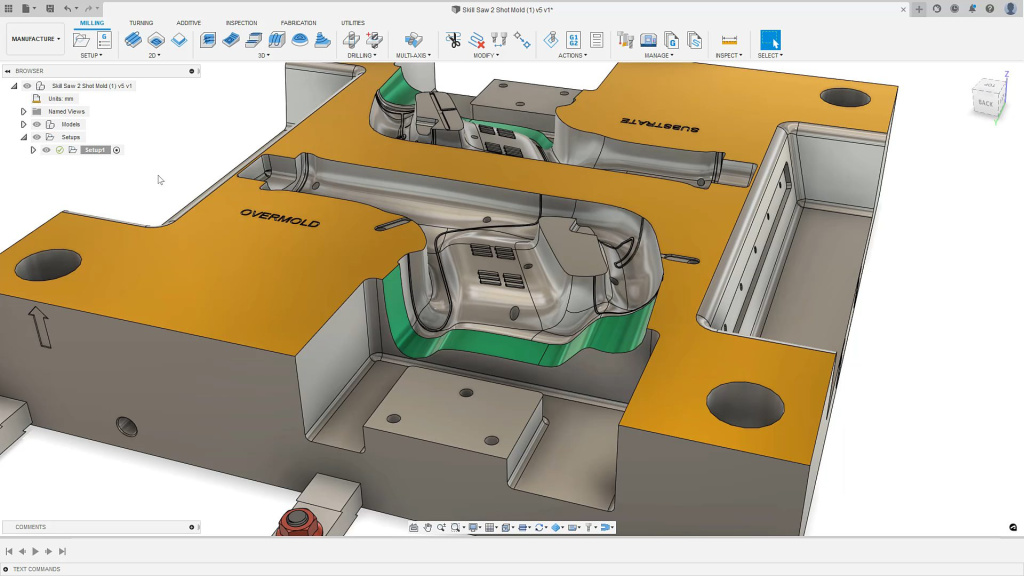
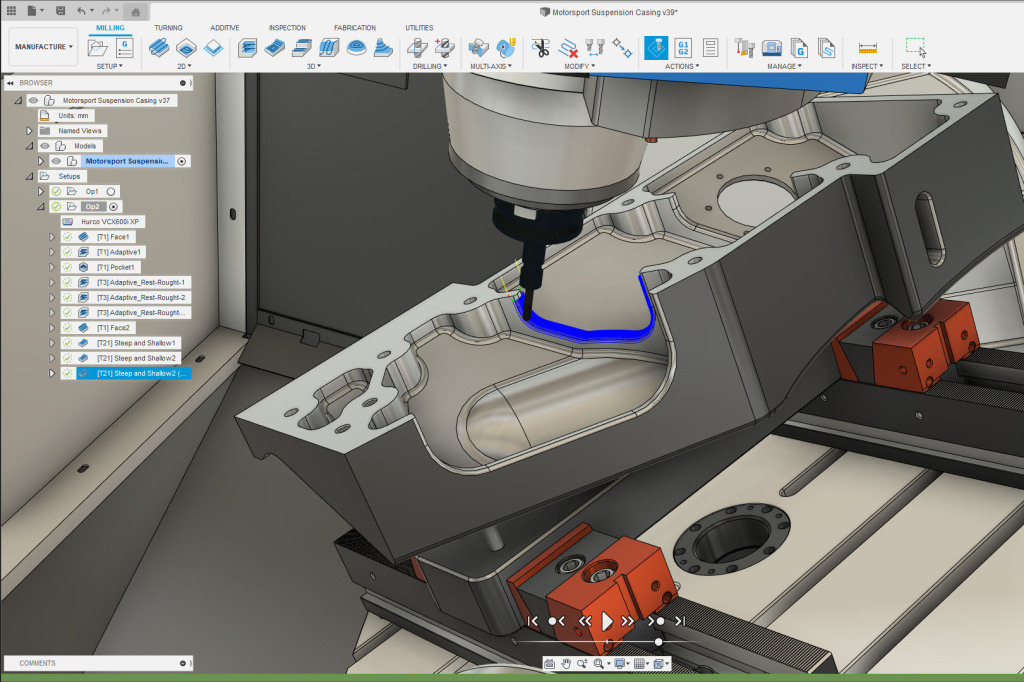
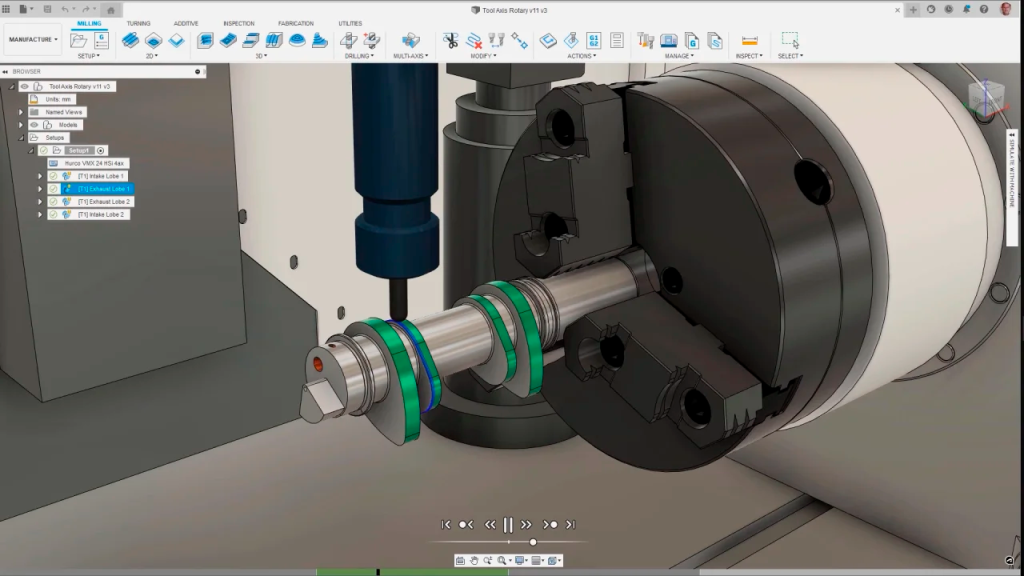
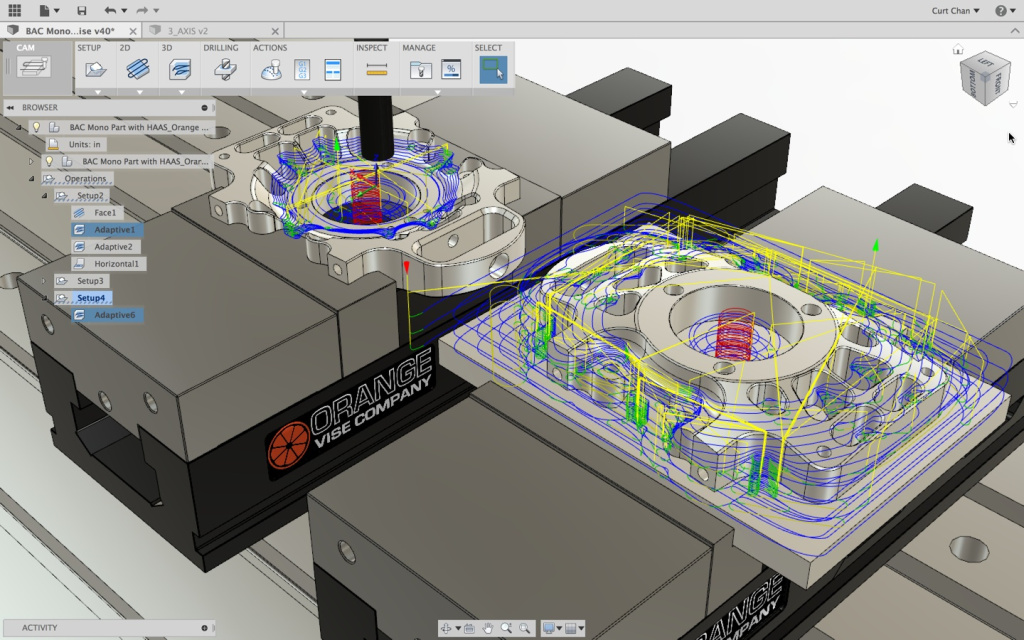
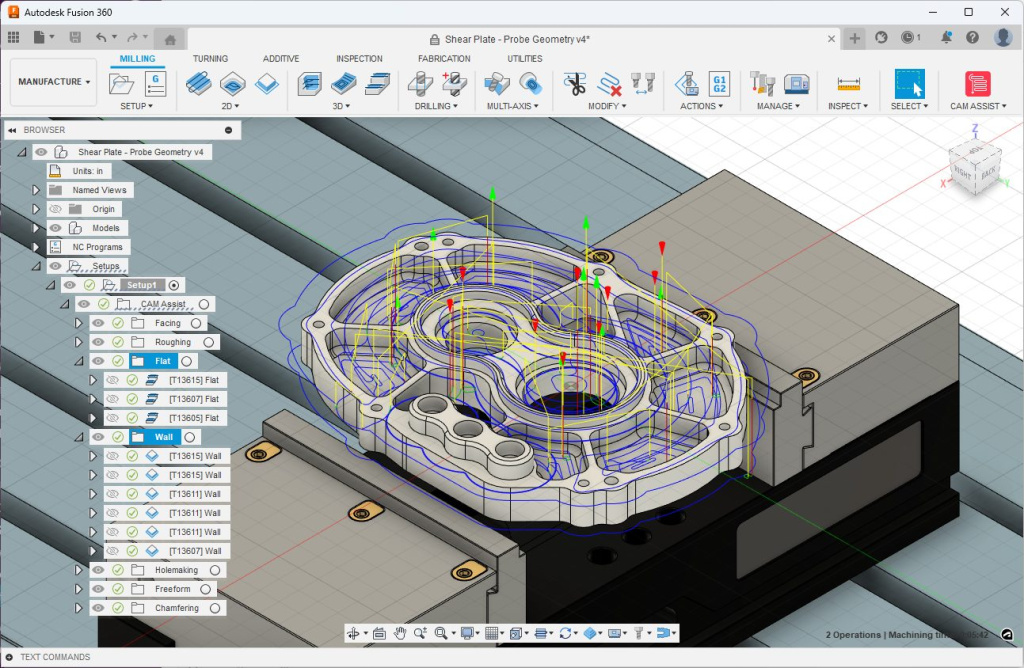
Fusion 360’s CAM features enable manufacturers to generate toolpaths for CNC machining, milling, and even cutting for fabrication of parts. This has made the software popular with machine shops and fabrication firms, as well as in industrial manufacturing settings where prototyping and tooling are routine. In addition, Fusion 360 supports additive manufacturing (3D printing) workflows and even includes a dedicated utility for preparing models for 3D printers. This capability is tapped by industries like medical device design and custom prosthetics, where 3D printing is often used, and by consumer product designers who rapidly prototype using printed models.
In recent years, Fusion 360 expanded into electronics design, incorporating PCB layout and circuit schematics. This means electronic product manufacturers and hobbyists can design a product’s mechanical enclosure and its circuit board in the same software environment – a rare level of integration that serves industries like consumer electronics, IoT device development, and robotics. For example, a hardware startup can use Fusion 360 to design a gadget’s circuit board and the plastic casing together, ensuring they fit perfectly without hopping between separate ECAD and MCAD tools.
The software’s flexibility also makes it a fixture in education and academia. Universities and vocational programs around the world teach Fusion 360 in engineering and design courses, given that it spans multiple disciplines (mechanical design, simulation, CAM, etc.) in one platform. Autodesk offers free educational licenses, and as of recent counts, millions of students and educators have used Fusion 360 for training in CAD/CAM skills. The maker community, including hobbyist engineers, DIY fabricators, and small startups, has also gravitated toward Fusion 360. Its affordable (or free) entry point and comprehensive toolset have enabled individual makers to design things like drones, furniture, jewelry, and electronic gadgets in their home workshops. In fact, Autodesk notes that Fusion 360 is widely used in maker spaces and by entrepreneurial hardware startups looking to bring innovative products to market without investing in multiple expensive software packages.
Industries benefiting from Fusion 360 often cite the efficiency of having design, engineering, and manufacturing preparation in one workflow. Automotive suppliers have used it for custom jigs and components; aerospace contractors for UAV parts; consumer product companies for iterative prototyping; and engineering firms for small-scale manufacturing runs. The cloud-based collaboration features also mean that teams spread across different locations can work together. A mechanical engineer in one city and a manufacturing engineer in another can jointly develop a design in Fusion 360, share feedback, and hand off directly to fabrication. This collaborative capability proved especially valuable during the COVID-19 pandemic when remote work became the norm in many design and engineering teams. Fusion 360’s user base today ranges from large corporations to one-person startups, reflecting its scalable utility across industry sizes.
Origins and Development History
Fusion 360’s story begins in the early 2010s, amid a broader industry shift toward cloud computing and integrated workflows. Prior to Fusion 360, design and manufacturing processes were often fragmented: a designer might use one program for CAD, export to another for simulation, and then hand off files to a CAM program for manufacturing instructions. Recognizing these pain points, Autodesk set out to build a unified platform that could cover the entire product development cycle.
The genesis of Fusion 360 can be traced to an Autodesk tech demo called Inventor Fusion released in 2009. Inventor Fusion was an experimental add-on to Autodesk’s Inventor software, showcasing new “direct modeling” techniques and hinting at more integrated design paradigms. By 2012, Autodesk’s leadership – notably then-CEO Carl Bass – saw an opportunity to leap ahead by leveraging cloud technology. Bass, along with a team of visionary engineers, embarked on an ambitious project to create a next-generation design tool that would break down the traditional silos in product development. Their goal was to seamlessly merge CAD, CAM, and CAE capabilities, and to harness the power of cloud computing for collaboration and computational heavy lifting. This effort culminated in what became Autodesk Fusion 360. “With Fusion 360 we want to be able to use the best tools for the job,” Carl Bass said, emphasizing that the platform was meant to adapt to many tasks without forcing users into one rigid workflow.
Autodesk first unveiled Fusion 360 to the public in 2013. The official launch came on September 24, 2013, positioning Fusion 360 as one of the industry’s first cloud-based 3D design and manufacturing tools. Early on, it incorporated many features from the Inventor Fusion prototype and introduced a cloud database for storing models, version control for tracking design iterations, and collaboration tools for team design reviews. Within a few years, Autodesk began steadily evolving Fusion 360 through frequent updates (often monthly), reflecting the software’s cloud-based development model that allowed continuous improvement. Users saw rapid addition of features: support for complex surfacing and free-form sculpting (thanks in part to Autodesk’s prior acquisition of the T-Splines technology for organic modeling), expanded simulation options, and a fully integrated CAM module for generating machine toolpaths. Notably, Autodesk had acquired a CAM software company called HSMWorks in 2012; that technology was integrated into both Inventor and Fusion 360, giving Fusion a powerful manufacturing engine from the start.
By the mid-2010s, Fusion 360 matured into a comprehensive toolkit. In 2015, it introduced cloud-based simulation capabilities, and in 2016 Autodesk added a groundbreaking generative design feature in beta form – an AI-driven tool that automatically creates optimal design geometries based on user-defined goals. This capability, derived from Autodesk’s research projects (and bolstered by the company’s 2014 acquisition of generative design startup Within Technologies), set Fusion 360 apart as a forward-looking platform. “I think, not since the industrial revolution has there been such a broad and radical rethinking of the way that we make things,” Carl Bass remarked around this time, underscoring how technologies like cloud collaboration and generative design were changing the game. Fusion 360 was at the forefront of that change, blending these innovations into everyday design software.
Over time, Autodesk has also consolidated other products into Fusion 360 to streamline its offerings. For example, the company had a line of hobbyist 3D modeling tools under the “123D” brand; in 2017, the Slicer tool from Autodesk 123D was folded into Fusion 360 as an integrated feature for preparing models for laser cutting or slicing for 3D printing. Similarly, Autodesk’s mesh editing software Meshmixer was discontinued in 2021 after its core functionality for manipulating mesh models was built into Fusion 360. Another significant enhancement came with Autodesk’s push into electronics: after Autodesk acquired the EAGLE PCB design software in 2016, it worked to merge those electronic design capabilities into Fusion. By 2018–2019, Fusion 360 offered an Electronics workspace, allowing PCB schematics and layouts to be done natively. In fact, as of January 2020, Autodesk bundled EAGLE’s functionality fully into Fusion 360, and later announced it would cease selling standalone EAGLE by 2026 in favor of the integrated Fusion electronics experience.
Throughout its history, Fusion 360’s evolution has also been influenced by broader market competition and user feedback. The emergence of rival cloud-CAD platforms (such as Onshape, launched by ex-SolidWorks founders in 2015) spurred Autodesk to accelerate Fusion’s development and adoption. Autodesk aggressively courted start-ups and small businesses by offering Fusion 360 free to early-stage companies (under a startup license) and keeping the personal-use license free for non-commercial projects. This helped boost its user base and create industry momentum. By the late 2010s, Fusion 360 was gaining recognition as a viable alternative to established, purely desktop-based CAD systems.
One testament to Fusion 360’s growth has been Autodesk’s own reports of its user numbers. Within a few years of launch, hundreds of thousands of users had signed up. Autodesk has noted in marketing materials that “over 1.2 million users” migrated to Fusion 360 at one point, and more recently the company stated that more than 4.6 million usershave chosen Fusion for their design and engineering needs. Many of these are professional users, and on top of that, Autodesk counts millions of educational users through its academic outreach. This rapid adoption reflects how the product’s continuous improvements and approachable pricing attracted a wide audience.
A recent milestone in Fusion 360’s history occurred in January 2024, when Autodesk officially rebranded the product. The “360” was dropped from its name, and the software is now often referred to simply as Autodesk Fusion. This branding update, quietly rolled out via a product update and new licensing terms, was accompanied by some packaging and pricing changes. (Notably, Autodesk phased out the free startup license around that time, transitioning small-business users to a discounted paid plan.) The rebrand signaled Autodesk’s intent to position Fusion as a core platform rather than an experimental product – the simplified name “Autodesk Fusion” aligns with it being a central hub in Autodesk’s ecosystem for product design and manufacturing. Despite the name tweak, long-time users still colloquially call it Fusion 360, and the vision of integrating the full 360-degree product development cycle remains at the heart of the software.
From its origins as an idea to unify design tools, through a decade of iterative enhancements, Fusion 360’s development has mirrored the changing needs of engineers and designers. It began as an ambitious project led by Autodesk’s internal innovators and, through consistent investment and user-driven updates, has grown into one of the industry’s leading platforms for end-to-end product development in the cloud.
Business Performance and Market Presence
As a product, Fusion 360 plays a strategic role in Autodesk’s business as the company adapts to modern, cloud-centric software models. Autodesk does not typically break out revenue by individual product publicly, but Fusion 360 is part of Autodesk’s broader Product Design & Manufacturing segment. This segment, which includes other manufacturing software and services, has been a growth focus for the company. Autodesk’s overall financial performance provides context: in its 2025 fiscal year, Autodesk’s revenues reached roughly $6.13 billion, continuing an upward trend as the firm transitioned fully to subscription licensing. Within that, subscriptions to products like Fusion 360 have been a driver of recurring revenue. In earnings calls, Autodesk executives have cited Fusion 360’s increasing subscriber base as evidence of successful uptake. For instance, by mid-2022, Fusion 360 surpassed 200,000 paying subscribers, according to Autodesk’s investor disclosures – a notable achievement considering many users started on free licenses and later converted to paid subscriptions as they grew into professional use.
Beyond direct revenue, Fusion 360 has been pivotal for Autodesk in attracting new generations of users. By offering low-cost (or free) access to students, makers, and startups, Autodesk uses Fusion 360 as an on-ramp to its ecosystem. This strategy expands the user base and later funnels some of those users into professional subscriptions of Fusion or other Autodesk products. As of 2022, Autodesk announced that over 5 million students and educators had used Fusion 360 through its education community, highlighting the software’s broad reach in academia. These numbers contribute to Autodesk’s claim of serving millions of users in over 100 countries, solidifying its global market presence.
In terms of market positioning, Fusion 360 competes in the CAD/CAM software market against longtime industry stalwarts like Dassault Systèmes’ SOLIDWORKS, PTC’s Onshape (cloud CAD), Siemens NX, and others. Autodesk has positioned Fusion 360 as a more accessible, modern alternative – frequently noting that it is “trusted by millions”and highlighting well-known customer success stories. For example, Fusion 360 has been used by automotive racing teams (like those designing custom car components), consumer product innovators (such as toy manufacturers experimenting with generative design for new products), and precision engineering firms. Autodesk’s marketing often references such case studies to show that Fusion 360 can handle complex, real-world projects that historically might have required a suite of separate specialized tools.
Geographically, Autodesk markets Fusion 360 worldwide. The product is available in multiple languages and is sold both directly online and through resellers. Regions with strong manufacturing sectors – North America, Europe, and parts of Asia – represent major user concentrations. Autodesk has also tailored certain features to industry-specific needs (for instance, advanced 5-axis machining capabilities for high-end manufacturing, or sheet metal design tools for fabrication industries) to broaden Fusion’s appeal to various sectors. The continuous addition of capabilities has helped Autodesk expand Fusion 360’s footprint from initially targeting small startups to now being used even in larger enterprises as part of their workflow for certain projects.
From a business performance standpoint, Autodesk’s move to cloud and subscriptions (with Fusion 360 as a prime example) has been well-received by the market in recent years. The company’s stock and market capitalization have grown as investors see recurring revenue stability. Internally, Autodesk measures Fusion 360’s success not just in subscription counts but in engagement: how much it’s used in production by companies and how it fosters attachment to the Autodesk brand. The software has won industry awards for innovation and has been cited as one of Autodesk’s fastest-growing products in the manufacturing domain. Executives have highlighted Fusion 360 in keynote addresses as a proof point of Autodesk’s successful cloud transition.
An interesting aspect of Fusion 360’s business model is the ecosystem of extensions and app store plugins around it. Autodesk sells specialized Fusion Extensions (add-on modules) for extra cost, covering niche needs like advanced simulation, generative design, or machining strategies. This creates additional revenue streams and allows serious users to extend the platform’s capabilities on demand. Moreover, a small industry of third-party developers offers plugins and content for Fusion 360 through the Autodesk App Store, indicating a growing community and platform effect similar to what AutoCAD and others enjoyed.
In summary, Fusion 360 has strengthened Autodesk’s competitive position in the CAD/CAM market by capturing a broad user base and generating steady subscription income. While exact revenue figures for the product are not public, its impact is evident in Autodesk’s user growth metrics and its prominence in the company’s product portfolio. The push towards cloud solutions like Fusion 360 is a cornerstone of Autodesk’s business strategy for the future, aiming to lock in long-term subscribers and fend off competition with a continuously improving, all-in-one offering.
Acquisitions, Partnerships, and Strategic Moves
The development of Fusion 360 has been intertwined with Autodesk’s strategic acquisitions and partnerships over the past decade. Autodesk has actively acquired companies and technologies that bolster Fusion 360’s capabilities, while also forging alliances to enhance its ecosystem. These moves shed light on how Autodesk has nurtured Fusion 360 and its related services.
One of the earliest and most relevant acquisitions was HSMWorks in 2012. HSMWorks was a CAM software developer known for its high-efficiency machining toolpath technology. Autodesk’s acquisition of HSMWorks provided the CAM kernel that later became integral to Fusion 360’s manufacturing module. It ensured that Fusion’s CAM features were industry-grade from the start, giving users the ability to generate CNC milling and turning programs comparable to those from more established CAM packages. This was a clear strategic play to appeal to the manufacturing community.
In the years following Fusion 360’s launch, Autodesk continued to fill gaps in its product by buying specialized tools. A notable example is the 2015 acquisition of Netfabb, a German company specializing in additive manufacturing and 3D printing software. Autodesk initially kept Netfabb as a separate product for advanced 3D print preparation and lattice design. But by 2021, Autodesk merged Netfabb’s functionality into Fusion 360, particularly to strengthen Fusion’s additive manufacturing and generative design offerings. This allowed Fusion users to access sophisticated lattice generation and metal additive manufacturing setups within the familiar Fusion environment, rather than using a separate program.
Another strategic acquisition was that of CadSoft EAGLE in June 2016, as mentioned earlier. EAGLE was a popular PCB design software. Autodesk’s purchase of EAGLE signaled an ambition to incorporate electronics design into its mechanical design toolkit. Over a few years, Autodesk tightly integrated EAGLE’s PCB capabilities into Fusion 360, eventually branding it as Fusion Electronics. This move reflected the industry trend toward mechatronics – combining mechanical and electronic design – and positioned Fusion 360 as one of the only platforms where designers can co-develop hardware circuits and enclosures together. (By 2023, Autodesk went so far as to cease selling EAGLE standalone, underscoring that Fusion 360 is now the primary vehicle for those capabilities.)
Autodesk has also acquired or integrated several smaller tools that have enhanced Fusion 360’s feature set. The company’s 2014 purchase of Within Technologies, an AI-driven generative design firm, indirectly fed into Fusion’s generative design tool launched later. The mesh modeling tool Meshmixer (acquired 2011) and the 3D printing-oriented Spark technologies were also absorbed. Additionally, Autodesk bought the massive CAM software company Delcamin 2014. While Delcam’s high-end machining software (like PowerMILL) remains separate for now, the expertise from that acquisition influenced Autodesk’s approach to manufacturing solutions in Fusion and beyond.
On the partnerships front, Autodesk realized that collaborating with other industry leaders could expand Fusion 360’s capabilities beyond what Autodesk alone provides. One significant partnership is with Ansys, a leader in engineering simulation. Autodesk and Ansys formed a strategic alliance to bring Ansys’s advanced simulation tools into Fusion 360. In practice, this led to the creation of a Fusion 360 Signal Integrity Extension powered by Ansys technology, allowing PCB designers using Fusion to run high-end electromagnetic analyses on their board designs. This partnership meant users could test for issues like signal interference and integrity within Fusion, reducing the need to export data to a separate Ansys tool. Autodesk described this alliance as delivering integrated PCB and enclosure analysis that improves product quality while cutting down design cycle time. Such a collaboration is mutually beneficial: Autodesk enhances Fusion 360’s appeal to electronics-heavy industries, and Ansys reaches Autodesk’s broad user base.
Another partnership enhancing Fusion 360’s ecosystem is with Xometry, a large on-demand manufacturing network. Fusion 360 integrates Xometry’s instant quoting app, which allows users to get immediate price and lead time estimates for manufacturing a part directly inside the Fusion interface. Designers can click a button to see how much it would cost to have their 3D model CNC machined or 3D printed by Xometry’s network of suppliers, and even order the part from within Fusion. This type of partnership connects design to manufacturing execution in a seamless way, reflecting Autodesk’s vision of a unified workflow from “design to make.” It adds real-world practicality: an engineer can design a part and immediately understand manufacturing feasibility and cost, then proceed to ordering without leaving the software.
Autodesk has similarly partnered with sustainability-focused firms like Makersite, integrating lifecycle analysis tools so that Fusion 360 users can assess things like material cost, carbon footprint, and compliance of their designs. And within its own products, Autodesk integrated Fusion 360 with its cloud data management (Autodesk Vault/Fusion Team) and PLM systems. In 2021, Autodesk acquired Upchain, a cloud-based product lifecycle management (PLM) company, with the vision of connecting Fusion’s design data to broader supply chain and lifecycle workflows. “Upchain’s cloud-based PLM and PDM will unite the ecosystem of every type of app—ours and others,” said Autodesk CEO Andrew Anagnost at the time, linking the move to Fusion’s multidisciplinary approach. “If you look at Fusion, it’s a multi-disciplinary design environment supporting CAD, CAM, CAE, and generative design… Upchain allows us to extend that process end-to-end… the data management piece becomes invisible.” This quote highlights Autodesk’s strategy of breaking down barriers between design, engineering, and manufacturing data – a philosophy at the core of Fusion 360’s integrations.
In addition to acquisitions and partnerships aimed at technology, Autodesk has undertaken community and educational initiatives around Fusion 360 as strategic moves. The company hosts an annual Autodesk University conference where Fusion 360 often features prominently in keynotes and training sessions. Autodesk also launched the Fusion 360 Academy (and various online certification programs) to cultivate skilled users. These efforts ensure a pipeline of professionals proficient in Fusion 360, which in turn feeds the product’s adoption in industry.
Overall, Autodesk’s mergers and collaborations have significantly shaped Fusion 360’s trajectory. By purchasing key technologies and teaming up with domain experts, Autodesk accelerated Fusion 360’s development into a comprehensive platform. The product today is the sum of many parts: core innovations developed in-house, plus integrated elements from acquired tools (CAM, PCB, additive manufacturing) and specialized features boosted by partners (like Ansys for simulation and cloud services for collaboration). This strategy of “buy, build, and partner” has kept Fusion 360 at the cutting edge of design and engineering software.
Technical Innovations and Distinctive Features
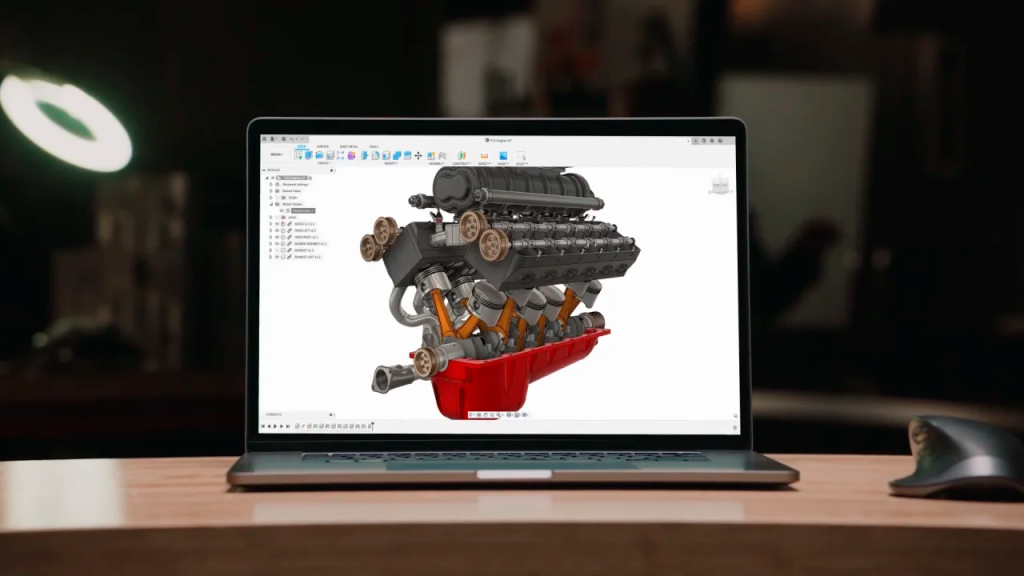
Fusion 360’s rapid rise in popularity can be attributed to several technical innovations and distinctive features that set it apart from traditional CAD/CAM software. At its heart, Fusion 360 was designed as an all-in-one solution, and this is evident in the breadth of functionality it offers natively. Users can sketch out a concept, model it in 3D, run simulations to test its behavior, render realistic images of it, and then generate toolpaths to physically manufacture it – all without leaving the Fusion 360 environment. This holistic approach to product development has been one of Fusion’s greatest strengths.
Cloud Collaboration: One of the signature features of Fusion 360 is its cloud-centric architecture. All design files in Fusion 360 are saved to Autodesk’s cloud (with offline caching available), which means that the single source of truthfor a project is accessible anywhere by authorized team members. This enables real-time collaboration in a way desktop-bound CAD tools historically couldn’t match. Multiple team members can work on different components of an assembly concurrently, or a manager can review a live design file from a web browser and leave comments. Fusion 360’s version control automatically records changes and allows users to roll back to earlier iterations or branch off new design ideas. By providing built-in collaboration and data management, Fusion eliminates the need for separate PDM (Product Data Management) systems for many small teams. As Carl Bass described it, “Fusion provides the context to understand what is going on in your project and gives you access to the interactions of all the people involved.” In practice, this means every design change, comment, or simulation result is part of a unified project timeline visible to the whole team – a stark contrast to emailing files back and forth.
Integrated CAD/CAM/CAE: Technically, Fusion 360’s integration of CAD, CAM, and CAE is its defining trait. On the CAD side, Fusion offers a range of modeling techniques: parametric modeling (with a feature history timeline and constraints, similar to parametric CAD like SolidWorks), direct modeling (allowing push-pull edits without history, useful for imported models), freeform sculpting (using T-Splines technology to create smooth organic shapes by manipulating a mesh-like cage), and surface modeling for complex curvature. This hybrid modeling approach means designers aren’t locked into one modeling paradigm – they can choose the best method for the task. Moving to CAE, Fusion includes simulation tools for finite element analysis (FEA), allowing stress, strain, and thermal analysis of parts. Users can apply loads and constraints and let Fusion compute how a model will deform or whether it will fail under pressure. There are also modal analyses (to check vibration modes) and even basic computational fluid dynamics (CFD) via an add-in, useful for electronics cooling simulations. While these built-in solvers may not be as advanced as dedicated simulation software, they cover a large portion of everyday engineering needs without leaving Fusion. On the CAM side, Fusion 360 shines with its manufacturing workspace: it can generate toolpaths for milling (2-axis, 3-axis, up to 5-axis machining), turning (lathe operations), cutting (laser or waterjet paths), and even additive processes. Hundreds of post-processor configurations for CNC machines are included, so users can output G-code tailored to their specific equipment. The tight integration means if a design change is made in CAD, the CAM toolpaths update to reflect the new geometry, which reduces errors and saves time in the iterative process between design and manufacturing.
Generative Design and AI: Fusion 360 was one of the first widely available CAD tools to offer generative designdirectly to users. Generative design, powered by cloud computing and AI algorithms, allows engineers to specify performance criteria (for example, “minimize weight but withstand a 500N load, and keep these areas clear”) and then have the software automatically produce a range of design alternatives that meet those criteria. Fusion 360’s generative design module will create dozens or even hundreds of different geometry solutions – often organic, lattice-like shapes – that a human designer might not have conceived on their own. This technology leverages the cloud to perform intensive calculations in parallel, something that wasn’t feasible on a normal desktop with older software. The result is a set of highly optimized designs that can be further refined or directly manufactured (especially via 3D printing or 5-axis milling). Autodesk has highlighted cases like automotive companies using Fusion’s generative design to create lightweight car components that maintain strength while reducing material usage. This capability demonstrates Fusion 360’s innovative edge: it’s not just a toolbox for executing a designer’s ideas, but also a co-creator, suggesting new solutions through AI. Alongside generative design, Autodesk has infused other AI-driven features into Fusion, such as Automated Modeling (which can suggest ways to continue a partially complete design) and Drawing automation(which leverages machine learning to generate 2D technical drawings from a 3D model with minimal user input).
Extensibility and Customization: Another strength of Fusion 360 is how extensible it is despite being cloud-based. Autodesk provides APIs and scripting abilities (using Python and JavaScript) so that users can write custom add-ons or automate tasks. This means power users and companies can tailor Fusion to their workflows – whether it’s a script to automate the design of a family of parts, or a plugin that connects Fusion to an external database. Additionally, Autodesk sells Fusion Extensions as mentioned, which are essentially optional feature packs. For example, the Machining Extension unlocks advanced 5-axis toolpath strategies and automated drilling routines; the Generative Design Extension allows unlimited runs of generative studies; the Simulation Extension adds more advanced study types, etc. This modular approach is a technical and business innovation: users get a core set of features in Fusion 360, and those who need more can opt-in to the extensions rather than Autodesk cluttering the base interface for everyone. It allows Fusion to cater both to beginners (with a simpler interface) and advanced users (who activate the extra tools) in the same platform.
Cross-Platform User Experience: From a usability standpoint, Fusion 360’s cross-platform nature and modern user interface have been distinguishing factors. Unlike some legacy CAD programs that only run on Windows, Fusion 360 was built to run on Windows and Mac, and parts of it even run in a web browser. This broad accessibility aligns with Autodesk’s cloud philosophy – users can log in and access their designs from almost any device. The software’s interface is relatively approachable, with contextual menus and a timeline that visually represents model features. Autodesk invested in making Fusion more discoverable for newcomers, knowing that many hobbyists and students would pick it up. Tutorials, in-app tips, and an extensive online community forum support this ease-of-use focus. The ability to share a design via a web link (for anyone to view in a browser 3D viewer) is a small but potent feature for communication; it means a client or a non-technical stakeholder can rotate and comment on a 3D model without installing any software. These kinds of cloud-enabled conveniences distinguish Fusion from older desktop-bound workflows.
Continuous Updates: A less visible but important innovation is Fusion 360’s continuous update cycle. Traditional professional CAD tools often had annual versions or service packs. Fusion, being cloud-connected, updates on a monthly (or even more frequent) cadence. Users automatically get the latest features and fixes, which means the software is continually improving without big disruptive upgrades. Autodesk uses analytics and feedback to decide on new features and often rolls them out gradually. This agile development approach, common in consumer software, was novel in the CAD world and has allowed Fusion 360 to rapidly incorporate emerging tech like new machine learning tools or support for the latest 3D printers. It also means that when industry standards or file formats update (say a new version of STEP or DXF format), Fusion can adapt more quickly.
In summary, Fusion 360’s technical DNA is all about integration, automation, and accessibility. Its key innovations – cloud collaboration, unified CAD/CAM/CAE, generative design, and a flexible, update-rich platform – have helped democratize high-end design and manufacturing capabilities. While no software is without limits, Fusion 360’s balance of power and simplicity, underpinned by Autodesk’s continuous improvements, has made advanced design technology available to a broader audience than ever before.
Leadership Vision and Quotes
Autodesk’s leadership has frequently spoken about Fusion 360 in the context of the company’s vision for the future of design and manufacturing. Their public statements highlight how central Fusion 360 is to Autodesk’s strategy and the broader trends in technology. Here are a few notable insights and quotes from Autodesk executives, which shed light on Fusion 360’s importance and the company’s aims:
Andrew Anagnost – CEO of Autodesk: Since taking the helm of Autodesk in 2017, Andrew Anagnost has been a champion of cloud solutions like Fusion 360. He often emphasizes breaking down silos between disciplines. In 2021, when Autodesk acquired the PLM company Upchain, Anagnost explicitly linked that move to Fusion’s mission, saying: “If you look at Fusion, it’s a multi-disciplinary design environment… supporting CAD, CAM, CAE, and generative design and simulation that all work together seamlessly. Upchain allows us to extend that process end-to-end, where the user doesn’t even have to think about it and the data management piece becomes invisible.” In this remark, Anagnost underscores Autodesk’s vision of Fusion 360 as more than just a CAD tool – it’s the centerpiece of a connected product development ecosystem where design data flows unimpeded from concept to production. He has also spoken about how technologies in Fusion (like generative design and automation) are emblematic of the “future of making things,” a phrase Autodesk uses to describe the next industrial evolution. In another context, addressing how cloud and AI are changing design, Anagnost noted that what was once considered normal in design software has completely changed with cloud connectivity: teams can collaborate globally and leverage AI-driven tools – a nod to what Fusion 360 enables.
Carl Bass – Former CEO of Autodesk: Carl Bass led Autodesk during the conception and early years of Fusion 360, and his vision was instrumental in its creation. Bass, himself a hands-on maker and software innovator, often spoke about the need to modernize CAD and embrace the cloud. At Autodesk University 2014, as Fusion 360 was gaining traction, Bass highlighted the shifting paradigm: “In this new world, collaboration and design management are built into everything. It’s not just another task layered on top,” he said, which clearly reflects Fusion’s integrated approach. He also pointed out, “The cloud provides a natural hub for you to collaborate.” Another Bass quote from that era: “Fusion 360 helps break down the barriers to entry and forge innovative pathways to success by helping smaller firms… work collaboratively together.” This was a recognition that Fusion 360 was opening doors for startups and small teams by providing enterprise-grade tools without the traditional cost and IT overhead. Bass’s enthusiasm for democratizing design tools was a driving force – he famously even acknowledged competitors like Onshape in a blog post, saying their emergence validated Autodesk’s belief in cloud CAD. Bass’s legacy with Fusion 360 is the ethos that high-end design capabilities shouldn’t be exclusive to big corporations; they should be available to anyone with an idea and an internet connection.
Jeff Kowalski – Former CTO of Autodesk: Jeff Kowalski, as Chief Technology Officer, often articulated Autodesk’s long-term vision around emerging tech and how it feeds into products like Fusion. He described Autodesk’s mission in the context of bold projects and technology convergence. “As a company, our mission is to help imagine, design and create a better world,” Kowalski wrote in 2017, reinforcing the idea that tools like Fusion 360 are not just for efficiency, but for enabling innovation that can have large societal impacts. Under Kowalski’s tenure, Autodesk invested heavily in AI and generative design, much of which materialized first in Fusion 360. He believed in looking at design through new lenses – once saying that Autodesk was “starting to look at design itself through the lens of nature,” which presaged the organic, nature-mimicking results of generative design in Fusion. His perspective as a technology chief ensured that Fusion 360 was on the frontier of applying cloud computing and AI to everyday engineering tasks.
Andrew Anagnost on Company Mission: Anagnost and other leaders frequently tie Fusion 360’s purpose back to Autodesk’s broader company mission. Autodesk’s mantra of empowering innovators everywhere comes through in their commentary. In interviews and social media, Anagnost has echoed that “Our mission has always been to empower those who imagine, design, and make a better world.” Fusion 360 is often cited as a prime example of that mission in action: by lowering barriers to advanced design and manufacturing, it empowers a new generation of creators. During product keynotes, Anagnost has also remarked on how Fusion 360 embodies the convergence of industries – for example, how it unites mechanical engineering with electronics and software, reflecting how modern products are developed. This aligns with Autodesk’s view that the lines between disciplines (like engineering, manufacturing, and media) are blurring, and their software needs to facilitate that convergence.
Other Autodesk Executives: Leaders such as Stephen Hooper, Vice President and General Manager of Autodesk’s Fusion 360 product line, have provided insight into Fusion’s direction. Hooper has discussed how user feedback drives development, saying that Autodesk is continually “future-proofing” workflows by focusing on data and automation. In one statement, he emphasized Autodesk’s commitment to making data management seamless in Fusion, which ties into the quotes from Anagnost about invisible data management. Autodesk’s messaging from the top down consistently paints Fusion 360 as central to the “platform” strategy – moving away from a collection of disconnected tools to a unified platform for design and make. This is evidenced by Autodesk consolidating branding (like renaming Fusion Lifecycle to Fusion 360 Manage for PLM, and connecting it with Fusion 360 CAD).
In summary, Autodesk’s leadership views Fusion 360 as a manifestation of the company’s future-looking strategy. They talk about Fusion not just as a product, but as a linchpin of the evolving workflow in design and manufacturing. The recurring themes in their quotes – breaking silos, empowering new makers, leveraging cloud and AI, and connecting the entire product development process – all speak to Fusion 360’s role. These candid insights from Autodesk’s top executives reinforce why the company continues to invest heavily in Fusion 360. It’s not only a commercial product for Autodesk; it’s a statement about where Autodesk sees the industry heading and how the company plans to remain at the forefront.
Vendor: Autodesk