
OneCNC: An Australian Pioneer in CAD/CAM Software for Manufacturing
Overview of OneCNC CAD/CAM Software and Its Vendor
OneCNC is a computer-aided design and manufacturing (CAD/CAM) software suite tailored for programming CNC (computer numerical control) machine tools. Developed and sold by the Australian company OneCNC Pty Ltd (part of QARM Pty Ltd), OneCNC provides an all-in-one solution for designing mechanical parts and generating the toolpaths needed to manufacture them on CNC equipment. The software’s core philosophy emphasizes ease of use, affordability, and self-sufficiency for machinists and engineers. OneCNC integrates a capable CAD modeling system with powerful CAM functionalities, enabling users to design or import part models and then create efficient machining toolpaths – all within a single application.
Unlike many competitors, OneCNC is sold as a perpetual license (with no mandatory yearly maintenance fees), and the company offers multiple editions so that customers can purchase exactly the level of functionality they need without hidden costs. This business model has made OneCNC especially popular among small-to-medium machine shops and manufacturers worldwide who seek professional CNC programming tools with a low total cost of ownership.
From a vendor standpoint, OneCNC Pty Ltd is a privately held firm based near Brisbane, Australia, and remains under the original founding management. The company has kept product development and innovation in-house since its inception, rather than relying on third-party technology. (In fact, OneCNC notes that it pays no third-party royalties for CAM components – an indication that it develops its own machining kernels and algorithms internally.) This independence has allowed OneCNC to evolve a tightly integrated CAD/CAM system, often described as “the only CAM system you’ll need” due to its breadth of capabilities and integration. After nearly four decades in the industry, OneCNC’s software has grown into one of the most widely used CAD/CAM packages on the global market, with a reputation for reliable performance on standard Windows PCs. The company behind it, OneCNC (QARM Pty Ltd), remains relatively modest in size (with only a few dozen employees), yet it punches above its weight by serving a global user base through a network of international offices and partners.
Areas of Application in Manufacturing and Engineering
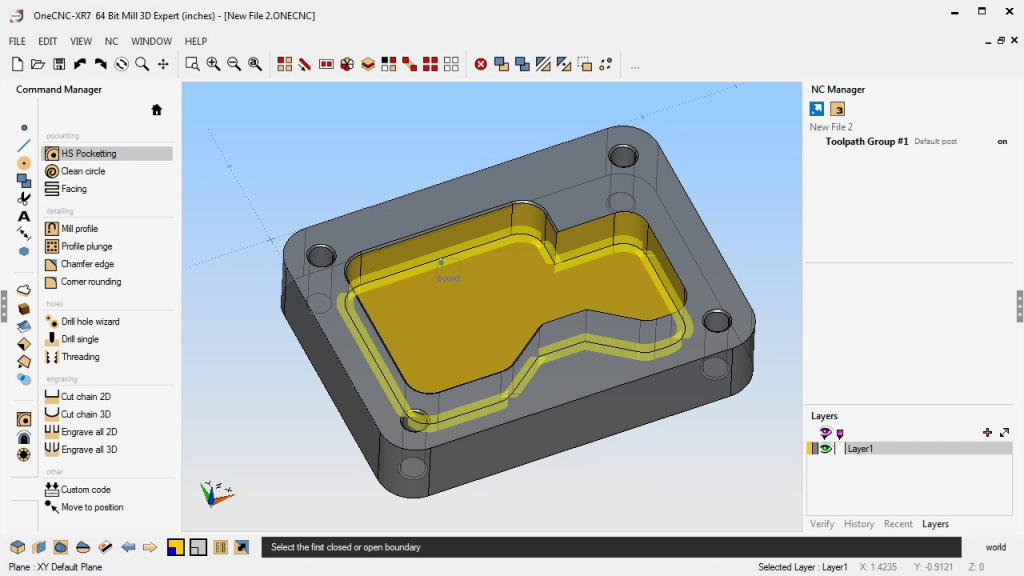
OneCNC’s primary application is in computer-aided manufacturing (CAM) for a broad range of industries that utilize CNC machinery. Users of OneCNC are typically machinists, CNC programmers, and engineers who need to create toolpath instructions for mills, lathes, and other machine tools. The software is versatile and is used in sectors including automotive, aerospace, medical device manufacturing, consumer products, and general mechanical fabrication. Whether it’s a small job shop producing custom parts or a larger manufacturer making production runs, OneCNC provides the tools to go from a design concept to a finished workpiece efficiently.
OneCNC’s product line is organized into specialized modules to address different machining processes:
- OneCNC Mill – a comprehensive milling module for programming CNC milling machines, covering everything from 2.5D machining (profiles, pockets, holes) up through complex 3D surfaces and even full 5-axis simultaneous machining. OneCNC Mill is commonly used for parts like molds, housings, and aerospace components. It includes high-speed machining strategies (branded as “Active Cut” technology) to maximize metal removal rates while preserving tool life and surface finish. According to the company, a user’s customer base with OneCNC Mill might range from automotive and aerospace suppliers to medical product manufacturers, reflecting the module’s broad applicability.
- OneCNC Lathe – a module dedicated to CNC turning and mill-turn centers. It enables programming of lathes for operations such as facing, OD/ID turning, grooving, threading, drilling, and part-off. OneCNC Lathe provides both basic and advanced turning cycles (with wizard-driven dialogs for ease of use) and can handle multi-axis mill-turn machines where milling and drilling operations are performed in the same setup. This makes it suitable for industries producing shafts, bushings, orthopedic implants, or any rotationally symmetric parts. Users appreciate that OneCNC Lathe, like the milling module, is integrated with design capabilities so they can sketch or modify part geometry directly within the CAM environment before generating toolpaths.
- OneCNC Profiler – a CAM solution for 2D cutting processes such as CNC laser cutting, plasma cutting, router machining, and waterjet profiling. Profiler allows users to lay out flat part geometries or import DXF files and then create toolpaths optimized for sheet cutting. It supports features like lead-in/lead-out, tool kerf compensation, and nesting of parts. This module is used in metal fabrication (e.g. cutting sheet metal parts or signage), as well as by woodworkers or composite fabricators using CNC routers. OneCNC Profiler can be customized to suit a variety of CNC cutting machines and is a fully standalone solution for profile cutting needs.
- OneCNC Wire EDM – specialized for programming wire EDM machines (electric discharge machining). Wire EDM is used to cut intricate shapes in hard materials using a thin electrified wire. OneCNC’s Wire EDM module provides geometry creation and toolpath generation for 2-axis and 4-axis (tapered) wire cutting operations. It includes features to define skim cuts, tag placements, and wire threading points, making it useful in tool and die making or any precision component manufacturing where wire EDM is required.
- OneCNC Solid Design – the CAD modeling component of OneCNC. Solid Design is an integrated solid modeling and drafting tool that comes with the CAM packages, allowing users to create or edit part geometries without needing a separate CAD program. It supports constructing 3D models, importing standard CAD file formats, and preparing drawings. OneCNC emphasizes that its CAD is “versatile, precise and efficient” while remaining easy to learn. Having a built-in CAD system is a strength of OneCNC, since users can iterate on design changes and immediately update toolpaths within the same software. This is especially beneficial for machinists who often need to tweak customer-provided designs or create jigs/fixtures on the fly.
OneCNC’s ease of use is frequently cited by its users. The interface features conversational wizards and a logical workflow that helps those who may not be formally trained in high-end CAD/CAM. For instance, in the turning module, selecting a threading operation will prompt a wizard guiding the user through thread specifications, and the software then automatically generates the toolpath. This approach reduces the learning curve, enabling small workshop owners or seasoned machinists to adopt the software quickly. As a result, OneCNC is often found in job shops and mid-sized manufacturing firms where the person programming the part might also be the one setting up and running the CNC machine – a scenario where simplicity and reliability of the CAM software are paramount.
History and Evolution of the Product
Origins (1980s): OneCNC’s story began in Brisbane, Australia in 1983, when it was first created by a company called QARM Pty Ltd. At that time, CAD/CAM technology was typically confined to expensive minicomputer systems or large CAD workstations available only to big corporations. QARM’s founders – led by Robert “Bob” Francis, who remains at the helm today – were pioneers in bringing CAM software to the personal computer platform. The initial version of OneCNC (as the product came to be named) was a 2D CAM system with basic CAD drawing tools, intended to let machinists design simple part geometries on an IBM-compatible PC and generate CNC toolpaths to drive machine tools.
This early focus on PC compatibility was groundbreaking; it meant that smaller machine shops could afford their own CAD/CAM capability without investing in mainframe-style systems. By the late 1980s, OneCNC had proven the viability of PC-based manufacturing software, and development continued steadily under QARM Pty Ltd’s guidance. (The name “OneCNC” reflects the idea of a single, unified system for all CNC programming needs – an “all-in-one” CNC solution on the PC.)
Growth and Windows Era (1990s): Through the 1990s, OneCNC evolved from a DOS-based application into a fully Windows-native software. As Microsoft Windows gained popularity in engineering offices, OneCNC transitioned to the GUI environment to leverage better graphics and usability. The development team (working out of Brisbane’s bayside suburb of Ormiston) continually expanded the software’s capabilities. By mid-1990s, OneCNC was no longer limited to simple 2D machining – it had grown to support 3-axis surface milling and included a more robust solid modeling kernel for CAD. OneCNC was still a relatively small player globally at this time, but it was building a loyal following in Australia and some early adopters overseas who valued its straightforward approach. The consistent progress is evident in the company’s own records: by 2006, OneCNC had undergone 17 years of continuous development and was on its 6th generation of Windows-based CAD/CAM releases. (These generations correspond to major version milestones; older users may recall product series names from the 90s, though the company later unified branding under the “XR” version scheme.)
“XR” Series and 21st Century (2000s–2010s): Around the early 2000s, OneCNC introduced the XR series (short for “X Release” or perhaps “Extended Release”) which denoted major upgrades to both the user interface and CAM engine. OneCNC XR versions brought the software to parity with many industry standards, adding features like full solids-based CAM operations, advanced 3D toolpaths, and multi-axis machining. The company’s commitment to R&D during this period kept OneCNC competitive even as CAD/CAM technology rapidly advanced. Notably, OneCNC does not rely on licensing third-party modeling kernels or toolpath algorithms – features like their simulation, tool libraries, and high-speed machining strategies are developed in-house. This allowed OneCNC to innovate on its own timeline. For example, the introduction of Active Cut high-speed machining in OneCNC provided users with a way to reduce roughing cycle times dramatically (sometimes by 70% or more) by maintaining consistent cutter engagement and smooth tool motion.
Through the 2000s, OneCNC expanded beyond milling and turning; modules like Profiler and Wire EDM were integrated into the suite to round out the product line. The user interface also received significant overhauls – one release introduced a modernized GUI with a Microsoft Office-like ribbon and tooltips to make the plethora of CAM options more navigable.
By the late 2000s, OneCNC’s reputation for blending power with simplicity was catching on in international markets. The company started to establish a direct presence in key regions (as detailed in the next section), and the software’s user base spread to Europe, Asia, and the Americas.
During this era, QARM Pty Ltd often branded the software simply as “OneCNC” and itself became known by the OneCNC name. Industry resources note that OneCNC was effectively founded by Bob Francis, and the product in its modern form really took off in the early 2000s as global marketing efforts began. In fact, some business directories cite 2001 as a founding or re-launch year – around when OneCNC opened its first overseas branch – even though the product’s lineage goes back to the 1980s.
Recent Developments (2010s–2020s): In the last decade, OneCNC has continued to iterate its XR series: XR5, XR6, XR7, and so on, each bringing enhancements and new features. For instance, OneCNC XR8 (around 2018) introduced updates like improved simulation graphics and additional multi-axis strategies, while the current OneCNC XR9(released in the early 2020s) is the latest generation as of 2025, featuring refined user controls and support for the newest Windows operating systems. The software’s evolution is deliberately paced – OneCNC’s team focuses on thoroughly testing features internally before public release, which sometimes means version number jumps (a fact explained by the company due to “intensive internal testing” phases between official releases). This cautious approach results in stable releases that users can trust on the shop floor.
OneCNC’s leadership has remained consistent through the years, providing continuity in vision. Founder Bob Francisserves as Managing Director of the OneCNC group and has been the driving force behind the product’s direction from day one. Under his stewardship, the company has stuck to a clear niche: delivering “world class CAD/CAM software, effective and affordable CNC solutions” without venturing into unrelated markets. Francis has often emphasized the importance of user feedback in guiding development. “In between those products, we offer many other input-driven enhancements,” Bob Francis said, stressing that many of OneCNC’s improvements are driven directly by user input and industry trends. By visiting customer sites and trade shows around the world, the OneCNC team gathers insight into what features CNC programmers and machinists need next. This close connection to the manufacturing community has shaped OneCNC’s evolution and kept it aligned with practical shop-floor requirements.
Global Business Footprint and Market Presence
Although OneCNC Pty Ltd started as a small Australian software outfit, it has grown into a global CAD/CAM provider with an impressive geographic footprint. Over the years, the company methodically set up international branches and partnerships to reach customers in their local markets. Today, OneCNC maintains offices or authorized distributors in over 20 countries across six continents, including major manufacturing regions such as North America, Europe, and Asia. This global network is quite expansive for a company of OneCNC’s size and is a testament to the product’s worldwide demand.
By the late 2000s, OneCNC had firmly established itself in Europe – for example, in 2009 the company opened a full sales, support, and training office in Lyon, France. This French office (headed by a local manager, Philippe Gabriel) was part of a broader European expansion, which also saw OneCNC offices in the United Kingdom, Germany, Italy, Denmark, Poland, Benelux (Netherlands), Sweden, and even Ireland. OneCNC’s presence in Europe enabled it to participate in prominent trade fairs and to serve the continent’s high-tech manufacturing base in native languages. “OneCNC Deutschland at METAV 2018” (a trade show in Düsseldorf) was a notable success – “This was a very good show for OneCNC; the quality of the customers was encouragingly high and we have succeeded in selling our OneCNC software too,” Bob Francis remarked in summary of that event. Such appearances not only drove sales but also increased brand recognition among European CNC professionals.
In North America, OneCNC established a direct office in the United States in the early-mid 2000s and later expanded with a second U.S. location. Currently, OneCNC USA operates out of Ohio, with an additional OneCNC USA West office in California. These offices handle sales and support for the U.S., Canada, and neighboring markets, competing in a landscape dominated by larger CAM vendors. Despite the fierce competition, OneCNC has carved out a niche particularly among job shops and small manufacturers who appreciate its cost-effectiveness. The company also has a presence in Mexico(OneCNC Mexico in Mexico City) and serves South America via partners, indicating coverage of the entire Americas region.
OneCNC’s reach into the Asia-Pacific region is notable as well. Besides its Australian headquarters, OneCNC has offices in China (Jiangsu Province), Taiwan, South Korea, Japan, India, Indonesia, and Thailand. Penetrating the East Asian market – where local CAM brands and other global players compete – suggests that OneCNC’s value proposition resonates there too. In particular, the Japanese and Korean offices allow OneCNC to support advanced manufacturing sectors (like automotive and electronics) in their native languages. Additionally, OneCNC is present in Turkey and South Africa, extending its coverage to the Middle East and African regions. All told, the company claims 22 global office locations staffed with trained technicians and training facilities to assist customers. This international framework means a OneCNC user in, say, Poland or Korea can access local support and training, which is often a key deciding factor for businesses when choosing a CAM system.
In terms of market positioning, OneCNC competes in the mid-range CAM software segment. The overall CAM software market has giants with large development teams and broad portfolios; however, OneCNC has thrived by focusing on a specific slice of the market – those customers who need robust capabilities but cannot justify the high cost or complexity of some enterprise CAM systems. OneCNC’s user community reportedly spans thousands of installations globally (exact numbers are proprietary since the company is private). Industry data suggests that companies using OneCNC tend to be small-to-medium enterprises (10–50 employees) with moderate revenues, which aligns with OneCNC’s target demographic of nimble manufacturers.
Revenue figures for OneCNC Pty Ltd are not publicly disclosed, but the business is sustained through software license sales, optional upgrades, and services like training. Notably, OneCNC does not depend on recurring maintenance contracts; customers receive support and updates without an annual fee, which is somewhat unique in the CAD/CAM world. This likely means OneCNC’s financial model relies on continuously attracting new customers and encouraging existing users to upgrade when major new versions (like XR8, XR9, etc.) are released. The company’s longevity (40+ years) and continued expansion imply that this model has been successful.
Geographically, OneCNC’s strongest markets include its home base in Australia/New Zealand, much of Europe, and North America, all of which have strong CNC manufacturing industries. It has also made inroads in Asia, particularly in regions with growing manufacturing sectors. For example, OneCNC’s presence in China caters to that country’s vast manufacturing base by providing an alternative CAM option that is fully localized. To support growth and R&D, OneCNC in recent years invested in expanding its development facilities. The company opened a new technical development center in Brisbane, described as a stand-alone, multi-million dollar investment designed to house around 20 software professionals in roles spanning development, support, and training. This modern development center includes a global support call center, on-site training rooms, and even a demonstration theater for showcasing the software to visiting clients. The upgrade underscores OneCNC’s commitment to staying technologically relevant and responsive to its worldwide client base from its Australian headquarters.
Beyond direct sales, OneCNC fosters a user community that adds to its global reach. There is an official OneCNC User Forum where customers from different countries share tips and seek help, effectively creating a peer network of OneCNC expertise. The company also runs the “OneCNC Users Club” as an online hub for collaboration among users and OneCNC support engineers around the world. This sense of community is further enhanced by OneCNC’s practice of engaging with educational institutions and skills competitions. In one instance, OneCNC donated licenses of its full software suite (Mill, Multi-Axis, Lathe, Wire EDM, Profiler, and CAD) to support a national skills championship event – providing young machinists and students access to professional-grade CAM tools. Such initiatives not only serve corporate social responsibility goals but also introduce OneCNC to the next generation of manufacturing professionals.
Partnerships, Collaborations, and Industry Relationships
Throughout its history, OneCNC has generally grown organically without mergers or acquisitions, and it has remained under the same ownership. The company has not been part of any major consolidation in the CAM industry – a space which has seen some competitors get acquired by larger CAD companies. Instead, OneCNC’s strategy has been to collaborate where it adds value, particularly in ensuring its software works well with other popular engineering tools.
One significant partnership is OneCNC’s relationship with Dassault Systèmes SOLIDWORKS, one of the world’s leading 3D CAD platforms. OneCNC CAD/CAM is an official Certified Solution Partner for SOLIDWORKS, meaning that OneCNC has met SolidWorks’ standards for interoperability. The OneCNC Solid Design module can directly import native SolidWorks part files (.sldprt) and assemblies, and the CAM side can then generate toolpaths on that geometry seamlessly. The company states that it works “closely with key CAD partners to ensure seamless interoperability,” and its SolidWorks certification is a tangible result of that effort.
In practical terms, this partnership allows a workflow where a design engineer using SolidWorks can hand off a model to a CAM programmer using OneCNC without loss of data or translation errors. OneCNC even promoted itself via SolidWorks’ partner catalog, highlighting “With unparalleled ease of use and sophisticated toolpath generation, it’s the only CAM system you’ll need for [SolidWorks] parts.”.
While SolidWorks is a notable partner, OneCNC also supports formats from other CAD systems (like Autodesk Inventor, PTC Creo, Rhino, etc.) through standard file types, ensuring that it can slot into various CAD environments.
On the machine tool side, OneCNC collaborates with CNC hardware manufacturers and local distributors to ensure its post-processors and machining strategies are tuned for those machines. For example, advanced multi-axis CNC machines (5-axis mills, mill-turn centers) often require specialized post-processing – OneCNC provides these through its support channels and works with customers to refine posts as needed. Although not a formal “merger” or “acquisition,” OneCNC’s proliferation of international offices often involved partnering with local entrepreneurs or CNC industry experts who became representatives of the OneCNC brand in their region. Many of the OneCNC offices (like those in Europe or Asia) started as collaborations between the Australian HQ and local distributors, eventually growing into full branch offices. This approach ensured that OneCNC had people on the ground who understood local market needs and language – a collaborative business expansion rather than a top-down approach.
Another form of collaboration is OneCNC’s engagement in trade shows and industry consortiums. The company frequently appears at manufacturing expos (such as EMO, METAV, IMTS, JIMTOF, etc.), often co-hosting booths alongside machine tool distributors or cutting tool manufacturers. This on-site collaboration helps demonstrate OneCNC’s capabilities in context – for instance, showing a live CNC milling demo programmed with OneCNC to highlight toolpath efficiency with a partner’s cutting tools. OneCNC’s Benelux team at the 2018 TechniShow in Utrecht exemplified this synergy; as OneCNC Benelux manager Jeroen Thiele noted, with over 26,000 visitors at the show their booth was constantly busy, indicating strong interest in integrated CAD/CAM solutions like OneCNC. These events also sometimes involve local educational institutions or industry groups, aligning OneCNC with broader initiatives in manufacturing technology.
In terms of technology partnerships, OneCNC has largely avoided dependence on external software components. The company prides itself on having developed its own CAM engine, simulation, and even much of its translation libraries. The benefit of this approach is that OneCNC isn’t at the mercy of third-party licensing changes; however, it also means the software might trail slightly in adopting file format updates or certain niche features compared to a competitor that licenses a widely used geometric kernel. Still, OneCNC’s focus on core functionality and in-house innovation has yielded a very cohesive product. Users often comment that OneCNC’s modules feel “cut from the same cloth,” whereas some CAD/CAM packages that result from acquisitions can feel patchwork.
One area of partnership that OneCNC leverages is with tooling and machining experts to keep its toolpath strategies current. For example, OneCNC’s Active Cut high-speed machining likely incorporated input from cutting tool manufacturers about optimum engagement and feed rates. By aligning with the trends in cutting tool technology (like carbide advancements and new milling strategies), OneCNC ensures its CAM output helps users take full advantage of modern tools. The company’s documentation and training materials frequently reference best practices that are informed by industry standards (e.g., recommending certain approaches for high-speed machining or detailing how to program safe tool entry/exits for CNC lathes).
In summary, while OneCNC has not engaged in headline-grabbing mergers or acquisitions, it has woven itself into the fabric of the manufacturing software ecosystem through strategic partnerships. By certifying with major CAD platforms, collaborating with local distributors worldwide, and staying close to machine and tooling innovations, OneCNC extends its influence well beyond what its modest corporate size might suggest. This collaborative strategy has helped OneCNC remain relevant and competitive among much larger rivals.
Key Innovations and Strengths of OneCNC
OneCNC’s longevity in the CAM software market can be attributed to several key strengths and innovations that distinguish it from other solutions. Below are some of the notable features and advantages of the OneCNC system:
- Integrated CAD/CAM: OneCNC provides a single, unified platform for both designing parts (CAD) and programming toolpaths (CAM). This integration is very efficient for users – there is no need to export and import files between separate design and machining software. For instance, if a machinist finds that a fillet radius needs adjustment after simulating a toolpath, they can simply edit the geometry in OneCNC’s CAD mode and immediately regenerate the CAM operations. The tight integration reduces errors and saves time, embodying the company’s “OneCNC” all-in-one ethos. The CAD side of OneCNC includes solid modeling, surface modeling, and drafting. It’s capable enough that some customers use OneCNC as their primary CAD for mechanical parts. On the CAM side, all toolpaths are associative to the CAD geometry, meaning changes update the machining instructions automatically.
- Ease of Use and Learning Curve: OneCNC has always prioritized an intuitive user interface and workflow that is accessible to practitioners on the shop floor. The software employs plain-language menus and dialog boxes (avoiding overly technical jargon), and many operations are guided by step-by-step wizards. The learning curve is further eased by extensive tutorial content – OneCNC offers free YouTube video tutorials and interactive training exercises to help new users get up to speed. The typical OneCNC user can produce simple toolpaths within hours of training, which is a significant advantage for small companies that cannot afford lengthy training sessions. This user-friendly reputation often appears in forums and user reviews, where OneCNC is praised for enabling CNC programming without needing a full-time CAM specialist on staff. At the same time, the interface doesn’t sacrifice depth; experienced programmers can access advanced settings and strategies when needed, but they’re not forced upon novices.
- High-Speed Machining and Active Cut: As machining technology advanced, OneCNC kept pace by integrating high-speed machining capabilities. The Active Cut technology in OneCNC Mill is a standout innovation. It automatically adjusts toolpaths to maintain consistent cutting loads and smooth motion, allowing significantly faster feed rates in roughing operations. For example, in a pocket milling routine, instead of sharp corners that cause sudden tool engagement spikes, Active Cut will curve the toolpath, modulating the tool’s trajectory so that the chip load remains steady. This results in reduced stress on the cutter, fewer chances of breakage, and drastically shorter machining cycles. OneCNC claims that its high-speed roughing toolpaths can cut roughing time to one-third of traditional methods in some cases. Importantly, these strategies are available to any user with OneCNC Mill, which puts modern machining methods in the hands of even small workshops (who might otherwise not have access to expensive high-speed machining packages). Moreover, OneCNC’s toolpaths are optimized for tool life and finish quality – features like feed rate optimization in corners, trochoidal milling paths, and adaptive clearing are built-in to ensure efficient and safe operations.
- Comprehensive Range of Machining Capabilities: OneCNC covers a very wide spectrum of CNC programming needs. A user can program 2-axis turning, 3-axis milling, 4- and 5-axis indexing, and even 5-axis simultaneous milling all within OneCNC (with the appropriate modules). Not all CAM software in OneCNC’s price class support true 5-axis simultaneous interpolation, but OneCNC does offer it as an upgrade module for advanced users. Additionally, the support for niche processes like wire EDM and plasma cutting means OneCNC can be a one-stop solution for shops that have diverse types of machines. This breadth is a strong selling point: a machine shop owner can invest in OneCNC and use it to program everything from a simple 2D laser cut on a sheet of metal to a complex 5-axis milled impeller – using consistent methods and interface.
- Post-Processing and Machine Compatibility: OneCNC includes a library of post-processors for common CNC machine controllers (Fanuc, Haas, Siemens, Heidenhain, etc.), and the posts can be edited to fine-tune the output. Users often note that OneCNC’s generated G-code is clean and efficient, not bloated with unnecessary points or overly long arcs. The software’s post processor editor allows advanced users to customize output for unique needs, which is valuable for integrating with older or custom-built CNC machines. Furthermore, OneCNC does not require an internet connection or cloud license to operate (the license is local), which some users prefer for shop floor reliability and security. In an era when many CAM products are moving to cloud or subscription models, OneCNC’s stand-alone, offline-capable software ensures that a user’s programming workflow is not interrupted by internet issues or subscription expirations. This was highlighted by OneCNC’s team as a benefit: the software can be used anywhere, anytime, independent of internet connectivity.
- No Recurring Fees (Cost Advantage): The absence of annual maintenance fees or required subscriptions is a major advantage from a business perspective. OneCNC follows a model where customers buy a license and get a period of support/upgrades included (or upgrades between major versions at low cost). Many rival CAM companies charge hefty yearly fees for support and updates, which can strain small businesses. OneCNC’s policy of “no yearly maintenance and no hidden support costs” is a selling point that its sales partners emphasize. Over just a few years, the cost savings of OneCNC versus a subscription-based CAM can be significant. Additionally, OneCNC offers its modules à la carte – users purchase only the functionality they truly need. For instance, a tool shop that only has milling machines might buy OneCNC Mill without having to pay for turning or wire EDM capabilities. This modular pricing ensures affordability and has helped OneCNC win business among budget-conscious shops and emerging markets.
- Continuous Development and User-Driven Features: OneCNC’s development team is relatively small but very focused. Updates and new releases are driven largely by user feedback loops. The company engages its users through the forum, direct support interactions, and visits. Over 40+ years, this has led to a product that feels tailored to machinists’ real needs. Some innovations in OneCNC originated from specific user requests that were generalized for all. For example, features like the OneCNC “Today” notification and update center, or certain niche toolpath options, were added after power-users suggested them for their workflow and the developers realized they could benefit the wider base. OneCNC’s release notes often credit broad themes of improvement (like “new advance spline function” or improved trimming tools) that show the software keeping pace with CAD functionality as well. Being a nimble company, OneCNC can implement and roll out such changes faster than some larger competitors. Users who have been with OneCNC for many years often comment on how the company has incrementally but steadily polished the software without making it bloated or overly complex.
- Community and Support: Despite not having the massive user base of some mainstream CAD/CAM packages, OneCNC has developed a strong community. The dedicated user forum (with sections for different regions and languages) is a hub for sharing post processors, macros, and tips. OneCNC staff participate in these forums, providing advice and sometimes quick custom solutions. The OneCNC Users Club and regular email newsletters keep users informed of updates. This sense of community means that a user in one country can learn from others halfway around the world – a valuable resource for problem-solving. The company also provides direct technical support by phone or email through its global offices, so help is usually not far away. And because the offices are worldwide, support is effectively available nearly around the clock in one language or another. This user-centric support ethos has built goodwill; many customers stick with OneCNC for years, upgrading through multiple versions, because they trust that any issues they encounter will be addressed by a responsive team.
In summary, OneCNC’s key strengths lie in its combination of usability, functionality, and cost-effectiveness. It may not have every high-end feature found in the most expensive CAM systems, but it covers the vast majority of machining needs extremely well. The software’s innovations like Active Cut and focus on integrated design/manufacture workflows keep it relevant as manufacturing technology advances. For an engineer or machinist, OneCNC offers confidence that from design to G-code, the process will be smooth and under their control. This balance of capabilities is encapsulated in OneCNC’s own tagline: “Powerful CAD CAM, made easy.”
Many in the industry see OneCNC as a bit of a hidden gem – not as loudly marketed as some competitors, but delivering solid value on the shop floor day in and day out.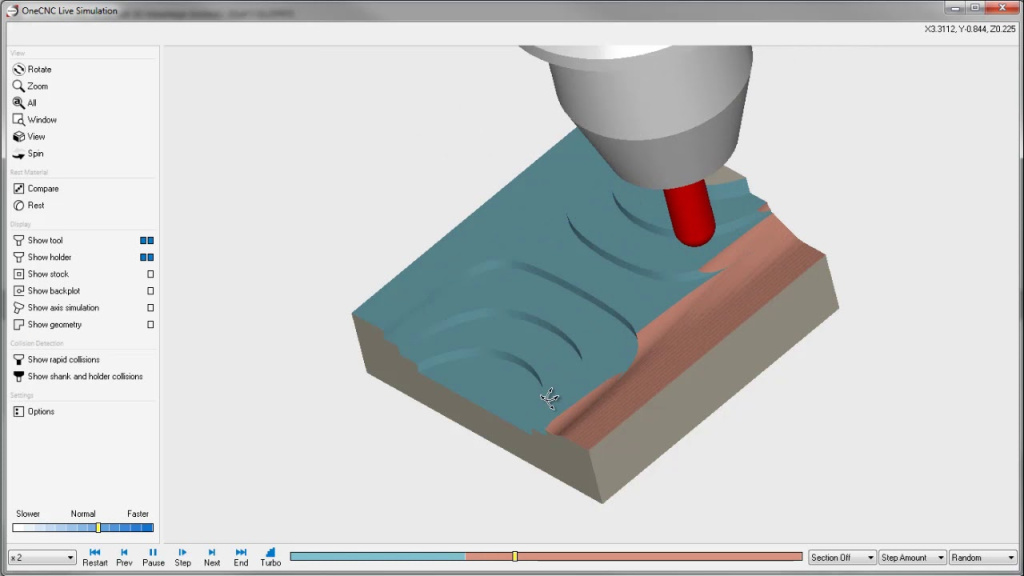
Leadership Perspectives and Company Culture
The leadership team at OneCNC, starting with founder and CEO Bob Francis, provides a clear vision that blends traditional values with modern innovation. Bob Francis is described as a hands-on managing director who has spent decades working closely with both the development team and end users. His philosophy has always been that software should empower the machinist, not complicate their job. In interviews and public comments, Francis often highlights how OneCNC listens to its users. “We visit trade shows and meet face-to-face with users to understand their needs,” he noted, explaining that many features in OneCNC’s roadmap come from conversations with machinists on the shop floor. This ground-up listening approach has kept OneCNC’s culture very customer-centric.
Another recurring theme from OneCNC’s leadership is pride in the product’s Australian origin and quality. Being developed outside of the traditional tech hubs has not impeded OneCNC; on the contrary, the Brisbane-based team has proven that world-class CAM technology can be created and exported globally from Australia. The company’s dedication to quality is evident in their official statements that “dedication to quality” is a core principle. Each release undergoes extensive internal testing, and OneCNC does not rush features to market until they’re truly ready – a point of pride for the development team.
OneCNC’s management also emphasizes practicality over hype. They rarely chase buzzwords or trends unless it tangibly benefits their users. For example, while some competitors have dabbled in cloud-based CAM or AI-driven automation, OneCNC has largely focused on perfecting its core desktop application and ensuring it works reliably in real-world conditions (often out on the shop floor where internet may be unreliable). This practical streak in company culture likely comes from Francis’s own background and long experience in the manufacturing domain.
Direct quotes from the leadership underscore these values. Summarizing OneCNC’s presence at a major trade event, Bob Francis said, “This was a very good show for OneCNC – the quality of the customers was encouragingly high and we succeeded in selling our OneCNC software too,” reflecting a focus on connecting with serious potential users rather than just generating buzz. Such down-to-earth commentary typifies OneCNC’s straightforward approach in business.
Regional leaders in OneCNC’s global offices also echo the corporate ethos. Jeroen Thiele, managing OneCNC’s Benelux operations, commented on the strong interest they received at a Netherlands trade show, noting that the crowded OneCNC booth and high visitor turnout indicated that “OneCNC had a good week… [with] a lot of demand from the local industry.” This feedback loop from regional teams to the Brisbane HQ helps OneCNC adapt and serve diverse markets without losing its core identity.
Internally, OneCNC fosters a culture of continuous learning. The team frequently runs training sessions, both for employees and for customers, at the Brisbane tech center and abroad. By educating users (through training programs, webinars, etc.), the leadership believes they can maximize the value customers get from the software. There is also a sense of longevity – many team members have been with the company for long periods, contributing to a stable knowledge base and consistent support experience for customers. This low turnover and tight-knit team vibe often translates to more personalized support; customers sometimes mention they can speak to the “same engineer who helped with a previous question,” which builds trust.
Finally, the leadership of OneCNC projects an unassuming yet confident image in the industry. They do not heavily advertise in flashy ways, but they often let customer success speak for them. OneCNC has been involved in case studies and user testimonials that are shared in industry publications. For example, a UK-based precision engineering firm touted how OneCNC improved their productivity, and such stories are used by OneCNC’s sales team to demonstrate real-world impact. The company’s message is consistent: OneCNC provides reliable, powerful CAM solutions that simply get the job done. In an era where some tech companies over-promise and under-deliver, OneCNC’s leadership takes the opposite approach – focus on delivering and let the reputation grow by word of mouth.
This strategy seems to be effective. As of 2025, OneCNC stands as a mature player in the CAM market with an extremely loyal customer base. It might not be the largest vendor, but it is respected for its technical rigor and customer service. The leadership team, anchored by Bob Francis, plans to keep refining the software in response to manufacturing trends (such as the push for more automation, 5-axis machining becoming mainstream, and integration with CAD/CAM/PLM ecosystems) while never straying from the user-friendly foundation that has been their hallmark.
Conclusion
OneCNC’s journey from a pioneering 1980s PC program to a globally deployed CAD/CAM system is a compelling example of sustained innovation in manufacturing technology. The company’s general overview reveals a clear mission: empower machinists and engineers with tools that are powerful, easy-to-use, and affordable. In an industry that often sees startups come and go, OneCNC has demonstrated remarkable staying power by continually adapting its software to meet the evolving needs of CNC manufacturing.
The areas of application for OneCNC span a wide range of manufacturing and engineering scenarios – from milling complex aerospace parts to turning out simple bushings on a lathe, from cutting profiles for signage to precision EDM of dies. This versatility means OneCNC has found a home in job shops and factories around the world. Its history, rooted in the vision of founder Bob Francis, shows a consistent pattern of growth and product refinement, as well as a commitment to delivering value to users rather than chasing short-term trends.
Business-wise, OneCNC Pty Ltd may be modest in size, but it competes on the global stage through a network of international offices and partnerships. The lack of mergers or acquisitions in its story speaks to a focused, organic growth strategy. Instead of expanding by buying other companies, OneCNC expanded by winning customers one by one – convincing each with its merits. Partnerships with CAD vendors like SolidWorks and active participation in the manufacturing community have further solidified its place in the ecosystem.
Technically, OneCNC’s strengths – integrated CAD/CAM, high-speed machining capabilities, range of supported processes, and user-friendly design – give it an edge for its target market. The software may not have every niche feature of some high-end systems, but for the vast majority of machining tasks, it provides a comprehensive and elegant solution. Its innovation pipeline appears to be driven largely by real user needs, which ensures that development resources are spent on features that truly matter to customers.
Quotes from OneCNC’s leadership and regional directors reinforce an image of a company that values quality over hype and customer success over aggressive sales. They highlight satisfaction in seeing users benefit (such as a successful trade show or a productive week at a tech expo) and in knowing OneCNC played a part in bringing a product concept to fruition. The official tagline might well be summed up in Bob Francis’s emphasis on input-driven enhancements – listening to the people who use the software daily and making changes that help them work smarter and faster.
As the manufacturing world moves forward, embracing trends like digital twins, smarter factories, and greater automation, OneCNC faces the challenge of evolving while maintaining the simplicity and reliability that are its soul. Given its track record, the company is likely to introduce new modules or integrations (for example, better interface with CNC simulators or additive manufacturing perhaps) carefully and methodically. The core product today, OneCNC XR9, stands as a mature and robust CAM suite. Users can reasonably expect that XR10 and beyond will continue the tradition – incrementally adding functionality, keeping up with machine tool advancements, and never losing sight of ease-of-use.
In conclusion, OneCNC is both a software tool and a success story in its own right. It underscores how a dedicated team, guided by consistent leadership, can sustain a niche in the global market by focusing on user needs and technical excellence. For those in the business or engineering audience evaluating CAM solutions, OneCNC offers an attractive combination of proven capability, pragmatic features, and solid support. It exemplifies the kind of quiet achiever in the tech world – not always in the limelight, but delivering tremendous value to those who discover it. As manufacturing continues to demand high productivity and efficiency, OneCNC’s established reputation for boosting CNC programming efficiency and its knack for “making CNC easy” ensure that it will remain a relevant and competitive choice for years to come.
Vendor: OneCNC