
GO2cam: A Comprehensive CAD/CAM Solution for Manufacturing and Dental Labs
The information is currently being reviewed and updated. If you notice any errors or inaccuracies, please let us know.
Company Overview and Product Description
GO2cam is a high-end CAD/CAM software suite developed by the French company GO2cam International. It is a versatile Computer-Aided Manufacturing system that covers a wide range of machining processes, including milling, turning, mill-turn (turn-mill), Swiss-type turning, and wire EDM. In addition to these traditional machining applications, GO2cam also offers specialized solutions for digital dentistry (under the GO2dental product line) and even supports offline programming of industrial robots for machining tasks. The software is known for combining powerful capabilities with a focus on ease-of-use, aiming to make advanced CAM technology accessible to machine tool operators and CNC programmers alike.
As an independent CAM software editor based in Lyon, France, GO2cam International differentiates itself through its deep dual expertise in mechanical engineering and software development. The company’s team has decades of experience in CNC machining processes, which has informed the design philosophy of GO2cam. The software emphasizes what the company calls “man to machine dialog” – in other words, a user-friendly interface and workflow that closely connects the human operator’s intentions with the CNC machine’s actions. GO2cam is often deployed right on the shop floor by machinists and is compatible with all major CAD formats, allowing users to import designs from their favorite CAD systems and generate efficient toolpaths within GO2cam. An example of this interoperability is GO2cam for SOLIDWORKS, a plugin that lets SolidWorks users export geometry and feature information directly into GO2cam, enabling automatic machining updates whenever the CAD model changes.
The GO2cam software suite is modular and comprehensive. For mechanical manufacturing, the “Workshop CAM”range includes dedicated modules for 2.5D to 5-axis milling, turning and mill-turn operations, Swiss-style screw machining, and wire EDM cutting. It provides rich libraries of machining cycles and post-processors to accommodate virtually every CNC machine configuration. Users can also extend functionality with add-ons for specific needs – for example, high-performance roughing, 5-axis machining strategies, multi-part machining, probing, and more. In the dental domain, GO2dental is a tailored CAM solution for dental laboratories, enabling the production of crowns, bridges, implants, custom abutments, clear aligners, and other restorations in a variety of materials. GO2dental features an intuitive workflow for dental technicians and integrates with dental CAD systems to streamline the fabrication of prosthetics. This dual focus on general manufacturing and dental applications is a unique hallmark of GO2cam’s product lineup and reflects the company’s broad industry reach.
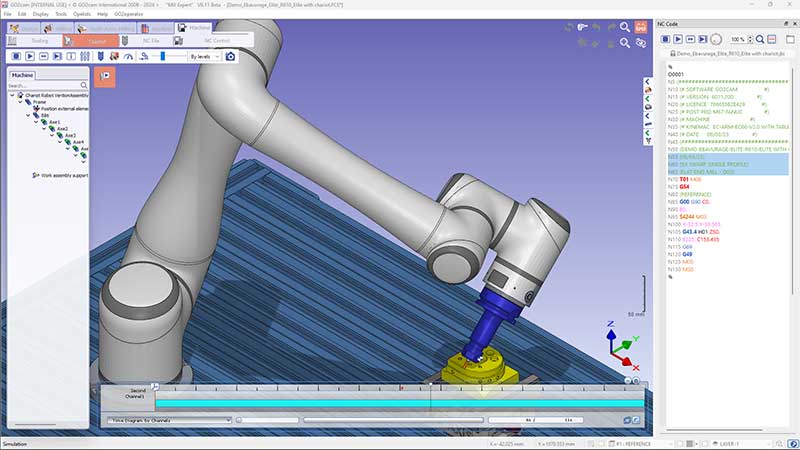
GO2cam is designed to support all types of CNC machine tools, from small workshop mills to complex multi-axis machining centers. Notably, the system also includes GO2cam for Robots, which allows robotic arms to be programmed for cutting, drilling, or deburring operations using the same CAM interface – an important feature as industrial robots become more common in manufacturing processes. Across all these applications, GO2cam emphasizes automation and customization: users can script their own macros or even use a built-in JavaScript API to automate repetitive tasks and tailor the software to their specific workflows. The result is a highly flexible CAM platform that can be adapted for everything from one-off job-shop parts to repetitive production runs and specialized niche manufacturing.
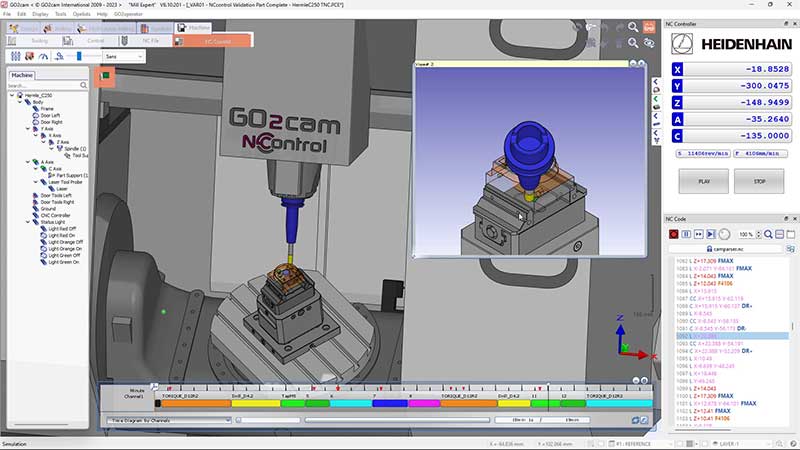
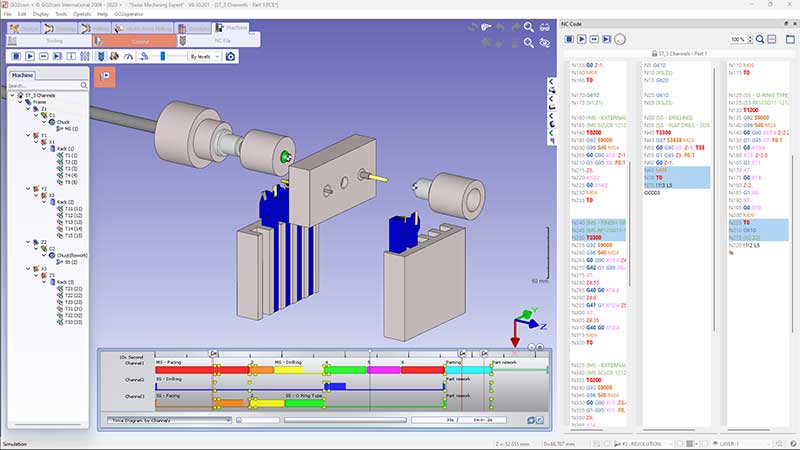
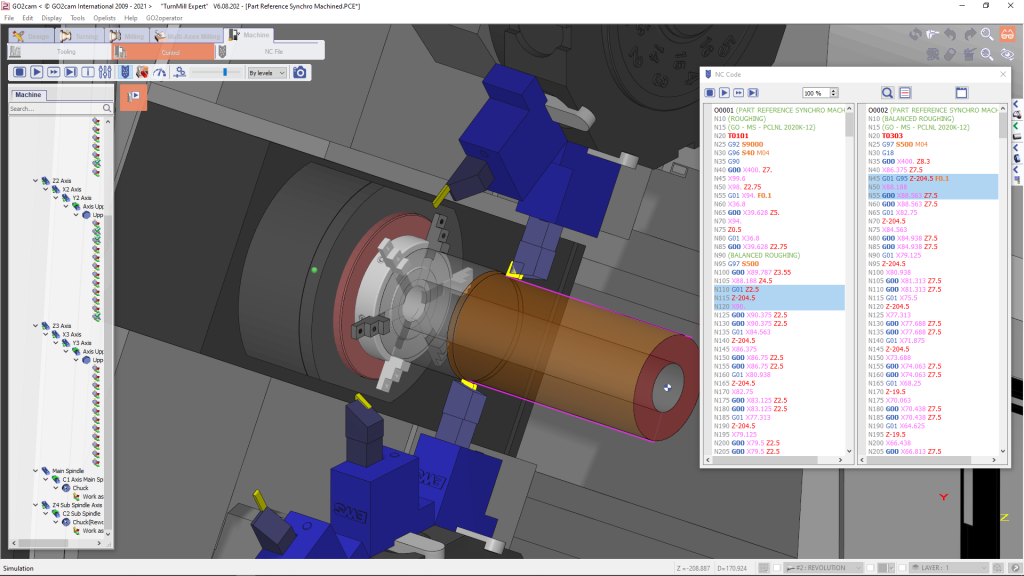
From a user’s perspective, one of GO2cam’s strengths is its operator-oriented interface. The software was developed with CNC operators in mind, aiming to simplify complex tasks like toolpath generation and machine simulation so that they can be done quickly on the shop floor. It features visual toolpath verification, collision checking, and an integrated simulation of the machine kinematics (leveraging industry-standard simulation engines) to ensure programs run safely and as expected. GO2cam also prides itself on maintaining consistency and compatibility across versions – for example, users can open projects created in older versions and find that the interface and logic remain familiar, even as new features are added. This commitment to not disrupting users’ established workflows, while continuously improving the technology, is a point of pride for the company.
In summary, GO2cam can be described as a comprehensive CAD/CAM solution that bridges the needs of traditional manufacturing workshops and modern digital dental labs. It offers a wide array of machining capabilities under one roof, with an emphasis on high performance, customization, and user-friendliness. The official website for the software (available at go2cam.net) provides further technical details and demonstration videos, reflecting the system’s capabilities in various scenarios.
Areas of Application
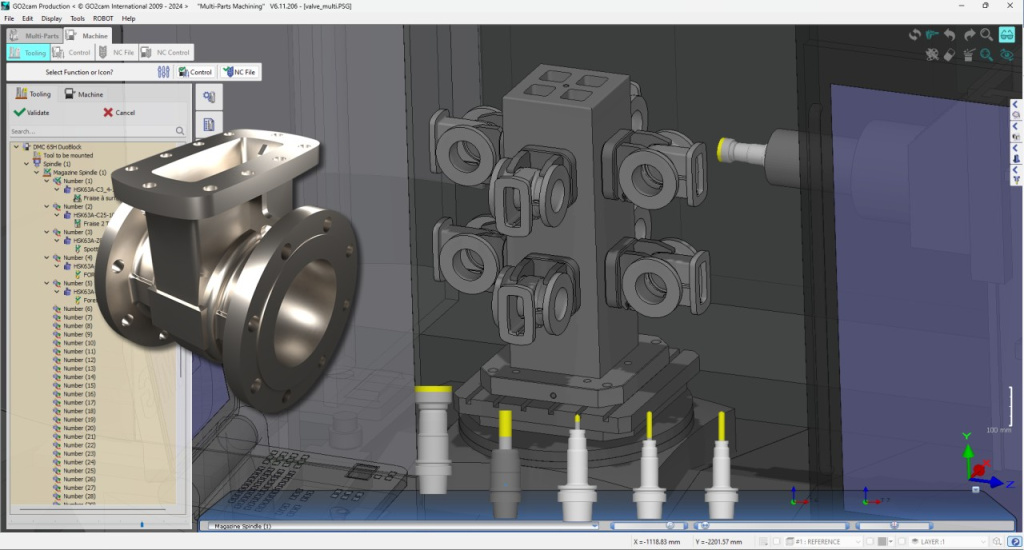
GO2cam’s areas of application span multiple industries, primarily divided into two main sectors: mechanical manufacturing and dental fabrication. In the mechanical realm, GO2cam is used by CNC programmers and machinists in industries such as aerospace, automotive, general engineering, mold and die, electronics, and any field that involves the machining of metal or plastic parts. The software’s milling and turning modules support everything from simple 2D plate machining to complex 5-axis freeform machining of aerospace components. This means a small machine shop making custom automotive parts and a large aerospace supplier manufacturing turbine components could both be using GO2cam to drive their CNC mills and lathes. The software’s flexibility to handle every type of CNC machine tool – whether it’s a 3-axis vertical machining center, a multi-spindle turning center, a 5-axis milling machine, or a Swiss-type lathe for micro-machining – makes it attractive to a wide array of manufacturing businesses.
Within mechanical workshops, GO2cam is particularly valued for optimizing toolpaths to save time and extend tool life. For example, an aerospace subcontractor might use GO2cam’s advanced 5-axis strategies to machine complex aluminum structural parts with fewer setups, or an automotive mold maker might rely on its high-performance roughing cycle to quickly hog out cavities in hardened steel. Because the software is compatible with popular CAD systems, design engineers can hand off their models (in formats like STEP, IGES, or native CAD files) to the CAM programmer, who then uses GO2cam to plan how the part will be cut. The result is a program (NC code) that the CNC machines execute to produce the finished part. GO2cam’s ability to handle feature-based machining (recognizing holes, pockets, etc. from the CAD data) and its library of post-processors for various machine controllers means it can be deployed in many different workshop environments with minimal customization.
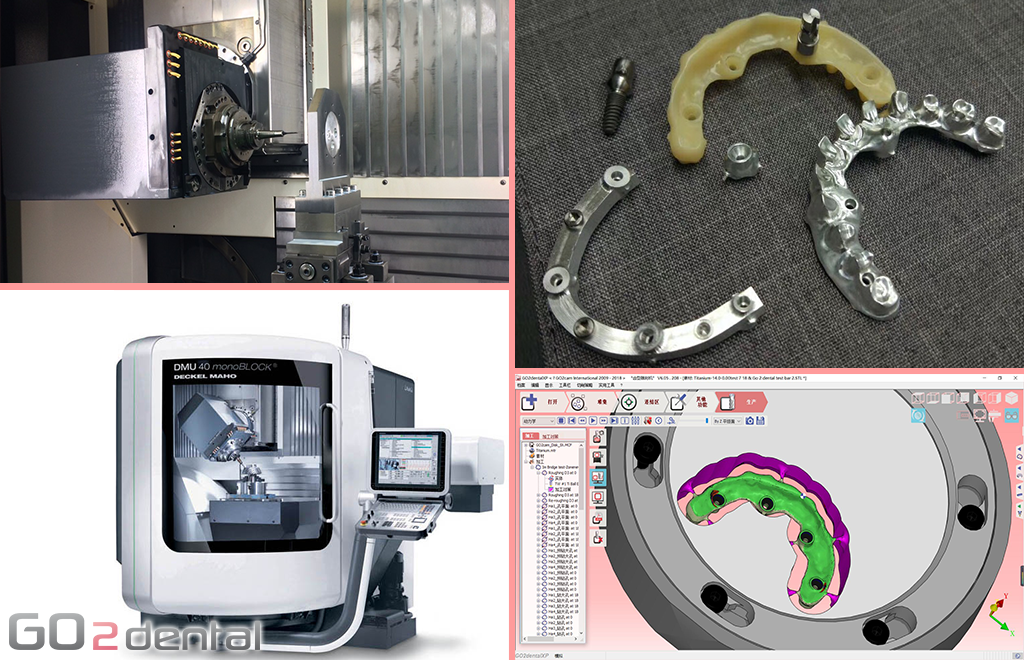
Another significant application of GO2cam is in the dental industry. Under the product variant called GO2dental, the system is tailored for dental laboratories and milling centers that produce dental prosthetics. This includes crowns, bridges, inlays, veneers, custom implant abutments, dentures, and even orthodontic appliances like clear aligners. Digital dentistry has its own unique workflow: a dentist or dental lab scans a patient’s mouth to create a digital 3D model, then a dental CAD software is used to design the restoration (for example, designing the shape of a crown). GO2dental comes into play by taking that designed restoration and generating the toolpaths needed to mill it out of materials such as zirconia, ceramic, titanium, or resin on a CNC milling machine specialized for dental applications. Thousands of dental labs worldwide are reported to use GO2dental for its reliability and precision in this process. It simplifies tasks for dental technicians – for instance, it can automate the placement of support pins or the optimal nesting of multiple crown units in a disk of material for efficient batch milling.
The dental application of GO2cam has grown particularly important as the industry transitions from traditional manual methods to digital fabrication. GO2cam International has even developed specific solutions like Iris Chairside CADCAM (in collaboration with a partner company) to enable same-day dentistry, where dental clinics use a compact milling machine on-site to produce restorations immediately from digital scans. In such cases, ease of use is critical – the dentist or technician using the system may not be a machining expert. GO2dental provides a guided workflow that automates tool selection, calculates toolpaths optimized for dental geometries, and ensures smooth surfaces and tight fits for the patient’s comfort. Its popularity in the dental field shows the adaptability of GO2cam’s core technology to very different types of “machining” – from heavy industrial metal cutting to delicate milling of a ceramic tooth crown.
Beyond these two main sectors, GO2cam also finds application in any scenario requiring CNC programming. The software’s support for wire EDM (electrical discharge machining) means it is used in precision engineering companies for cutting intricate shapes out of hard metals using wire-cutting CNC machines (commonly for making extrusion dies, stamping tools, or medical devices). The inclusion of robot programming capabilities has opened up uses in industries like aerospace and art/design, where industrial robots armed with spindle attachments can mill large sculptures or trim composite material parts. GO2cam provides the toolpath planning for these robots as if they were 5-axis machines, accounting for the robot’s kinematics.
In summary, the areas of application for GO2cam range from conventional machining shops producing metal parts to specialized sectors like dental prosthetics manufacturing. Its comprehensive toolset allows it to serve a diverse user base: machine shops, manufacturing enterprises, dental labs, CNC equipment OEMs, and more. The common thread is any context where there is a need to translate a digital design into a physical object via CNC machining – GO2cam positions itself as the software to accomplish that translation efficiently and accurately.
History and Evolution of the Product
The story of GO2cam and its technology stretches back several decades. While GO2cam International as a company was officially founded in 2009, its roots go back to 1991. In the early 1990s, a team of nine young software engineers in France began working on CAM technology with the goal of improving the interaction between humans and CNC machines (the “man-machine dialog”). This team gained experience under another established CAD/CAM software publisher at the time, honing a technology platform for CNC programming. Over the years, the core group stayed together across different ventures and saw their CAM technology evolve through various iterations. Eventually, in 2009, they took a bold step: the team launched GO2cam International as an employee-owned company, essentially carrying forward their accumulated know-how into an independent new venture. This origin explains GO2cam’s name (which echoes some earlier CAM product branding they were involved with) and sets the stage for the company’s ethos of independence and innovation.
From its founding in 2009, GO2cam International built its flagship product, GO2cam, as a next-generation CAM solution that would incorporate the team’s decades of expertise. The product started by offering robust milling and turning capabilities and was rapidly adopted by some loyal clients (some of whom had followed the team since the 1990s). Early on, the company established itself in its home market of France and began expanding into Europe and beyond. By around 2010, the company also ventured into the dental market with GO2dental, recognizing the digital revolution happening in dental fabrication. This was a significant evolution of the product – adapting a general CAM engine to the very specific needs of dental labs required new features like specialized dental milling strategies, support for dental CAD file formats, and easy-to-use interfaces for technicians. GO2cam’s team leveraged their existing CAM kernel and, with input from dental experts, rolled out GO2dental as a sister product. A forum post from an insider around 2013 mentioned that GO2cam had “started dental CAM 4 years ago”, indicating that by 2009 the groundwork for GO2dental was already underway. This move into dental CAM positioned GO2cam International as a pioneer in that niche, alongside their mechanical industry offerings.
Through the 2010s, GO2cam’s software underwent continuous enhancement and version upgrades, with major releases every year. By 2012, one notable milestone in the product’s evolution was the integration of advanced 5-axis machining capabilities. Instead of developing every complex toolpath algorithm in-house from scratch, GO2cam International opted to partner with ModuleWorks – a leading provider of CAM components – to quickly bolster GO2cam’s multi-axis offerings. In 2012, GO2cam released a version featuring a full suite of 5-axis strategies (like multi-surface 5-axis swarf cutting, complex contouring, and automatic 3+2 axis positioning) by embedding ModuleWorks’ proven 5-axis toolpath engine into their system. This allowed GO2cam users to access state-of-the-art five-axis machining techniques that were on par with much larger CAM vendors. At the time, GO2cam’s Marketing Executive, Mathilde Borel, commented on this milestone, saying that the demand for 5-axis was increasing and that by partnering with ModuleWorks, they achieved a “win-win” outcome: GO2cam could deliver a comprehensive set of five-axis functionalities to customers in a short time frame, greatly enhancing the product’s competitiveness. This is a good example of how GO2cam’s evolution has been a combination of internal R&D and strategic collaboration to bring new features to users.
Another key innovation in GO2cam’s evolution was the development of its own high-performance machining technology known as millyuGO. Around the mid-2010s, adaptive high-speed roughing had become a hot area in CAM (pioneered by various companies to maximize material removal rates). GO2cam’s R&D team created millyuGO as their proprietary solution to this, and it was introduced to the market as an add-on for GO2cam. By 2016–2017, millyuGO was showcased publicly (for instance, at the Paris Air Show 2017, GO2cam’s CEO Eric Gerval introduced millyuGO to the aerospace industry audience as a game-changing roughing method). The technology was subsequently patented – in fact, GO2cam secured multiple patents for the algorithms behind millyuGO. This adaptive roughing strategy automatically adjusts the toolpath to maintain constant cutting forces on the tool, which avoids spikes in stress that can cause breakage. Over successive versions (notably in the GO2cam v6 series), millyuGO was refined and became a highlight of GO2cam’s product, capable of reducing milling cycle times dramatically (the company cites up to 80% reduction in roughing time in ideal scenarios) and extending tool life (reports of tool longevity increasing by a factor of up to six have been made when using millyuGO on tough materials).
As GO2cam matured, the company also expanded the software’s ecosystem. They developed a GO2cam for SolidWorks integration (so that SolidWorks CAD users could seamlessly use GO2cam, as mentioned earlier) and a GO2cam API to let advanced users customize the software. They also improved the user interface and added functionality for new manufacturing trends, such as better support for multi-tasking mill-turn centers and the aforementioned robot programming. Each new version of GO2cam built upon feedback from its user community – GO2cam International takes pride in listening to what machinists and dental technicians suggest. For example, if a group of users in the automotive sector needed a more efficient way to program deep hole drilling, that might become a new feature in the next release. This user-driven evolution is part of the company’s continuous improvement philosophy.
From a small startup in 2009, by the 2020s GO2cam International had grown to employ over 50 people (many of them in R&D and technical roles) and to serve a worldwide customer base. The product remained developed in Lyon, retaining its “French engineering” core, but the user interface was localized into multiple languages (French, English, Italian, German, etc.) to support international growth. The company has regularly participated in major industry trade shows (like EMO Hannover, industrial fairs, and dental expos) to demonstrate new versions and features. For instance, version 6.10 was announced in early 2023 with enhancements in automation and UI, and by early 2025 the company announced GO2cam v6.12, highlighting new features involving artificial intelligence to further assist in machining decisions. This shows that even after more than a decade on the market, GO2cam’s evolution is ongoing, incorporating cutting-edge tech trends.
An interesting historical note is the continuity of the development team. The original founders from 2009 (and even from the 1991 roots) remained key players in driving GO2cam’s technical direction. This stability allowed them to maintain a very focused vision for the software. It also meant GO2cam International did not go through the kind of major corporate acquisitions or mergers that many competitors did over the last decade. While many independent CAM companies were bought by large CAD corporations or equity firms, GO2cam stayed independent, which has been a deliberate choice by its leadership to ensure they could chart their own course. In essence, the history of GO2cam is one of steady, innovation-driven growth: from a seed of an idea in 1991 to a fully-fledged product by 2009, and from a fledgling company to a respected niche CAM provider by the mid-2020s.
Business Footprint and Key Indicators
GO2cam International today can be characterized as a small-to-medium enterprise in the CAD/CAM industry, with a global reach that belies its size. The company is privately held (and notably owned by its employees), so it does not publicly disclose detailed financials. However, some indicators of its business footprint are known. The company has a workforce of around 50+ employees and focuses a large portion of its resources on research and development (about one-third of the staff are dedicated R&D engineers). This heavy R&D focus is evident in the steady stream of software innovations and updates over the years.
In terms of market presence, GO2cam may not be a household name like some CAD/CAM giants, but it has built a loyal customer base across multiple continents. The software is sold in more than 15 countries through a network of subsidiaries and authorized distributors. GO2cam International has its headquarters and core team in Lyon, France, and from there it coordinates a distribution network that spans Europe, Asia, and the Americas. For example, there are GO2cam resellers or partners in countries such as Germany, Italy, Turkey, India, China, and the United States, among others. This distribution model allows the relatively small company to have a worldwide footprint, with local representatives providing sales, training, and support to end-users in their regions.
One key business indicator is the number of end-users or installations of GO2cam. While the company hasn’t published an official total count of licenses, it’s known that GO2dental (the dental CAM) alone is used by thousands of dental laboratories globally. Being a niche leader in dental CAM has bolstered GO2cam’s user base significantly; for example, many dental milling centers in Europe and Asia adopted GO2dental to drive their CNC milling machines that produce crowns and bridges. In the mechanical sector, GO2cam is used by a wide range of workshop types. Customers include small job shops, larger manufacturing firms, and even educational institutions or training centers that teach CNC programming. The exact number of industrial users isn’t publicly stated, but the company often cites that some clients have been with them since the very beginning (suggesting strong customer retention). The existence of a “community of connoisseurs,” as GO2cam calls its user community, also implies a dedicated following that continuously uses and advocates for the software.
Financially, industry observers have estimated that GO2cam International’s annual revenue is in the range one would expect for a company of its size and domain – likely on the order of a few million Euros per year. An external analysis (by a market research aggregator) once pegged the revenue around 2–3 million USD, but the accuracy of that is unconfirmed. What is clear, however, is that GO2cam has maintained a sustainable business by focusing on high-value software rather than mass-market volume. CAM software tends to be a high-margin product, and GO2cam’s strategy of catering to specific needs (like dental labs or high-end workshops) means each sale is substantial. Additionally, they often engage in OEM partnerships where machine tool manufacturers bundle GO2cam with their equipment, which can provide a steady channel of business (more on that in the next section).
Another important business aspect is GO2cam’s global support and training services. As a software vendor, the company not only sells licenses but also provides technical support, maintenance updates, and user training. In France, GO2cam International handles this directly – they have consultants who work closely with manufacturers to implement tailor-made CAM solutions and a hotline support for customers. Internationally, their distributors handle first-line support, with the Lyon team backing them up for complex issues. The company’s relatively small size allows it to be quite agile in responding to customer requests. Customers have noted that GO2cam’s support team can quickly incorporate feedback or even develop custom features when needed, something that larger competitors might struggle with due to bureaucracy. This agility is a competitive advantage that GO2cam’s leadership often emphasizes.
In terms of business growth, GO2cam International appears to have grown organically rather than through big acquisitions. Over the years, they have increased their employee count steadily and expanded into new markets gradually. By being employee-owned, the company also likely reinvests profits into development rather than focusing on shareholder dividends, which aligns with its innovation-centric approach. GO2cam’s leadership has expressed that they choose strategic options “not dictated by immediate profitability,” underscoring that long-term technical excellence is prioritized over short-term financial gains. This philosophy might keep the company’s revenue at modest levels in the short run, but it has built a strong foundation and reputation that could drive future growth.
One can also consider the presence in industry associations as an indicator of GO2cam’s standing. The company is involved in national and regional manufacturing clusters in France, such as being part of French industry initiatives (they have mentioned participation in associations like La French Fab and others). This involvement helps them stay connected with the manufacturing community and often gives them insights into market needs. It also indirectly contributes to business development by increasing brand visibility among potential clients.
In summary, GO2cam International’s business footprint is that of a niche yet global player in the CAM software market. They have a stable and growing user base in both the mechanical manufacturing and dental industries, a solid distribution network across 15+ countries, and a team that’s sized to stay responsive. While not the largest vendor, GO2cam has carved out a profitable segment for itself, leveraging its strengths in innovation and customer focus. The company’s leadership, including CEO Eric Gerval, often highlights the healthy and sustainable nature of their growth – pointing out that being independent and employee-owned allows them to measure success not just in revenue, but in customer satisfaction and technical achievement.
Partnerships, Alliances, and Collaborations
Throughout its history, GO2cam International has actively pursued partnerships and collaborations to enhance its product offerings and expand its market reach. These partnerships fall broadly into two categories: technical collaborations (integrating third-party technologies into GO2cam or co-developing new solutions) and business partnerships (OEM deals, distributor relationships, and industry alliances).
On the technical side, the development of GO2cam reads like a who’s who of manufacturing software components. The software is something of a platform that brings together various specialized engines, many sourced from expert partners. For instance, GO2cam uses the Parasolid® geometric modeling kernel (licensed from Siemens PLM) as the backbone for its 3D geometry handling. This gives GO2cam robust and precise CAD capabilities under the hood. For machine simulation and verification – critical in CAM to ensure that toolpaths won’t cause crashes – GO2cam is integrated with the MachineWorks® simulation engine, a widely respected solution for CNC verification. Additionally, for nesting (optimizing the layout of parts in material, important for sheet cutting or for dental disk nesting), GO2cam incorporates technology from Alma® (a French nesting software company). These integrations allow GO2cam to offer a full suite of capabilities without reinventing the wheel for each function.
Another key technology partnership, touched on earlier, is with ModuleWorks®. In 2012, GO2cam International officially partnered with ModuleWorks to embed ModuleWorks’ 5-axis toolpath generation algorithms into GO2cam. This collaboration means that GO2cam users have access to a rich library of 5-axis cycles – such as swarf milling, complex 5-axis contouring, and 3-to-5 axis conversion – which are all seamlessly part of GO2cam now. The partnership was mutually beneficial: GO2cam could rapidly elevate its multi-axis capabilities, and ModuleWorks gained another OEM client for its component business. The integration has been so successful that most GO2cam users probably assume those 5-axis functions are native, when in fact they are powered by ModuleWorks behind the scenes. GO2cam’s team didn’t stop there; they also utilize the Spatial 3D InterOp libraries (from Dassault Systèmes) to read a wide range of CAD file formats. This means GO2cam can import models from CATIA, SolidWorks, Inventor, and others seamlessly – a direct result of partnering with the specialists in CAD data exchange.
GO2cam’s openness to third-party integration extends to the shop floor toolchain as well. The software can export data to external simulation programs like Eureka or VERICUT, which some customers use for G-code simulation. GO2cam also collaborates with tool management software providers: it mentions working with systems like TDM Systems for tool databases, meaning a user can interface their CAM with a central tool library system common in factories. Moreover, GO2cam has a relationship with a company called C4W, with whom they co-developed parts of the GO2dental line and the IRIS chairside solution. This indicates a willingness to co-engineer products when venturing into new domains, leveraging external expertise (in this case, C4W’s dental CAD knowledge) alongside their own.
On the business partnership front, one of GO2cam International’s strategies has been to forge OEM (Original Equipment Manufacturer) partnerships with machine tool builders. Essentially, GO2cam can act as a “white-label” CAM software that a machine manufacturer bundles or brands as part of its offering. The company has explicitly highlighted that GO2cam is customizable and that they have created unique versions for certain “happy few” customers, integrating bespoke features as needed. For example, companies like Mécanumeric (a French CNC machine manufacturer specializing in milling machines and routers) and Realmeca (a machine tool company) are noted as using GO2cam technology in their solutions. It’s likely that if you buy a CNC milling machine from Mécanumeric, you might receive a CAM software with it that is actually GO2cam under the hood, possibly branded with the machine maker’s name or a special interface tailored to that machine. Similarly, in the dental world, some milling machine vendors bundle GO2dental as the CAM software driving their equipment. A case in point is KaVo Dental (a German dental equipment manufacturer): GO2cam’s team has mentioned that their reseller in Germany installed GO2dental in many labs that use KaVo’s Everest milling system. These OEM deals are a win-win: they provide GO2cam with a wider distribution channel and captive audience (every machine sold is a potential GO2cam seat), and the machine builders get a CAM solution optimized for their hardware without developing it from scratch.
Distribution partnerships are another layer of GO2cam’s collaborations. Outside of France, GO2cam relies on authorized distributors who often serve as both sales agents and support providers. These partners are typically firms with expertise in CAD/CAM sales in their region. For example, in Italy and Turkey there are specialized CAM solution providers that include GO2cam in their portfolio (sometimes alongside other software or services). In Asia, similar arrangements exist. Such partnerships allow GO2cam International to maintain a lean direct operation while still tapping into global markets. The company provides training and technical backup to these distributors, ensuring end customers get a consistent quality of experience.
Beyond direct business partnerships, GO2cam International has also engaged in industry alliances and initiatives. A notable recent example (from 2025) is an alliance formed to combat software piracy in the digital dentistry space. GO2cam joined forces with other leading dental CAM developers – namely CIMsystem (which makes MillBox CAM), FOLLOW-ME! Technology (maker of hyperDENT), and ModuleWorks (provider of dental CAM components) – to launch a campaign against piracy of CAM software. The alliance’s goal is to ensure that dental labs use legitimate, updated software for patient safety and to support ongoing innovation. By collaborating even with companies that are technically competitors in the dental market, GO2cam showed a commitment to industry-wide issues. This kind of cooperation can build goodwill and also helps all players by creating a more fair market environment. It’s also reflective of GO2cam’s position; as a smaller company, banding together with peers on common causes amplifies their voice.
In summary, collaboration has been integral to GO2cam’s strategy. Technologically, the software is an aggregate of in-house innovation and best-in-class third-party components, which means users benefit from a very robust and feature-rich system. Commercially, partnerships through OEM deals and distributors have extended GO2cam’s reach far beyond what its size would normally permit. And within the industry community, GO2cam hasn’t shied away from joining alliances or engaging with associations to advance mutual interests (whether it’s fighting piracy or contributing to regional industry growth initiatives). These collaborations underscore that GO2cam International does not operate in isolation; rather, it is well-connected and respected in the broader CAD/CAM and manufacturing ecosystem.
Innovations and Key Strengths
Innovation is at the heart of GO2cam’s identity. The company has consistently introduced unique features and leveraged its agility to stay ahead of certain trends. One of the standout innovations in its portfolio is the millyuGO® high-performance machining technology. This is GO2cam’s proprietary approach to adaptive roughing – a method of generating toolpaths that maintain constant cutting engagement to significantly boost efficiency. MillyuGO was developed entirely by GO2cam’s R&D team and is protected by multiple patents. In practice, what millyuGO does is calculate toolpaths such that the cutter never overloads: it will automatically trim the path to avoid taking too deep or wide of a cut, thereby keeping the force on the tool and spindle consistent. The effect for the user is dramatic: tools wear out much more slowly (in some cases, shops reported tooling life extending several times over) and machining operations finish much faster (roughing routines that once took hours might be done in a fraction of the time). MillyuGO also incorporates intelligent strategies for handling delicate situations – for example, when milling thin walls or difficult materials like titanium and Inconel, it avoids sudden tool deflections that could cause vibrations or part damage. By offering millyuGO as part of GO2cam, the company provides a built-in solution for what used to require specialized third-party CAM tools. This innovation is a key strength especially for customers in high-value manufacturing who are looking to reduce cycle times and costs. It essentially allows a small CAM player to match or even surpass the capabilities of larger competitors in the high-speed machining arena.
Another significant strength of GO2cam is its emphasis on usability and practical workflow. Since its inception, the software was intended to be used directly by workshop personnel, not only CAD/CAM office specialists. That led to design choices that favor simplicity and clarity. The interface uses plain language where possible, and it presents machining operations in a logical sequence (often following the way a machinist thinks about a job). GO2cam also has a concept of templates and standard processes – users can save their best practices and reuse them, which is crucial in a busy workshop to avoid reprogramming similar parts from scratch. This focus on the end-user experience, coupled with the continuity of interface across versions, has made GO2cam a tool that companies can adopt with relatively short training cycles. New users (even those coming from other CAM systems) often find that GO2cam “speaks the machinist’s language.” This is not a trivial advantage; in manufacturing, time is money, and software that is easier to learn and less error-prone can save a company significant expenses in training and scrap.
GO2cam’s independence and company culture also translate into strengths for the product. Because GO2cam International is employee-owned and not beholden to external investors, it can prioritize technical excellence and customer needs over marketing hype or rushed releases. The development team follows a practice of continuous improvement: they release updates regularly, each time incorporating bug fixes, user feedback, and new ideas. Users often form a close feedback loop with the developers – for instance, a suggestion from a power-user for a new drilling cycle might well appear in the next version of the software. This responsiveness means the software evolves in tune with real-world demands. It’s a contrast to some larger CAM packages that might have slower development cycles or where user requests get lost in a corporate maze. GO2cam’s CEO Eric Gerval once explained that their agility allows them to address needs rapidly; indeed, he described the company as having a “unique R&D reactivity.” This has enabled GO2cam to carve out niches where they shine. For example, when Swiss-type (sliding headstock) automatic lathes became popular for manufacturing small precision parts, GO2cam quickly added a Swiss-turn module to support those machines – a feature not all CAM vendors had at the time.
One of GO2cam’s strengths, particularly evidenced in recent years, is the focus on return on investment (ROI) for the customer. The leadership at GO2cam often speaks about ensuring that their software directly contributes to productivity gains. In an interview about industry trends, CEO Eric Gerval explained the value proposition they offer to cost-pressured suppliers: by using GO2cam, a company can expect a very fast ROI through multiple avenues. He highlighted that typically GO2cam’s toolpaths can reduce production time by about 10% to 20% for a given part without any changes to machines or tooling – purely by optimizing the cutting strategy. He also noted that by using optimized strategies (like millyuGO and others), companies can reduce the frequency of tool replacements and repairs, saving money on cutting tools. These are concrete, measurable benefits. One could say GO2cam’s strength lies in sweating the details: things like collision avoidance, or fine-tuned post-processor output that avoids manual editing, which ensure that once the program is on the machine, everything runs smoothly with minimal stoppages. Many GO2cam users have reported that the reliability of its post-processors (the modules that translate the internal toolpath into the exact machine code for each CNC controller) is excellent – this reduces trial-and-error at the machine, which is another often overlooked productivity booster.
Another innovation worth highlighting is GO2cam’s approach to maintaining compatibility. The company has made a point that even as it adds new features, it keeps older data and methods compatible. If a shop has been using GO2cam for years, they don’t have to fear that updating to the latest version will make their previous project files unusable or require re-training staff on an entirely new interface. This constancy is valued by users who have experienced other software that undergoes radical changes. GO2cam strikes a balance: continuous improvement without disruptive change. It’s an innovative approach to software evolution, building on a philosophy of “stability plus novelty.” In practice, it means a machine shop can confidently build a large library of GO2cam projects and know that even a decade later, those can be opened and referenced or reused, which protects the knowledge investment they’ve made.
On the technical innovation front beyond toolpaths, GO2cam has also ventured into incorporating modern trends such as AI assistance and automation. The latest versions have teased features where the software can, for instance, automatically recognize features of a part and suggest machining operations (feature recognition), or even optimize certain parameters using built-in intelligence gleaned from past projects. This is part of the industry-wide move toward smart manufacturing software, and GO2cam is ensuring it isn’t left behind despite its smaller size.
Lastly, an understated strength of GO2cam is its community and support network. Over the years, the user base – especially in France and Europe – has formed something of a community of practice. There are users who have become experts and advocates, sometimes sharing their success stories in industry forums or events. GO2cam International has capitalized on this by hosting or participating in workshops, training sessions, and user meetings. When users see that the company genuinely listens and engages, it fosters brand loyalty. In the dental segment, GO2cam often works closely with key opinion leaders (like master dental technicians or educators) to refine its product. That collaboration is a form of innovation in itself – innovating not just in code but in how the company interacts with its ecosystem.
Summing up the innovations and strengths: GO2cam’s patented high-performance cycles (like millyuGO) give it a technical edge; its user-centric design and responsiveness make it pragmatic and beloved in the field; and its independence fuels a culture of innovation for the long haul. These factors combined have made GO2cam one of the most innovative yet perhaps underrated CAM systems on the market. It may not have the marketing might of large competitors, but those who discover it often recognize that it punches above its weight in delivering productivity and precision.
Leadership and Vision – In Their Own Words
The leadership of GO2cam International, being intimately involved in both the management and technical development, often share insights that illustrate the company’s mission and vision. CEO Eric Gerval, who has been with the venture since its start, is both a business leader and an engineer at heart, and his perspective sheds light on GO2cam’s direction. Speaking about the needs of manufacturing SMEs (small-to-medium enterprises), Gerval once explained: “We know that suppliers in the aerospace industry are facing increasing pressure to reduce their costs and we offer a unique and cost-effective solution to help them do so.” This quote encapsulates how the company sees its role – as a provider of solutions to very practical problems (in this case, cost reduction under pressure from big industry primes). It’s not just about selling software; it’s about addressing pain points such as machining cycle times and tooling expenses.
In the same discussion, Eric Gerval elaborated on the tangible benefits GO2cam aims to deliver: “Our customers can expect a very fast return on investment. Using the software results in production savings in two ways: firstly, we can typically reduce the production time of specific parts by 10% to 20%, with no changes to the machines or tools used. Secondly, we can dramatically reduce the frequency and cost of repairing and replacing cutting tools.” This statement is essentially a promise from leadership based on accumulated results across their client base. It underscores an important aspect of GO2cam’s vision: ensure that adopting their technology directly boosts the manufacturer’s bottom line. It’s somewhat unusual to hear software CEOs talk in such concrete terms (many focus on features or vision in the abstract), but Gerval’s focus on ROI and percentages of improvement reflects GO2cam’s down-to-earth approach – likely a result of their close contact with the shops using their software daily.
Another voice in the leadership is Mathilde Borel, who has been involved in GO2cam’s marketing and partnerships. During the ModuleWorks partnership announcement, she commented on the strategy behind it: “We have seen increasing demand for 5-Axis machining and by partnering with ModuleWorks we’ve been able to complement our existing machining strategies with ModuleWorks’ comprehensive range of 5-Axis toolpaths. Time to market has been very quick and customers are already seeing the benefit. It’s a win-win all round.” This quote from 2012 reveals a lot about GO2cam’s mentality. They identified a trend (5-axis machining becoming more common even for smaller shops) and instead of taking years to develop it all in-house, they sought a collaboration to meet that demand quickly. Borel’s reference to “time to market” and customers immediately seeing benefits speaks to the agility that GO2cam’s leadership cherishes. The phrase “win-win” also reflects how they approach partnerships – looking for scenarios where both GO2cam and its partners, and ultimately the end-users, gain value.
Leadership’s vision is also captured in the corporate values that GO2cam International published. They emphasize entrepreneurial freedom, companionship, constancy, and engineering genius as their core values. In practical terms, entrepreneurial freedom means the company can steer its product development in the directions it believes are right, without external interference. One internal motto was: “We decide GO2cam’s future and step on our own path.”This sentiment, while not a public quote to media, was part of their values statement and drives home the point that GO2cam intends to remain master of its own fate. The idea of “companionship” in their values highlights knowledge-sharing and a passion for machining that the leadership fosters among the team and with the community – it’s a recognition that the CAM field is a small world and relationships matter. “Constancy” reflects the commitment to not abandoning what works (keeping interfaces familiar, maintaining compatibility), and “genius & engineering” points to their pride in innovation (they were labeled an “Innovative Young Company” by French authorities at their foundation, and they received support from France’s Public Investment Bank for R&D, which the leadership often acknowledges as enabling their patented inventions).
Importantly, GO2cam’s leaders have a forward-looking perspective on the future of CAM technology. In an interview titled "The Future of CAM is no CAM", Eric Gerval discussed how automation might evolve such that CAM software becomes increasingly invisible – meaning, the process of going from design to machine might be so automated that users don’t even realize a CAM system is working behind the scenes. This provocative idea (the future of CAM is having no explicit CAM, because it’s fully integrated and automated) shows that GO2cam’s top management is considering how to stay relevant in an age of Industry 4.0 and smart factories. They imagine a future where perhaps the CAD, CAM, and machine control are tightly integrated. GO2cam has already taken small steps in that direction (like with their SolidWorks plugin and their efforts in robotics programming, they blur lines between design and manufacturing steps). By voicing such visions, GO2cam’s leadership signals to its users that they are working on keeping the software ahead of the curve – that even as technology changes (AI, IoT, etc.), GO2cam will adapt to serve the needs of manufacturers.
To encapsulate the leadership style, one could say GO2cam International is led by engineers with an entrepreneurial spirit. Their quotes and actions indicate a focus on practical innovation, close customer relationships, and steady growth. The company’s president and team are accessible figures in industry events, often directly demonstrating software or engaging in technical discussions rather than just high-level sales talk. This hands-on leadership approach has built trust with customers. A user who meets Eric Gerval at a trade show, for example, isn’t just meeting a CEO in a suit talking numbers; they are likely talking to someone who can discuss the intricacies of a toolpath algorithm one moment and the business challenges of a machine shop the next. That dual understanding – technical and business – in GO2cam’s leadership is somewhat emblematic of the company’s niche: bridging the gap between advanced technology and real-world manufacturing needs.
In conclusion, the voices of GO2cam’s leaders reinforce the company’s profile as an innovative, customer-focused player in the CAD/CAM field. They provide a clear narrative: GO2cam is here to help manufacturers be more productive and competitive, and it will do so by innovating relentlessly while staying true to the needs of the people on the shop floor. It’s a vision that has guided the company from its origins and continues to shape its path forward.
Vendor: Autodesk