
WorkNC: The Automated CAM System Powering Modern Manufacturing
The information is currently being reviewed and updated. If you notice any errors or inaccuracies, please let us know.
In 2004’s futuristic thriller "I, Robot", actor Will Smith races through the city in a sleek Audi concept car. Off-screen, that very vehicle – the Audi RSQ – was sculpted from aluminum by robots following instructions from a software program. The digital mastermind behind the car’s creation was WorkNC, an automated CAD/CAM system.Over the past three decades, WorkNC has quietly become an unsung hero of manufacturing, helping shape everything from automotive prototypes to precision dental implants. This feature story delves into the evolution of WorkNC: its origins as a startup’s ambitious idea, its growth into a global tool, and the innovations and industry partnerships that have solidified its status as a go-to solution in computer-aided manufacturing.
The Software and Its Maker
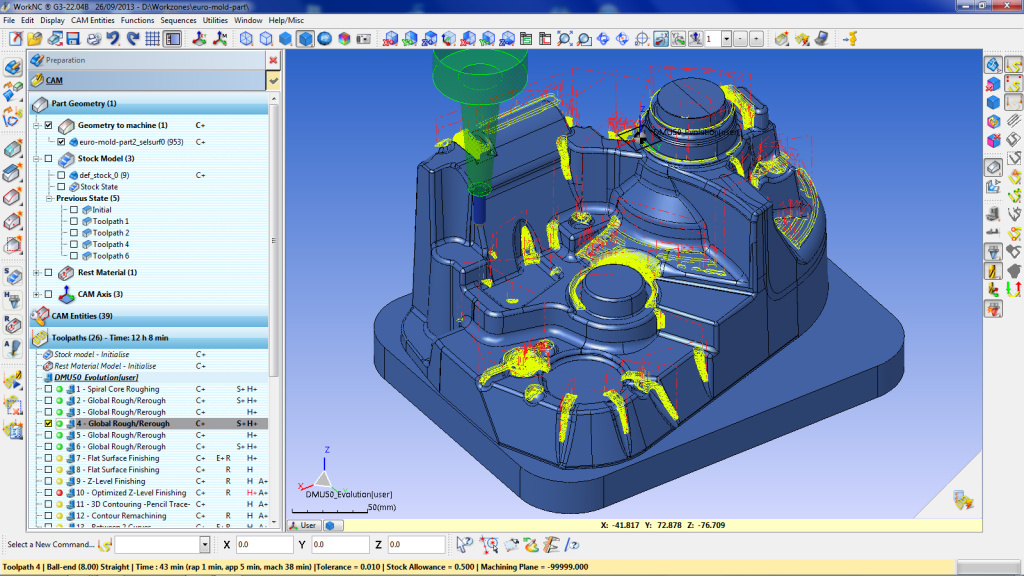
WorkNC is a computer-aided manufacturing (CAM) software that generates the instructions (toolpaths) for CNC machines to cut and form complex parts. In simpler terms, it’s the brain telling high-precision machine tools how to carve metal or other materials into a desired shape. Initially developed for mold and die makers, WorkNC quickly earned a reputation for automation and ease-of-use in CNC programming. Where older CAM systems required extensive manual tweaking, WorkNC’s claim to fame was doing much of the heavy lifting automatically – its toolpath generation aimed to be as close as possible to a one-click operation.The software was born at a small French company called Sescoi in the late 1980s. Sescoi (short for Société Européenne Spécialisée en Communication Organisation et Informatique) was founded in 1987 by Bruno Marko, an engineer with a vision to simplify CNC programming. At the time, programming multi-axis machining operations was notoriously difficult and time-consuming. Marko and R&D manager Gérard Billard set out to change that. Their solution, WorkNC, launched in 1988 and immediately turned heads in the industry by dramatically reducing programming times and improving reliability. “WorkNC’s aim has always been to be the closest thing possible to ‘single-button’ CAM,” founder Bruno Marko said, encapsulating the product philosophy of extreme user-friendliness through automation.
Today, WorkNC is part of the product portfolio of Hexagon AB, a Swedish technology giant. Through a series of acquisitions (which we’ll explore shortly), WorkNC became a flagship offering in Hexagon’s Manufacturing Intelligence division. The vendor behind WorkNC has evolved from a small French CAD/CAM specialist into a segment of a multinational corporation, but the software’s core mission remains: help manufacturers program complex machining jobs faster and more efficiently.
Areas of Application: From Automotive to Dentistry
WorkNC found its first successes in the mold and die industry, where manufacturers create the metal molds used to stamp or inject plastic parts. This field demands intricate shapes and smooth finishes – the kind of challenge WorkNC’s automated toolpaths were well suited to handle. One of WorkNC’s early adopters in 1988 was the Salomon Group, which used the software to manufacture ski boots and sporting goods. The ability to take a 3D design and rapidly generate a reliable machining program saved Salomon significant time in tooling their products.From that base in mold making, WorkNC expanded into automotive and aerospace manufacturing. Car makers and their suppliers began using WorkNC to machine engine components, prototype parts, and production tooling. The Audi RSQ concept car is one high-profile example – the entire outer body of the car was machined using WorkNC, demonstrating the software’s capability to handle large, complex surfaces. Aerospace firms similarly applied WorkNC to high-precision tasks like milling turbine blades and structural components from tough materials. The software’s emphasis on smooth, collision-free toolpaths and optimized cutting strategies helped companies improve surface quality (crucial for aerodynamic parts) and reduce machining times.
Another area where WorkNC made inroads is medical and dental device manufacturing. Recognizing a niche need, Sescoi introduced a specialized version called WorkNC Dental in 2009. WorkNC Dental automates the programming for milling dental prosthetics – crowns, implants, bridges – from materials like ceramics and titanium. Dental labs, which typically are not staffed by CAM experts, found that WorkNC Dental’s simplified interface and templates allowed them to produce custom implants with minimal programming effort. This opened a new market for the company in the healthcare field, where the demand for digital fabrication of patient-specific parts was on the rise.
Beyond these, WorkNC is used in general engineering, consumer electronics tooling, energy sector components, and even high-end consumer products. Wherever there is a complex 3D shape to be milled – whether the cavity of a plastic shampoo bottle or the mold for an aircraft interior panel – WorkNC has likely been considered by the shop doing the work. Its versatility across 2-axis, 3-axis, and 5-axis milling means it can handle simpler drilling operations all the way up to sculpting freeform surfaces on multiple sides of a part.
Importantly, WorkNC is often favored for jobs that are high-mix, low-volume – like prototypes, custom parts, or short production runs – because its automation features reduce the CAM programming overhead per job. In a factory making many one-off components (as is common in aerospace or mold making), saving hours on each programming task adds up to a big productivity gain. This is why WorkNC has a loyal following in some of the world’s most demanding manufacturing environments. In fact, by the 2000s WorkNC became so prevalent in Japan’s advanced manufacturing sector that it was reportedly used by over a quarter of Japanese companies in relevant industries, an impressive penetration in a market known for high quality standards.
From Startup to Industry Staple: A Brief History
WorkNC’s journey began in 1988 with version 1.0 of the software released by Sescoi. The timing was auspicious: industries were transitioning from manual programming of CNC machines to more sophisticated CAD/CAM software, but many solutions were still clunky or limited to 3-axis machining. WorkNC arrived offering a degree of automation that competitors lacked, and word spread. Throughout the 1990s, Sescoi expanded its reach internationally, setting up offices in the United States, UK, Germany, Japan, and other industrial hubs to directly support customers. By 2011, the company had nine offices across Europe, Asia, and North America, plus a network of over 50 distributors worldwide.
Key historical milestones for WorkNC include:
-
1988: Launch of WorkNC 1.0. Bruno Marko’s small team releases the first version, focusing on 3-axis milling for complex geometries. The product quickly proves its worth by halving programming times for roughing operations in early customer trials.
-
Early 1990s: WorkNC gains traction in Europe and Asia. Automotive and sporting goods manufacturers adopt it to accelerate their tooling production. Sescoi’s philosophy of continuous improvement begins to add more automated features with each release.
-
2002: Sescoi launches WorkNC-CAD, a companion 3D CAD system. This was a strategic move: by offering a CAD module, Sescoi enabled users to prep and repair geometric models or design tooling right within the WorkNC environment. Around this time, the company also acquires a small French CAD software (Mecasoft’s Solid Concept) to bolster its modeling capabilities.
-
2003: Introduction of WorkNC 5-Axis, marking WorkNC’s entry into full 5-axis simultaneous machining. This was a significant leap, as 5-axis machining allows cutting from virtually any angle and is essential for complex parts. WorkNC’s approach to 5-axis was again to simplify – it later introduced a feature called Auto5 that could automatically convert a 3-axis toolpath into a 5-axis one, sparing the programmer from starting from scratch.
-
2007: Release of WorkNC G3, a new generation with an updated interface and improved toolpath algorithms. By now WorkNC is in its third decade and facing competition from other CAM packages, but G3 shows the software keeping pace with modern UI expectations and 64-bit computing.
-
2008: Sescoi rolls out WorkXPlore 3D, a high-speed 3D viewer and collaboration tool. This product, while not a machining program itself, reflects the company’s innovative spirit – it allows anyone to open large 3D CAD files, analyze measurements or cross-sections, and share feedback without needing the original CAD software. It’s a complementary tool likely aimed at helping WorkNC customers (and others) in design reviews and project communication.
-
2009: The launch of WorkNC Dental and WorkNC Wire EDM. WorkNC Dental, as noted, brings the software’s automation to dental prosthetics manufacturing. WorkNC Wire EDM extends WorkNC’s CAM capabilities to wire-cut electrical discharge machining, a process often used for cutting very hard materials or intricate shapes (like injection mold inserts). These launches demonstrate Sescoi’s strategy of diversifying WorkNC into specialized niches.
-
2010: WorkNC Version 21 is introduced with full 64-bit support and multi-threading, taking advantage of modern hardware to speed up complex toolpath calculations. By this time, many long-time users could see a clear evolution: tasks that once took overnight to calculate could now be done in a fraction of that time, thanks both to improved algorithms and better PC performance.
-
2012: WorkNC celebrates its 20th anniversary. Reflecting on the journey, Bruno Marko emphasizes that throughout the years, “automation is a theme which runs throughout the development history of the software.” Indeed, by 2012 WorkNC boasts numerous automated routines – from automatically detecting the geometry of stock material to selecting appropriate cutting tools and sequences based on templates. This anniversary also marks the end of an era, as big changes were on the horizon for the company’s ownership.
By the early 2010s, Sescoi had grown to over 5,000 customers worldwide, with more than 11,000 licenses of WorkNC and its sister products in use. The success, while gratifying, also attracted interest from larger players in the industry – and soon WorkNC would change hands and join forces with bigger CAM portfolios.
Business Footprint and Metrics
Measuring the exact footprint of a software like WorkNC involves a mix of user base, financial metrics, and market presence. While detailed financials for WorkNC alone aren’t public (especially after being subsumed into larger companies), there are several indicators of its impact:
-
Global User Base: As mentioned, by 2011 Sescoi had thousands of customers across dozens of countries. Japan was (and likely remains) one of the largest user communities of WorkNC, where it reportedly held a strong share of the CAM market for mold and die. In Europe and North America, WorkNC became a staple in high-end mold shops and aerospace suppliers. Today, as part of Hexagon, WorkNC continues to be sold globally. Hexagon’s manufacturing software group serves customers in over 45 countries, and WorkNC is one of the key products it offers for CNC machining.
-
Revenue and Market Share: When WorkNC was under Sescoi, the company’s revenue wasn’t widely disclosed, but industry observers knew Sescoi as a successful mid-sized CAM vendor. In 2013, after being acquired by Vero Software (more on that soon), the combined group became what was called “the world’s largest CAM specialist.” Vero Software’s turnover in 2013 (across all its CAM brands including WorkNC) was about €80 million. This suggests that WorkNC contributed significantly to a business approaching the hundred-million-euro range – making it one of the major CAM products by revenue. In terms of market share, CAM is a fragmented market with many players; WorkNC historically competed with the likes of Mastercam, PowerMILL, and Tebis among others. Thanks to its reputation in the automotive and aerospace tooling sectors, WorkNC carved out a healthy niche; for instance, industry consulting firm CIMdata frequently listed Vero (and by extension WorkNC) among the top CAM vendors by seats shipped annually. In 2016, Vero Software was ranked the #1 CAM vendor by revenue, an accolade that partly stemmed from the popularity of WorkNC in its target segments.
-
Geographical Reach: Under Hexagon, WorkNC is sold and supported worldwide, with key development still happening in Europe. There is a strong presence in Asia (Japan, China, Korea) through offices and resellers, a legacy of the Sescoi era which Hexagon has continued. North America also remains an important market, especially for aerospace and automotive tooling. The software is available in multiple languages (English, French, German, Japanese, Chinese, etc.), reflecting its global user base.
-
User Profile: WorkNC’s users range from small job-shop machinists to large OEMs. A typical user might be a tooling engineer in a big automotive plant, or a CNC programmer at a supplier making molds for consumer electronics. Over the years, the community around WorkNC has remained quite pragmatic and loyal – many case studies show users sticking with WorkNC for decades because it “just works” and doesn’t require them to be programming wizards. In one example, the manufacturing team at Fuji Heavy Industries (maker of Subaru vehicles) adopted WorkNC and found that new staff could learn it “in less than half a day” because of its intuitive interface and automated features, a testament to the short learning curve that has become a selling point.
While exact figures like current annual revenue or total active licenses aren’t publicly broken out for WorkNC alone, it’s clear that the software stands as a significant contributor to Hexagon’s broader manufacturing software segment. Hexagon AB is a publicly traded company, and in its financial reports, the division containing CAD/CAM software has shown steady growth, indicating continued demand for products like WorkNC.
Mergers, Acquisitions, and Partnerships
The corporate story of WorkNC is one of integration into larger ecosystems. The first big turning point came in January 2013, when the UK-based company Vero Software acquired Sescoi and the WorkNC product line. Vero Software was itself a conglomeration of several CAM software brands (including well-known names like Alphacam, Edgecam, SurfCAM, Radan, and VISI). By acquiring Sescoi, Vero added WorkNC to its stable, immediately boosting Vero’s portfolio with a top-tier solution for automated 5-axis machining and mold/die applications.
Richard Smith, then CEO of Vero, commented at the time that the acquisition “firmly establishes Vero as the world’s largest and number one CAM specialist.” Indeed, by bringing WorkNC onboard, Vero could now claim an unrivaled range of CAM solutions covering nearly every niche – from sheet metal cutting (Radan) to wood cabinetry (Alphacam) to multi-axis milling (WorkNC). Smith promised to continue investing in WorkNC and welcomed Sescoi’s partners and resellers into the Vero family, emphasizing that existing WorkNC customers would see only positive changes in support and development.
Bruno Marko, the founder of Sescoi, expressed satisfaction in joining forces with Vero. “Since originally founding the company in 1987, Sescoi has become one of the world’s key CAD/CAM providers with WorkNC,” Marko said upon the acquisition. He noted that with Vero’s global distribution network and greater development resources, he was confident WorkNC would “advance at an even faster pace” and continue to deliver innovative solutions that boost productivity and quality for customers. The merger was not just a financial transaction; it was seen as a strategic alignment where WorkNC could reach more users and get more R&D muscle behind it.
The next chapter came swiftly. Barely a year and a half later, in July 2014, the Swedish corporation Hexagon AB announced it was acquiring Vero Software. Hexagon is a big name in precision technologies – known primarily for metrology (measurement systems like coordinate measuring machines and laser scanners) and design software. By acquiring Vero, Hexagon signaled a move into the CAM realm, effectively bridging the gap between measuring a part and manufacturing it. Ola Rollén, Hexagon’s CEO at the time, said, “Together with its unique suite of manufacturing software solutions, Vero Software has the expertise, knowledge and resources to deliver even higher levels of productivity to our customers. Leveraging our global footprint, the synergies from our combined technologies will advance our strategy, supporting the growing need to integrate all data and processes across the manufacturing lifecycle.” In other words, Hexagon saw WorkNC and its sister CAM products as the missing pieces to connect design, production, and quality control in a seamless digital thread.
Under Hexagon, WorkNC became part of the Hexagon Manufacturing Intelligence division (often referred to as Hexagon’s Production Software portfolio). This new home opened up opportunities for deeper partnerships and integrations:
-
Integration with Metrology: Hexagon’s metrology tools (like portable measuring arms or 3D scanning systems) could now interface more intelligently with CAM. For example, measurement data from a scanned part might inform adjustments to a WorkNC machining program for a better fit – a synergy important for reverse engineering and quality loops.
-
Collaboration with Simulation Software: In recent years, Hexagon also acquired a simulation software called NCSIMUL. WorkNC has been integrated with NCSIMUL to provide seamless G-code simulation and verification. As one product manager described, after programming in WorkNC, a user can send the entire setup (machine model, tools, stock, fixtures) to NCSIMUL with a couple of clicks and simulate the CNC run. This tight coupling means fewer errors on the shop floor and faster prove-out of new jobs.
-
Partnerships with Machine Tool Builders: CAM software vendors often collaborate with CNC machine manufacturers to optimize post-processors (the translators that turn CAM toolpaths into machine-specific code) and to showcase capabilities. Over the years, WorkNC has been demonstrated in partnership with leading machine builders – for instance, at trade shows like EMO or IMTS, you might find WorkNC driving a 5-axis machining center from Makino or DMG Mori, cutting a complex showpiece part. These partnerships are win-win: WorkNC gets to prove its worth on cutting-edge machines, and machine builders show customers an easy way to program their equipment for complex tasks.
-
Academic and Training Collaborations: Given the specialized nature of CAM, Sescoi (and later Vero/Hexagon) often engaged with technical schools and training centers to teach WorkNC. By providing educational licenses, the company ensured a pipeline of young engineers familiar with the software. In some countries, WorkNC became part of the curriculum for toolmaking and machining courses, reflecting its industry-standard status.
One notable collaboration in the 2010s was the development of a suite concept under Hexagon. Rather than selling WorkNC as a standalone product, Hexagon began offering it as part of a “Mold & Die” suite – pairing WorkNC with design tools (like CAD for mold design), analysis tools (for mold flow or stress, via other Hexagon acquisitions), and metrology. This suite approach aimed to appeal to manufacturers looking for an end-to-end solution from a single vendor.
Throughout these ownership changes, WorkNC’s identity remained intact. Users continued to see new versions and enhancements regularly. If anything, being under larger corporate umbrellas accelerated its development. However, consolidation did raise some questions in the community – whenever a beloved product gets acquired, users worry if it will be shelved or merged into something else. In WorkNC’s case, those fears have largely proven unfounded: Hexagon has consistently released annual updates to WorkNC, including major versions in 2020, 2021, and beyond, often touting improved performance and new features.
Innovations and Unique Features
What sets WorkNC apart in the crowded CAM software market? Several innovations and unique strengths have defined the system over the years:
-
Automation and Ease of Use: We’ve touched on this, but it bears repeating – WorkNC’s flagship feature is automation. From the early days, it introduced automatic geometry analysis to detect part features and choose appropriate machining zones. It can figure out where there is remaining material (rest machining) and adjust subsequent toolpaths automatically. It also offers predefined machining sequences for common tasks; for example, a shop can set up a template for “steel injection mold cavity” that automatically strings together roughing, semi-finishing, and finishing routines with recommended tools and speeds. This dramatically lowers the skill barrier and programming time. A quote from Atsushi Takahashi, a manufacturing manager who implemented WorkNC in a Subaru factory, encapsulates it: “I have personally experienced how easy and trouble-free CNC program preparation is with WorkNC… Our employees tell me that WorkNC is the best and that it can be learned in less than half a day.” Statements like this underline why companies invest in WorkNC – less training time and fewer errors mean faster turnaround on jobs.
-
High-Quality Toolpaths: All CAM systems ultimately live or die by the quality of the toolpaths they generate – these directly impact machining time, surface finish, and tool wear. WorkNC has excelled in strategies for High Speed Machining, which involve smooth, flowing toolpaths that avoid sharp changes in direction (to reduce stress on machines and tools). It was an early adopter of trochoidal milling strategies (a method of constant engagement cutting that is easier on the tool) and has collision detection built-in to prevent costly crashes. In multi-axis machining, its Auto5 module can transform a 3-axis path into a 5-axis movement automatically, which is quite unique; it essentially lets users get some benefits of 5-axis machining without having to be experts in 5-axis CAM programming. Furthermore, WorkNC’s toolpath algorithms are known for producing minimal air-cutting and smooth transitions, meaning the cutter spends more time removing material and less time repositioning inefficiently.
-
Reliability and Consistency: Many longtime users note that WorkNC produces “ready-to-run” programs with very little manual editing. In the world of CAM, it’s not uncommon for programmers to have to hand-edit the G-code or add custom touches for tricky sections. WorkNC’s philosophy is to eliminate that need. A mold maker from an aerospace supplier once commented that WorkNC’s output was so reliable, they could trust it to run an unmanned night shift (lights-out machining) without incident – a huge compliment in manufacturing. This reliability stems from rigorous testing and incremental improvements: WorkNC’s development team often works closely with customers to refine toolpath behavior in real-world conditions. For example, if a user finds a particular scenario that produces a gouge or inefficiency, Sescoi (and later Hexagon) would address it in service packs or the next release. Over decades, this has built a robust, battle-tested system.
-
Wide CAD Format Support: WorkNC is CAD-neutral, meaning users can import designs from virtually any CAD system – CATIA, SolidWorks, NX, you name it – and WorkNC will handle it. This has been crucial because suppliers often receive models from their clients in various formats. WorkNC also supports working with polygon mesh files (STL) and even point cloud data, which is useful in some rapid prototyping or medical applications.
-
Specialized Modules: In addition to the core product, WorkNC offers a variety of optional modules that extend its functionality:
-
WorkNC-CAD (Designer): A CAD module for creating and editing part geometry or fixture designs. Modern versions (branded as WorkNC Designer) provide direct modeling tools to quickly fix or tweak CAD models before machining.
-
WorkNC 2D: A lighter package for simple 2D machining like drilling, pocketing, and engraving – catering to users who may not need full 3D surfacing capabilities.
-
WorkNC Robot: A module to program robotic machining, which uses industrial robotic arms as machining devices. This is a newer frontier, as some companies employ robots for light milling or trimming operations; WorkNC provides simulation and toolpath generation for those robots, leveraging its CNC expertise.
-
WorkXPlore 3D: The aforementioned viewer, which is often bundled to allow easy sharing of 3D models and CAM results with clients or team members who don’t have CAD software.
-
Dental and EDM modules: Tailored interfaces and automation for those specific processes, as previously discussed.
-
-
Continuous Innovation: Even in recent releases, WorkNC has introduced forward-looking features. The 2020 release, for instance, brought a technology called Advanced Toolform which improved how toolpaths are calculated when using modern cutting tools (like high-feed cutters or complex insert shapes). By accounting for the true shape of these tool inserts (rather than an oversimplified profile), WorkNC can leave a more consistent layer of material for finishing passes, thereby speeding up the finishing and reducing overall cycle time. In internal tests, the developers reported rest-roughing time improvements up to 70% using this feature – a massive gain for large jobs. Additionally, the integration with Hexagon’s toolpath simulation (NCSIMUL) as described earlier was a significant step in error-proofing the machining process. And on the user experience side, WorkNC’s interface has been evolving to be more intuitive and customizable, with ribbon-style menus and context-sensitive help, to ensure that even as the software gains complexity under the hood, it remains approachable to the programmer on the shop floor.
Strengths and Market Position
WorkNC’s strengths can be summed up in a few key points: automation, quality, and niche focus. By automating complex CAM tasks, it allows companies to be productive with fewer specialized programmers. This has positioned WorkNC as a premium solution especially valued in high-labor-cost environments (like Western Europe, Japan, and North America) where saving programming time translates directly into cost savings.
Quality of output – both in terms of the machine code and the finished part – is another strength. Experienced machinists often judge a CAM system by the subtlety of how it approaches corners, how it manages tool engagement, or whether it avoids unnecessary lifts of the cutter. WorkNC scores high in these details, thanks to its decades of refinement. It produces toolpaths that not only run safely but also optimize cutting conditions. For example, when roughing out a cavity, WorkNC dynamically adjusts the tool’s path to maintain a consistent material removal rate, which avoids shock loads on the tool and results in a smoother cut. This kind of intelligence built-in means the end user doesn’t have to manually create multiple toolpaths or extra geometry to achieve the same result – the software handles it.
In terms of market position, WorkNC has often been seen as the go-to CAM for mold, die, and tooling work. Competitors in this space include Tebis (from Germany), Cimatron, and PowerMILL (originally from Delcam in the UK). WorkNC’s edge has been its automation; some competitors offer perhaps more raw control or specialized functions for extremely complex shapes, but they often require more expert knowledge to use. WorkNC aimed for the 80% of typical jobs that could be largely automated. The result is that in many tooling departments, engineers choose WorkNC when they want a dependable result quickly, whereas they might reserve a more manual CAM system for only the trickiest of projects.
An interesting byproduct of WorkNC’s focus on ease-of-use is the impact on workforce flexibility. Companies have noted that they can cross-train more employees to program with WorkNC, rather than relying on one “CAM guru.” This mitigates the risk of losing tribal knowledge if a key programmer leaves. In an era where skilled CNC programmers are in short supply, this strength cannot be overstated – it turns CAM programming into more of a push-button process that any machinist or engineer can pick up, rather than a black art mastered by few.
As of the mid-2020s, WorkNC continues to hold a solid spot in the CAM market. It might not have the sheer volume of users that more generalist CAM packages (like Mastercam or Fusion 360) do, since those cater to a broad range including hobbyists and very small machine shops. WorkNC instead has a quality-over-quantity approach to its user base: it’s prevalent in the upper tiers of manufacturing where the demands are toughest. Many of its users produce mission-critical parts – think of an aerospace shop making engine components or a medical device company milling surgical implants – where precision and reliability trump all. In those circles, WorkNC is a respected name.
Voices of Leadership: Philosophy and Future Direction
One of the consistent threads in WorkNC’s story is visionary leadership that understands manufacturing pain points. Bruno Marko’s early vision set the tone; his oft-quoted goal of “single-button CAM” speaks to a philosophy of using software to shoulder the burden, not the human. That approach has clearly resonated, as seen by how many in WorkNC’s leadership and development team have echoed it.
For instance, Walter Neveux, a WorkNC product owner at Hexagon, explained in a recent interview how the team tackles practical shop-floor questions when developing new features. “We looked at how many rest-roughing processes need to be applied, and how lengthy they are; how much stock material should be left for finishing, and could it be less; and could pre-finishing be eliminated altogether?” By asking such questions, WorkNC’s developers created the Advanced Toolform solution mentioned earlier, which yielded more efficient roughing. Similarly, Miguel Johann, a senior manager in the WorkNC team, highlighted their drive to streamline workflows: “The process is as simple, automated and straightforward as possible. The solution is now empowered by a modern CAD preparation platform that will continue to bring WorkNC users closer to the digital thread.” Quotes like these reinforce that WorkNC’s direction is aligned with the broader trends in manufacturing – automation, integration, and the pursuit of efficiency.
When Hexagon took over, Ola Rollén (then CEO of Hexagon) provided a broader context for WorkNC’s future: he envisioned integrating WorkNC into a full digital ecosystem where design, production, and inspection data all flow together. This is part of what’s often called Industry 4.0 or smart manufacturing. In practical terms, the WorkNC team has indeed been working on such integrations – connecting CAM to PLM (product lifecycle management) systems, adding functionality for handling multiple part setups (important for efficient smart factories), and enabling cloud-based updates and support. While the core of WorkNC remains a desktop application used by a programmer at a machine shop, it increasingly doesn’t live in isolation – it’s a piece of a larger puzzle. Hexagon’s concept of “closing the loop” between digital design and physical production means WorkNC could, for example, use feedback from inspection results to adjust a machining process proactively (like tweaking a toolpath if a part tends to come out slightly out-of-tolerance in one corner).
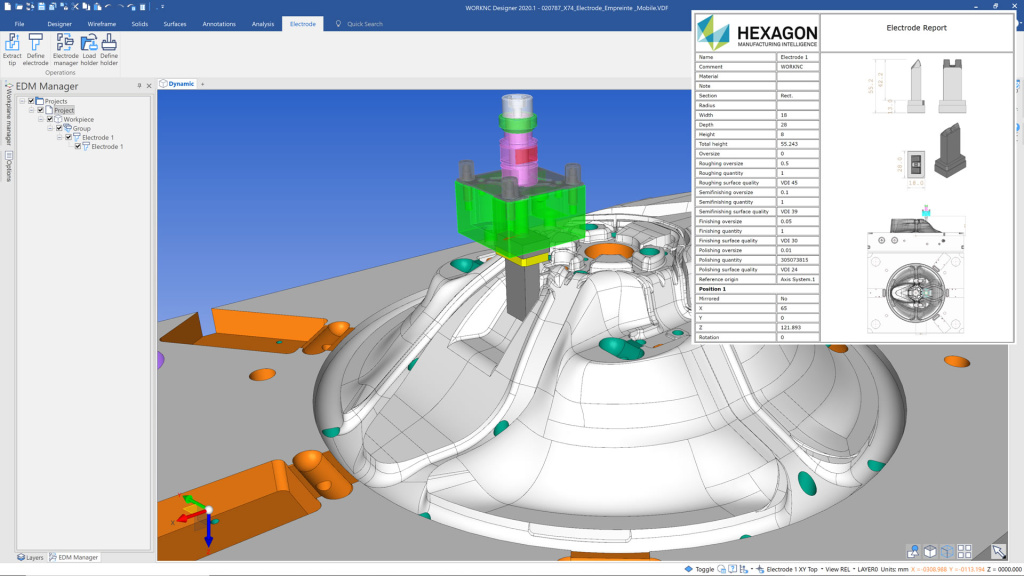
The company’s leadership also frequently speaks about supporting their customers in adopting new technologies. In recent press releases, WorkNC’s team has championed topics like toolpath strategies for additive manufacturing hybrids (machines that both 3D-print and mill) and automation for robot-based machining, indicating they are not resting on laurels. Even as some in the industry speculate about CAM consolidation or wonder if newer CAD/CAM entrants will disrupt the scene, WorkNC’s guardians appear committed to keeping it cutting-edge. As evidence, the software’s release history in the 2020s has shown not just maintenance updates but genuine new capabilities each year – from smarter toolpath algorithms to improved user interfaces and new modules (for instance, an Electrode design module was added to help EDM electrode fabrication, which is vital in mold making).
Finally, a subtle but important aspect of WorkNC’s endurance is the community and feedback loop. Leadership at Hexagon often cites customer case studies and user group meetings as invaluable. They’ve kept an open ear to the shops using WorkNC day in and day out. A quote from a WorkNC project manager sums it up: “Our best ideas often come from a conversation with a user who says, ‘I spend too long doing X.’ If we can solve X in the software, that benefits not just that user but everyone.” This collaborative ethos between developer and end-user is a hallmark of WorkNC’s development culture, instilled from the Sescoi days and carried on under Hexagon.
The Road Ahead
As WorkNC moves forward under the umbrella of Hexagon, it straddles a line between continuity and innovation. On one hand, it must continue doing what it does best – providing rock-solid CAM solutions to industries that rely on it. On the other hand, it must adapt to the evolving manufacturing landscape, which could include more automation, artificial intelligence in CAM, cloud computing, and integration with emerging fabrication technologies.
The software’s history shows a willingness to evolve: from 3-axis to 5-axis, from standalone to integrated solutions, from traditional machining to new areas like robotics and dental. The current stewards at Hexagon clearly see WorkNC as a key piece in their smart manufacturing vision, so investment is likely to remain strong. Users can expect improvements that align with increasing shop automation – for example, even more powerful scripting or automation within WorkNC to handle lights-out machining scenarios, or perhaps AI-driven suggestions for optimum toolpaths. Already, features like automatic feature recognition in WorkNC hint at a future where the CAM system might identify a part’s geometry (holes, pockets, ribs) and propose a complete machining plan with minimal human input.
Another aspect to watch is how WorkNC fits into Hexagon’s push for digital twins and simulation. With data being the buzzword of modern industry, WorkNC might evolve to provide richer data analytics – such as predicting machining time and costs with greater accuracy, or integrating with factory scheduling systems to optimize machine usage.
Yet, for all these forward-looking possibilities, the heart of WorkNC’s appeal will likely remain the same as it was in 1988: make life easier for the machinist and programmer. In a world of increasingly complex products – whether an electric vehicle’s motor components or a custom medical implant – there is immense value in a tool that simplifies the manufacturing of those products. WorkNC has built its legacy on that value proposition, and by all accounts, it is poised to continue playing a pivotal role behind the scenes in manufacturing’s most challenging projects.
WorkNC may not be a household name outside industrial circles, but next time you marvel at a finely crafted car, airplane, or gadget, remember that software like WorkNC is quietly at work behind the curtain, turning digital dreams into tangible reality on shop floors worldwide.
Vendor: Hexagon