
FeatureCAM: Evolution of a Feature-Based CAD/CAM Solution
General Description and Vendor
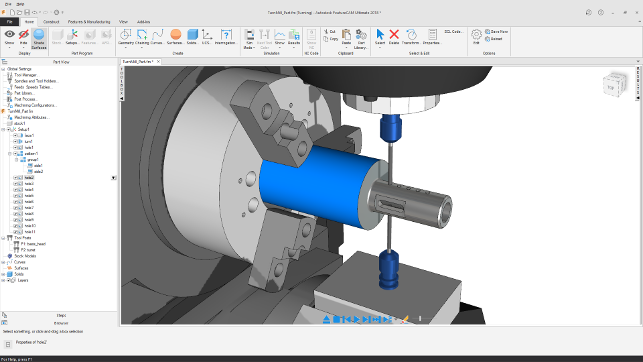
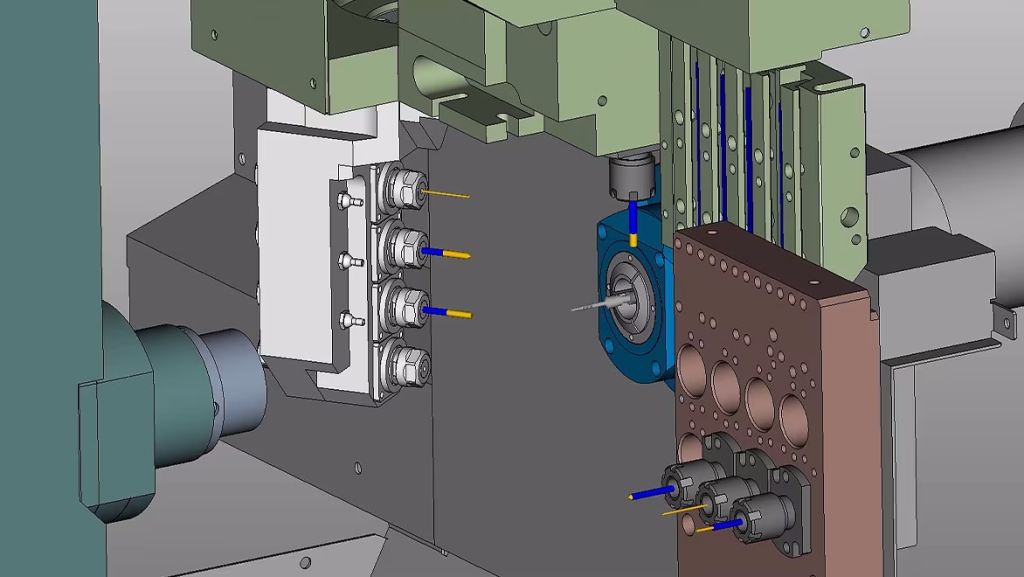
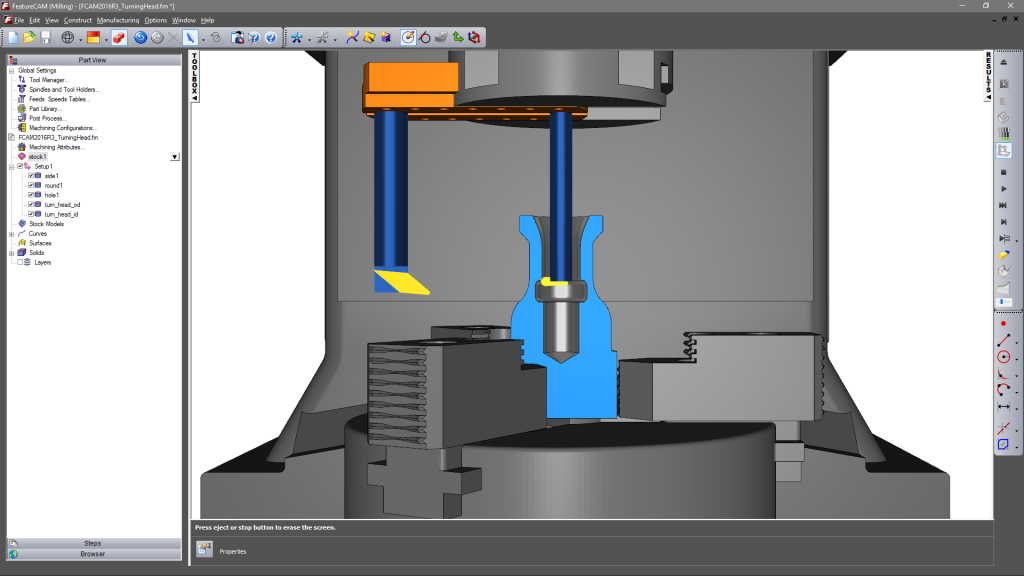
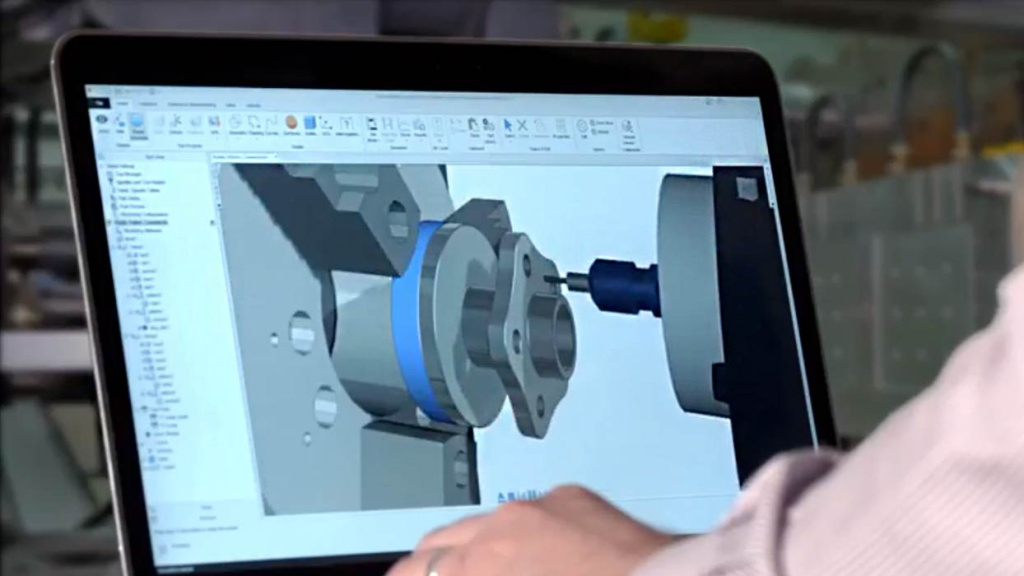
FeatureCAM is an automated computer-aided manufacturing (CAM) software package designed to streamline the programming of machine toolpaths for CNC (computer numerical control) equipment. It integrates CAD-to-CAM functionality, allowing users to import or design parts and then automatically generate optimized toolpaths for milling, turning, mill-turn (multi-tasking) machines, Swiss-type lathes, and wire EDM cutting. A defining aspect of FeatureCAM is its feature-based approach: the software recognizes geometric features (like holes, pockets, bosses, etc.) on 3D models and uses built-in machining knowledge to decide how to machine those features. This intelligence enables automatic selection of tools, cutting strategies, and machining order, significantly reducing the manual effort and expertise normally required in CNC programming. The result is faster programming turnaround and more consistent, error-free toolpaths compared to conventional CAM systems.
Today, FeatureCAM is part of Autodesk’s portfolio of manufacturing software. The product was originally developed by a smaller specialist firm (Engineering Geometry Systems) and later became part of Delcam plc – a leading UK-based CAD/CAM company. Autodesk, a global CAD/CAM/CAE software leader, acquired Delcam in 2014, and with it FeatureCAM. Now marketed as “Autodesk Fusion 360 with FeatureCAM”, the software is available through Autodesk and is positioned within its Product Design & Manufacturing collection.

Application Areas and Use Cases
FeatureCAM is used in a wide range of industries that rely on CNC machining. Common application areas include:
-
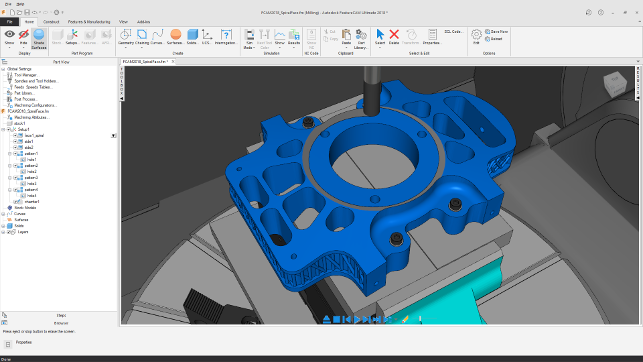
Aerospace & Defense: Programming complex 5-axis milling operations for aircraft components, turbine parts, and intricate structural pieces. FeatureCAM’s advanced 5-axis strategies and collision avoidance are valuable for machining the complex geometries and tight tolerances in aerospace parts.
-
Automotive: High-speed machining of molds, dies, and engine components. Automotive suppliers use FeatureCAM to automate the manufacturing of tooling (injection molds, stamping dies) as well as production parts, leveraging its feature recognition to rapidly program common features like holes, slots, and pockets on engine blocks or transmission components.
-
Medical Devices: Precision machining for implants, surgical instruments, and prosthetics. In the medical sector, where small, intricate parts are common, FeatureCAM helps quickly generate toolpaths for multi-axis milling and turning of titanium bone screws, dental implants, orthopedic components, etc., ensuring consistency and surface finish quality.
-
Consumer Products & Plastics: Mold making and general machining for consumer goods. For example, FeatureCAM is used by plastics manufacturers to CNC machine molds and tooling for products like kayaks, sports equipment, and packaging. (Notably, the software’s 40,000th customer in 2012 was a U.S. manufacturer that used FeatureCAM to produce aluminum molds for plastic kayaks, illustrating its use in tooling for consumer products.)
-
General Machining & Job Shops: Small to mid-sized machine shops use FeatureCAM for its ease of use and quick programming on a variety of jobs – from simple 2.5D milled plates to turned shafts and complex milled/turned parts. The software’s ability to automatically handle different machine types (mills, lathes, mill-turn centers) in one interface makes it popular for shops handling diverse projects in low to medium production volumes.
Across these use cases, a key benefit is reduced programming time. CAM programmers, manufacturing engineers, and CNC machinists often report that FeatureCAM’s automation lets them program parts in a fraction of the time of manual coding or less-automated CAM tools. By capturing best practices in its machining strategies, it also helps even less-experienced programmers produce safe and efficient NC code. For instance, a precision molding company that adopted Autodesk FeatureCAM noted significant productivity gains – they could program their multi-axis CNC lathes and mills much faster and with fewer errors, allowing them to take on more complex jobs in aerospace and automotive markets without adding programming staff. In summary, any manufacturing scenario that requires rapid, reliable generation of CNC toolpaths can be a good fit for FeatureCAM, especially where feature-rich parts (with many drilled holes, pockets, etc.) are involved.
History and Product Evolution
FeatureCAM’s origins date back to the late 1980s and early 1990s. It was developed by Engineering Geometry Systems (EGS), a small CAM software company based in Salt Lake City, Utah. EGS was led by CEO Glenn McMinn, who founded the company in 1988 with the vision of embedding manufacturing knowledge directly into CAM software. At the time, programming CNC machines was labor-intensive and required significant expertise; McMinn and his team aimed to simplify this by having the software itself understand machining “features” and best practices.
After several years of R&D, EGS launched the first version of FeatureCAM in 1995. It made history as one of the world’s first Windows-based, feature-recognition CAM systems. Early FeatureCAM could take a CAD design and automatically identify features like drilled holes or pockets, then suggest tools, speeds/feeds, and generate toolpaths to machine those features – a groundbreaking capability in the mid-90s. This approach contrasted with traditional CAM, where programmers had to manually define each machining operation. FeatureCAM 1.0 initially focused on 2D milling, but its success set the stage for rapid expansion of capabilities. Over the late 1990s, EGS introduced additional modules: support for 2.5D and 3D milling, turning (FeatureTURN), wire EDM, and eventually 4-axis and 5-axis machining. By the early 2000s, FeatureCAM had a loyal user base and was known for its ease of use and efficiency. Manufacturing publications from that era noted how FeatureCAM “eliminates many errors and can save a lot of time and money” by embedding machining details into software – precisely the vision EGS started with.
A significant milestone in FeatureCAM’s evolution came in 2005 when Delcam plc acquired EGS. Delcam, based in Birmingham, UK, was a major CAD/CAM vendor known for products like PowerMILL (high-end CAM for complex shapes) and PowerSHAPE (CAD). By acquiring FeatureCAM, Delcam expanded its offerings to include a more automated, feature-based CAM line developed in the U.S. Under Delcam’s ownership, FeatureCAM continued as an independent product line (with EGS essentially becoming “Delcam USA”). Delcam invested in further development – in fact, the acquisition heralded accelerated enhancements leveraging Delcam’s resources. For example, within a few years, FeatureCAM’s algorithms were bolstered by Delcam’s R&D; the software gained the advanced “Vortex” high-efficiency roughing strategy (originally developed for PowerMILL) to improve toolpath performance. In 2007, FeatureCAM achieved “Certified CAM Product” status for SolidWorks, indicating a high level of integration and compatibility with the popular SolidWorks CAD software – a strategic move allowing users to seamlessly import SolidWorks models and even run FeatureCAM inside SolidWorks if desired (via a plug-in). By 2010, FeatureCAM introduced multi-threaded toolpath calculations for faster processing on modern CPUs, and added complex features like 5-axis swarf machining and combined drilling/milling operations to handle holes with missing drill sizes. The product matured into a comprehensive CAM suite covering a broad range of machine types, yet it retained the user-friendly interface and automation focus that were its hallmarks.
During the Delcam era, FeatureCAM’s user base and capabilities grew steadily. Delcam often highlighted FeatureCAM as complementing its higher-end CAM systems: whereas PowerMILL was ideal for highly complex free-form surface machining (like molds and aerospace components), FeatureCAM excelled at production machining and feature-rich parts, offering ease and speed in programming. The two product lines together helped Delcam cater to a wide spectrum of manufacturing needs.
The next turning point came in 2014. Autodesk, Inc. – a Fortune 500 design software giant best known for AutoCAD and Inventor – acquired Delcam. This was a landmark deal in the CAM industry, valued at approximately £172.5 million (around $286 million USD). With this move, FeatureCAM became part of Autodesk’s portfolio. Initially, Autodesk allowed Delcam to operate as a semi-independent subsidiary, ensuring continuity for Delcam’s products and customers. Over time, however, Autodesk integrated the Delcam technologies into its own offerings. FeatureCAM was rebranded under Autodesk, and eventually bundled with Autodesk’s Fusion 360 (a cloud-connected CAD/CAM platform). By the late 2010s, Autodesk began offering “Fusion 360 with FeatureCAM,” combining Fusion’s modeling and cloud collaboration tools with FeatureCAM’s automated CAM capabilities. This integration aimed to provide a more unified CAD-to-CAM experience: designers could develop a part in Fusion 360 and then use FeatureCAM’s engine to generate NC code, all under one subscription. Despite the Autodesk branding, the core FeatureCAM application interface and functionality remain recognizable to long-time users – Autodesk has continued releasing annual updates (FeatureCAM 2017, 2018, … up to the latest FeatureCAM 2024) with new features and improvements, ensuring the product stays current with industry needs. Notably, Autodesk decided to discontinue some older Delcam products (like the artistic engraving tool ArtCAM), but FeatureCAM has been maintained, reflecting strong demand and unique value in the market.
In summary, FeatureCAM’s journey spans over 30 years: from a pioneering startup in Utah introducing feature-based CAM, through growth and refinement under Delcam’s wing, to its current status as an Autodesk product with global reach. Throughout this evolution, the software has consistently advanced in capability (adding more machine support, optimization strategies, and user conveniences) while sticking to its original mission of automating CNC programming and reducing the burden on human programmers. It stands as one of the longer-running CAM software brands in the industry, with a continuous lineage of development since 1995.
Business Metrics and Market Presence
Over the decades, FeatureCAM (and the business behind it) achieved significant commercial success in the CAM market. Here are some key business metrics and facts:
-
User Base: By 2012, Delcam announced it had reached over 40,000 FeatureCAM customers worldwide. This number continued to grow; the company passed 45,000 customers in 2013 and was on track to exceed 50,000 by 2015. (Each “customer” often represents a company or installation, so the number of individual end-users or seats is likely even higher.) Having tens of thousands of users has placed FeatureCAM among the most widely used CAM systems globally. Users range from small job shops with a single license to large manufacturing enterprises with dozens of FeatureCAM seats across multiple facilities.
-
Revenue and Growth: FeatureCAM contributed to Delcam’s strong financial performance in the early 2010s. In 2012, Delcam plc (which sold FeatureCAM along with other products) recorded an annual revenue of £47.1 million (approximately $71 million USD), a record high at that time. This represented a 12% increase over the previous year, reflecting growing sales of CAM software licenses and maintenance. By the first half of 2013, Delcam’s sales were up again (~£25 million in H1 2013). While these figures encompass all Delcam products, FeatureCAM was a significant part of the portfolio – particularly important in markets like North America. It’s worth noting that Delcam’s consistent growth (even through the late-2000s recession) was driven in part by FeatureCAM’s appeal to a broad base of machine shops seeking productivity improvements. Autodesk has not broken out FeatureCAM’s revenue as a separate line since the acquisition, but the product is believed to continue to generate substantial subscription sales as part of Autodesk’s manufacturing solutions segment.
-
Geographic Presence: FeatureCAM is used worldwide. Prior to the Autodesk acquisition, Delcam had more than 30 offices across North America, Europe, and Asia, and a reseller network of over 300 partner offices covering around 80 countries. This extensive distribution meant FeatureCAM was available and supported in all major manufacturing regions. The software saw particularly strong adoption in the United States (which became Delcam’s single largest market by revenue), as well as in Western Europe (UK, Germany) and East Asia (notably China and South Korea). In fact, Delcam’s revenue breakdown in 2012 was roughly 51% Europe, 25% Asia, 24% Americas, underscoring a balanced global presence. Since becoming part of Autodesk, FeatureCAM benefits from Autodesk’s even broader global infrastructure and brand recognition, likely further expanding its user base in emerging markets. The user interface is localized in multiple languages, and training/support is available worldwide, making it accessible to manufacturing teams virtually anywhere CNC machines are used.
-
Market Position: In the CAM industry, FeatureCAM has occupied a prominent niche. Industry analysis by CIMdata (a PLM/CAM market research firm) ranked Delcam as the world’s largest CAM-centric software vendor in the early 2010s. In 2013, Delcam’s share of global CAM software “vendor direct” revenue was about 7.7%, the highest among dedicated CAM companies (this excludes CAD-embedded CAM products of larger CAD companies). This top ranking was bolstered by the popularity of FeatureCAM (as well as PowerMILL) and demonstrated that Delcam/FeatureCAM were leaders in the CAM field alongside competitors like Mastercam, Siemens NX, and others. Delcam also employed the largest development team in the CAM sector (over 200 developers) – a sign of continual investment in product improvements. After Autodesk’s acquisition, the combined resources further solidified FeatureCAM’s development. While Autodesk doesn’t publicly break out market share for FeatureCAM alone, the software continues to be considered one of the major CAM systems globally and a key component of Autodesk’s strategy to offer end-to-end solutions from design to manufacturing.
-
Awards and Recognition: Over its history, FeatureCAM and its parent companies have received various industry accolades. Prior to 2014, Delcam won multiple Queen’s Awards for Innovation and International Trade (a prestigious UK award for companies) – some of those awards were indirectly attributable to the success of FeatureCAM in international markets and its innovative approach. FeatureCAM itself earned certification and partner awards, such as the SolidWorks Certified CAM Product status, which highlighted its technical excellence and integration capabilities. These recognitions helped reinforce customer confidence and brand reputation.
In summary, FeatureCAM is backed by strong numbers: a large and diverse user community, proven sales growth, and a presence on the world stage of manufacturing software. Even as part of Autodesk (a multi-billion-dollar corporation), FeatureCAM’s identity as a market-leading CAM solution remains, with a substantial installed base and ongoing demand from industry for its automation capabilities.
Mergers, Acquisitions, and Partnerships
The story of FeatureCAM involves several strategic mergers and alliances that shaped its trajectory:
-
Engineering Geometry Systems (EGS) Joins Delcam (2005): The first major change in ownership came in March 2005, when Delcam plc acquired Engineering Geometry Systems, the original developer of FeatureCAM. This acquisition was a strategic fit: Delcam wanted to broaden its CAM offerings with a feature-based, easier-to-use system, and EGS’s FeatureCAM provided exactly that. Upon acquisition, EGS was renamed Delcam USA, and the FeatureCAM product line continued under the Delcam brand. All of EGS’s management and staff (including founder Glenn McMinn) stayed on through the transition, ensuring product development proceeded without interruption. Delcam’s Managing Director at the time, Hugh Humphreys, remarked that the union would “strengthen both product lines and aggressively market them worldwide,” reflecting Delcam’s plans to leverage its larger sales network (over 150 offices in 60 countries) to increase FeatureCAM’s international reach. From EGS’s perspective, joining Delcam provided resources and exposure to “move FeatureCAM to an even higher level of automation,” as EGS President Glenn McMinn noted. Indeed, post-2005 FeatureCAM releases saw accelerated enhancements thanks to the larger R&D pool and technologies cross-transferred from Delcam’s other products. This merger also brought FeatureCAM into closer alignment with Delcam’s other acquisitions – for example, Delcam had acquired a Swiss-lathe CAM specialist (PartMaker/IMCS in 2006), and while PartMaker remained a separate product, eventually Autodesk would bundle PartMaker together with FeatureCAM Ultimate to offer a comprehensive package for mill-turn and Swiss machining.
-
Autodesk Acquisition of Delcam (2014): A decade after the Delcam/EGS deal, the next major shakeup was Autodesk’s purchase of Delcam. Announced in late 2013 and completed in February 2014, this acquisition was one of the largest in CAM software history. Autodesk paid roughly £20.75 per share for Delcam, totaling about £172.5 million (approx. $300 million). By acquiring Delcam, Autodesk instantly added a suite of CAM products (FeatureCAM, PowerMILL, PowerINSPECT, etc.) to its portfolio, signaling a strong push into the manufacturing software space beyond its traditional CAD focus. For FeatureCAM users, Autodesk’s acquisition initially brought little change – Autodesk allowed Delcam to operate as an independently managed subsidiary for a period, meaning FeatureCAM’s product team, release schedule, and customer support continued as before. Autodesk’s senior leadership publicly expressed support for Delcam’s direction: Mark F. Chestnut (Autodesk VP of manufacturing at the time) emphasized that Delcam’s expertise would help Autodesk build a more comprehensive “digital prototyping” and manufacturing solution. Delcam’s CEO Clive Martell similarly lauded the deal, saying Autodesk’s resources and design expertise, combined with Delcam’s manufacturing know-how, would “transform industries and improve how the world is designed and made.” Importantly, Autodesk kept Delcam’s structure and leadership in place in the near term – a gesture of trust in Delcam’s successful culture and products. Over the next few years, integration steps were taken: sales and distribution channels were unified under Autodesk, product naming slowly changed, and Autodesk’s development processes were adopted. By 2017–2018, FeatureCAM was fully an Autodesk-branded product. The acquisition also fostered internal partnerships: FeatureCAM was integrated with Autodesk’s Fusion 360 platform, and Autodesk’s existing CAM tools (like HSMWorks for SolidWorks) were aligned with FeatureCAM to provide a range of solutions for different user needs.
-
Strategic Partnerships: Aside from ownership changes, FeatureCAM’s history includes partnerships that enhanced its capabilities. A notable example is the SolidWorks partnership. In 2007, FeatureCAM earned the Certified CAM Product status from DS SolidWorks, which meant that FeatureCAM could directly read native SolidWorks CAD models accurately and had been validated for use alongside SolidWorks. Although FeatureCAM is a standalone CAM system (it does not require SolidWorks), this certification helped many machine shops that design in SolidWorks and manufacture with FeatureCAM – it ensured smooth data import and associativity (so if a design changed in SolidWorks, FeatureCAM would update the toolpaths accordingly). Another technical partnership was with LightWork Design’s MachineWorks toolkit for simulation. As early as 2001, EGS licensed MachineWorks components to power FeatureCAM’s solid verification – enabling true 3D material removal simulation, collision detection, and display of toolpaths on complex setups. This collaboration gave FeatureCAM an accurate simulation module without having to reinvent that wheel in-house, and the result was a more robust product (MachineWorks was and is used by many CAM vendors as a de-facto standard for CNC simulation). FeatureCAM also worked closely with machine tool builders and controller companies on occasion. For instance, EGS cooperated with CNC control manufacturers in the late 1990s to ensure FeatureCAM could output code tailored for emerging PC-based machine controllers, aligning with the industry’s move towards more open architectures. While not formal partnerships, FeatureCAM’s development team often incorporated feedback from cutting tool manufacturers and machining experts, ensuring new features (like the high-efficiency roughing strategies or 5-axis toolpath controls) were developed in line with real-world needs and complementary to the latest cutting technology.
In the Autodesk era, the concept of partnerships extends to integration within Autodesk’s ecosystem. FeatureCAM now works in conjunction with Autodesk’s CAD tools (Inventor, Fusion 360) and PLM tools. Autodesk has also formed industry partnerships (for example, with machine makers and tooling companies via its Fusion 360 initiative) that indirectly benefit FeatureCAM users by providing more machine templates, post-processors, and libraries. Overall, whether through mergers or collaborations, FeatureCAM’s capabilities and reach have been amplified by aligning with larger entities and complementary technologies. Each merger (EGS into Delcam, and Delcam into Autodesk) brought FeatureCAM to a new level of resources and market access, while partnerships ensured it stayed compatible with other key pieces of the manufacturing puzzle.
Innovations, Key Features, and Strengths
FeatureCAM is distinguished by several innovations and strengths that have been developed over its lifespan:
-
Feature-Based Automation: The core innovation of FeatureCAM is its ability to automatically recognize and program machining features. When a user loads a 3D model, FeatureCAM can scan the geometry to identify features such as holes (with their diameters and depths), pockets, slots, bosses, and more. It then automatically selects appropriate machining operations for each feature. For example, a through-hole might prompt the software to select a center drill, drill, and perhaps a reamer in sequence, with suitable speeds and feeds – all chosen from a built-in knowledge base. This dramatically speeds up programming compared to manually defining each toolpath. The approach also reduces errors, as the software ensures no feature is overlooked. Users can further customize the feature recognition rules, teaching the system company-specific preferences (for instance, which tools to use for a certain type of pocket). Feature-based programming was a pioneering concept in 1995 and remains a competitive advantage today, as it enables even moderately skilled CAM operators to produce consistent results that embed expert knowledge.
-
Built-In Machining Knowledge (Knowledge-Based Machining): FeatureCAM comes pre-loaded with what can be thought of as machining best practices. This includes recommended cutting parameters for different materials, typical tool choices for each feature type, and logical sequencing of operations. The software’s built-in intelligence might, for instance, automatically choose an appropriate cutter size to rough out a pocket based on the pocket’s dimensions, or suggest drilling from the top face of a part because it recognizes that approach is feasible. It also handles things like step-over, step-down values, and cutting strategies (zigzag vs. spiral, etc.) through predefined templates. While the user retains full control to override or fine-tune any suggestion, these defaults mean that much of the programming is already done the moment a feature is recognized. This knowledge base is continuously updated by the developers to include new machining strategies and adapt to new machine tool capabilities. The result is programming consistency – different programmers using FeatureCAM are more likely to produce similar NC code following proven methods, which is especially useful in larger companies with multiple CAM programmers.
-
Ease of Use and Interface Consistency: A strong selling point of FeatureCAM has long been its user-friendly interface. The software presents a logical workflow: import or draw geometry, define stock, let the feature recognition identify features, review/edit the automatically generated operations, simulate, then post-process to generate CNC code. The UI uses wizards and dialogs that guide the user through these steps. For instance, creating a new part prompts a wizard for machine setup, material, and stock size; the feature tree lists all features found on the part, which can be clicked to see or modify the associated operations. This structured approach makes learning FeatureCAM relatively quick – many users report being productive after just a few days of training. Additionally, all modules of FeatureCAM (milling, turning, EDM, etc.) share the same interface style and workflow. This consistency means once you know how to program a milling part in FeatureCAM, you can apply similar steps to a turning part or a mill-turn part without learning a completely different software. Over years, the interface has been modernized but remains familiar, balancing simplicity (for less experienced users) with depth (power users can delve into detailed settings if needed).
-
Comprehensive Machine Tool Support: FeatureCAM covers a broad array of CNC machine types. It handles 2-axis turning (with canned cycles for roughing/finishing, threading, parting, etc.), 3-axis milling (including surface machining and Z-level roughing for 3D shapes), 4- and 5-axis indexed machining (positional multi-axis), and full 5-axis simultaneous milling (for complex contouring or swarf cuts). It also supports multi-spindle, multi-turret mill-turn centers and Swiss-type lathes (especially when using the FeatureCAM Ultimate package that incorporates PartMaker technology). In the area of EDM, FeatureCAM can program 2- to 4-axis wire EDM cuts. This range means a single software solution can be used across an entire machine shop’s equipment. Moreover, FeatureCAM’s post-processor library is extensive – it includes machine-specific post-processors for hundreds of CNC models, allowing the software to output ready-to-run G-code or ISO code customized to each control (Fanuc, Siemens, Heidenhain, Haas, etc.). If a custom machine is used, the post can be further edited or written from scratch, and Autodesk (or its resellers) provide services to develop custom posts as needed. The ability to handle multi-axis and multi-tasking machines is a major strength, as manufacturing increasingly moves toward complex, consolidated machining operations. FeatureCAM provides special strategies for these machines, such as simultaneous 5-axis toolpath controls (with tilt and lead/lag angle management) and synchronized milling/turning operations for twin-spindle lathes.
-
Advanced Toolpath Strategies (Efficiency and Optimizations): Through its development under Delcam and Autodesk, FeatureCAM has incorporated cutting-edge toolpath strategies to improve machining efficiency. One highlight is the Vortex high-efficiency roughing strategy (originally from Delcam). Vortex is a form of adaptive clearing or high-speed machining that maintains a constant tool engagement angle, allowing deeper cuts at higher speeds without overloading the cutter. By gradually spiraling into material and avoiding full-width cuts, Vortex toolpaths remove material significantly faster while prolonging tool life. FeatureCAM integrated this strategy, giving users options for 2D and 3D high-efficiency roughing that can drastically reduce cycle times. The 2016 release of FeatureCAM, for example, expanded options for Vortex toolpaths and allowed fine-tuning of non-cutting moves (retracts and repositioning) to save even more time. Another innovation was the combined drill-mill strategy introduced around 2010: if a required drill size for a hole is not available, FeatureCAM can automatically generate a milling toolpath to interpolate that hole with existing tools – a clever way to avoid process stoppages due to missing tooling. FeatureCAM also added a “spiral finishing” strategy for 3D surfaces (producing a continuous spiral toolpath that leaves no dwell marks, improving surface finish on molds), and automatic rest roughing, which detects leftover material and machines it with smaller tools without air-cutting. These advanced strategies keep FeatureCAM competitive with other top-tier CAM systems in terms of the quality and efficiency of generated toolpaths.
-
Simulation, Verification, and Safety Features: Recognizing that even automated programming needs validation, FeatureCAM includes robust simulation and verification tools. Users can simulate the entire machining process within the software’s graphics window. The simulation shows the stock being cut away by the tools step-by-step, using solid modeling (thanks to the MachineWorks engine) to represent the exact shape of the remaining material. During simulation, FeatureCAM will highlight any collisions or gouges – for example, if a tool or tool holder would collide with the part or a fixture, or if an attempted cut would gouge beyond the intended geometry. The software also updates toolpaths automatically to avoid clamps and fixtures if those are defined in the setup – a feature known as automatic clamp avoidance, which is extremely useful in preventing crashes on the machine. These safety checks give programmers confidence before sending code to the shop floor. There is also a utility to compare the machined stock with the original CAD model to ensure accuracy (highlighting any deviations or excess material). For multi-axis machines, toolpath visualization includes the machine tool’s movements (if a machine model is loaded) to help detect issues like axis limit errors or unnecessary rotations. By catching problems in the virtual stage, FeatureCAM helps avoid costly mistakes, machine downtime, or scrap parts. Additionally, because the toolpaths are generated based on known rules, they tend to be reliable; but the simulation is an extra layer of verification that many shops consider indispensable.
-
Continuous Development and Integration: FeatureCAM has benefited from continuous improvements for over 25 years. Each yearly release typically brings user-requested features and compatibility updates. For example, recent versions have improved 5-axis drilling routines, better lead-in/out moves for smooth machining, and updates to support newer CNC controllers and codes (important as machines evolve). The integration with Fusion 360 also means FeatureCAM can be part of a larger workflow – data can move between Fusion’s CAD and FeatureCAM’s CAM environment more fluidly. Autodesk’s cloud services even allow things like storing post processors or machining templates in the cloud for team access. While FeatureCAM itself remains desktop software, its place in Autodesk’s lineup ensures it can leverage innovations from other areas (such as generative design or additive manufacturing, which Autodesk is also developing, potentially complementing FeatureCAM’s subtractive focus in hybrid manufacturing scenarios).
In summary, the key strengths of FeatureCAM lie in automation, speed, and reliability. It reduces CNC programming time through feature recognition and intelligent defaults; it provides sophisticated control when needed to handle advanced machining; and it helps ensure that the generated NC code will run safely and efficiently. These capabilities make it a powerful tool for manufacturers seeking to boost productivity and adapt to increasingly complex machining tasks without increasing programming complexity. FeatureCAM’s longevity and popularity in the industry are a testament to these strengths – it pioneered feature-based CAM and continues to be at the forefront of practical, shop-ready CAM software solutions.
Leadership Perspectives and Quotes
Over the years, company leaders and visionaries behind FeatureCAM have shared insights about the product’s philosophy and direction. These real quotes shed light on how FeatureCAM has been viewed internally and its role in the broader strategy:
-
Glenn McMinn (Founder of EGS and original developer of FeatureCAM): In the 1990s, McMinn often spoke about the need to bridge design and manufacturing. Explaining FeatureCAM’s approach, he said: “When you create a design, lots of manufacturing details simply are not there. In our products, we take the design and embed the manufacturing details in the software. It eliminates many errors and can save a lot of time and money.” This quote highlights the core idea of knowledge-based machining – embedding process intelligence into the software – which was the foundation of FeatureCAM’s development. McMinn’s emphasis on eliminating errors and saving time directly translated into FeatureCAM’s feature-recognition and automation capabilities that distinguish it from traditional CAM.
-
Hugh Humphreys (Managing Director of Delcam, upon acquiring FeatureCAM in 2005): “Both companies [Delcam and EGS] produced record sales in 2004, so it only makes sense to continue to strengthen both product lines and aggressively market them worldwide.” Humphreys made this statement to assure that Delcam would invest in FeatureCAM, not phase it out. He also noted, “We recognize the importance of the FeatureCAM brand name in the industry and its unique position. The addition of the FeatureCAM family will accelerate our sales growth by giving us strength in automated and feature-based production machining… FeatureCAM’s high reputation with its users will further raise Delcam’s profile in the CAM industry, especially in the important North American market.” This strategic view from Delcam’s leadership underlines how FeatureCAM was seen as a complementary product that filled a gap in Delcam’s lineup (automated production machining) and as a means to gain market share, particularly in the U.S. where FeatureCAM had a strong following.
-
Tom McCollough (FeatureCAM Development Director at Delcam): In an interview about new releases, McCollough proudly stated, “FeatureCAM was the world’s first feature-based programming system when it was introduced in 1995… with our longer history and bigger R&D investment, we believe that FeatureCAM still maintains its clear leadership in knowledge-based machining.” This quote (from 2009) reflects a confidence that even as competitors tried to imitate feature-based CAM, FeatureCAM remained ahead of the curve due to the team’s experience and ongoing innovation. It positions FeatureCAM as the leader in its niche of knowledge-driven CAM automation.
-
Clive Martell (CEO of Delcam, at the time of Autodesk acquisition in 2014): “Autodesk brings to Delcam increased financial strength, unparalleled expertise in design, and a long history of making technology accessible to broad audiences. Through sharing our technology and expertise, this transaction will transform industries and improve how the world is designed and made.” Martell’s comment captures the aspirational vision behind combining Delcam/FeatureCAM with Autodesk. He touched on making technology accessible – something FeatureCAM had been doing for CAM programmers – and suggested that together, they would push digital manufacturing forward (the phrase “how the world is designed and made” resonates with Autodesk’s push for seamless CAD/CAM integration). Martell also noted Autodesk’s decision to maintain Delcam’s structure: “By maintaining the basic structure of Delcam’s business, Autodesk is reflecting its trust in and respect for Delcam’s solutions, leadership and organization.” This indicated that Autodesk recognized the value in FeatureCAM’s team and product, and would allow it to thrive post-acquisition.
-
Buzz Kross (Autodesk Senior Vice President for Design, Lifecycle & Simulation Products): Welcoming Delcam’s products, Kross said, “The acquisition of Delcam is an important step in Autodesk’s continued expansion into manufacturing… Together with Delcam we look forward to accelerating the development of a more comprehensive digital prototyping solution and delivering a better manufacturing experience. We welcome the Delcam employees, customers, partners and community to Autodesk.” From Autodesk’s leadership perspective, FeatureCAM (as part of Delcam) was key to offering a complete solution from design to manufacturing. This quote underscores Autodesk’s intent to invest in and grow FeatureCAM as part of a broader ecosystem, rather than treat it as a niche tool.
These leadership quotes collectively reveal a consistent theme: a focus on automation, quality, and growth. From the founder’s technical vision of embedding manufacturing knowledge, to corporate executives highlighting market strategy and synergy, FeatureCAM has been guided by the idea of making CNC programming easier and more efficient, and has been recognized as strategically important by each successive owner. The confidence and praise from company leaders also mirror the positive reception among users; many machine shop owners and CNC programmers have echoed similar sentiments anecdotally – noting how FeatureCAM’s automation “just works” and how it allows them to take on more complex jobs or increase throughput. In essence, the vision communicated by leadership has aligned well with the practical benefits experienced on the shop floor, which is a key reason FeatureCAM has maintained a strong reputation in the manufacturing software community.
Vendor: Autodesk