
Mastercam: From Pioneering CAD/CAM Software to Global Manufacturing Mainstay
The information is currently being reviewed and updated. If you notice any errors or inaccuracies, please let us know.
Mastercam is a leading computer-aided design and manufacturing (CAD/CAM) software suite that has become a mainstay in modern manufacturing. Developed by CNC Software, the Mastercam system allows engineers and machinists to design virtual parts and generate precise toolpaths for computer-controlled machine tools. Over nearly four decades, Mastercam has evolved from a small startup’s idea into the world’s most widely used CAM software, empowering industries from aerospace to education and shaping how products are made.Overview of Mastercam and Its Origins
Mastercam was first conceived in 1983 by two brothers, Mark and Jack Summers, in Massachusetts. They envisioned bringing complex NC (numerical control) programming directly to the shop floor by leveraging the emerging power of personal computers. Joined by a third brother, Brian, the team developed one of the earliest PC-based CAD/CAM programs. The software was originally nicknamed “Meghan” (after Mark Summers’ daughter) before being renamed Mastercam to clearly reflect its purpose as the “master” software for computer-aided machining. What set Mastercam apart at the time was its accessibility – running on affordable microcomputers like the IBM PC (and even the Apple II in early versions) – which put CAD/CAM capabilities within reach of small machine shops that previously relied on expensive minicomputers or manual methods.
From the outset, Mastercam combined basic design tools with computer-aided manufacturing features. This meant machinists could both sketch out part geometry on-screen and then generate the code to drive CNC machine tools to cut those parts. “It started out as a simple idea. I was a machinist. My brother was a mathematician. We combined our experience to put what was out of reach for most shops – NC programming software – right onto their desktops,” recalls Mastercam founder Mark Summers. This founding vision of practical, shop-focused technology would guide Mastercam’s development in the years to come.
Areas of Application and Industry Use
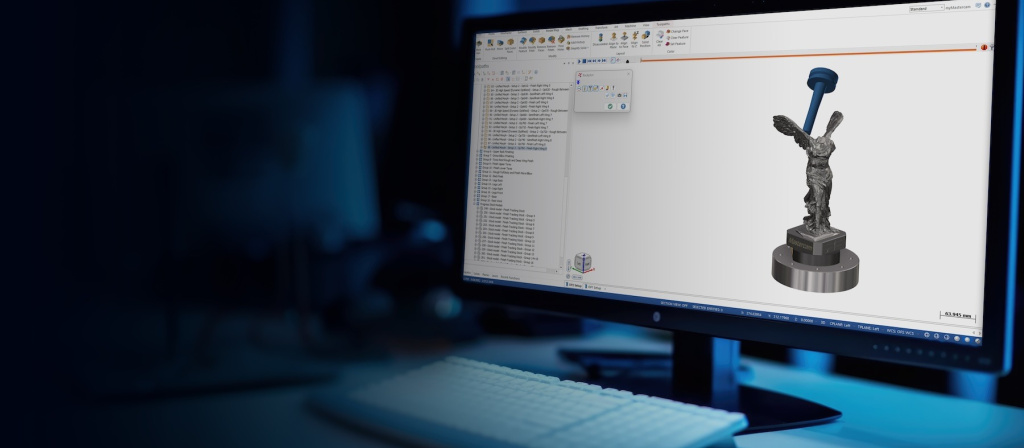
Today, Mastercam’s software suite is used across a broad spectrum of manufacturing applications. Its core purpose is to help program CNC machines – from mills and lathes to routers and wire EDMs – to produce parts with precision and efficiency. Mastercam generates toolpaths for operations such as milling (2D and multi-axis 3D cutting), turning (lathe work), drilling and tapping, routing of wood and composites, and even specialized processes like 2- and 4-axis wire EDM (electrical discharge machining) and Swiss-style machining for small, high-precision parts. The software also includes CAD modules for creating or importing part designs, as well as simulation tools to visualize and verify machining sequences.
Because of this versatility, Mastercam is employed in countless industries. In aerospace and defense, manufacturers use Mastercam to craft complex components like engine turbine blades, structural airframe parts, and precision fixtures – often using the software’s 5-axis machining capabilities to handle intricate geometries. In the automotive sector, Mastercam drives the machining of engine blocks, transmission parts, molds and dies for body panels, and other critical components, helping automakers and suppliers reduce cycle times and improve quality. The medical device industry relies on Mastercam for accurately machining implants, prosthetics, and surgical instruments where tight tolerances are literally life-critical. Mastercam is also widely used in general manufacturing, from moldmaking shops producing plastic injection molds, to consumer products companies prototyping new designs, to electronics and tech firms milling enclosures and components. The arts and creative sector has even embraced Mastercam for things like sculptural engraving and artistic relief cutting in wood or metal.
One key aspect of Mastercam’s broad adoption is that it scales to different user needs. A one-person job shop can use the same Mastercam software that a Fortune 100 manufacturer employs – the difference is mainly in the complexity of the projects, not the tool itself. This democratization of CAD/CAM technology means a small machine shop can take on sophisticated work using tools similar to those at Boeing or Sikorsky. At the high end, large corporations integrate Mastercam into their production workflows for its robust capabilities, while at the low end, small businesses appreciate that Mastercam remains affordable and relatively user-friendly for everyday jobs. The software’s wide usage in industry is matched by a strong presence in technical education: vocational schools, colleges, and university engineering programs around the world teach CNC programming using Mastercam. By training students on the platform that industry uses most, schools help ensure graduates can smoothly transition into manufacturing roles with practical skills in hand.
History and Evolution of the Product
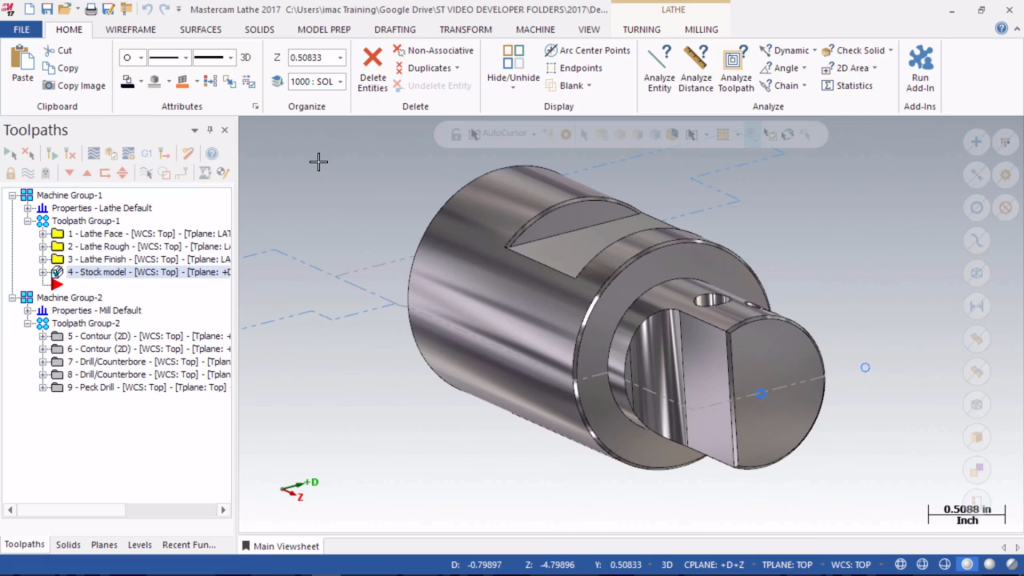
Mastercam’s evolution over the decades mirrors the leaps in manufacturing technology. After its founding in 1983, CNC Software released the first versions of Mastercam for MS-DOS in the mid-1980s. Early releases focused on 2D machining, offering milling and drafting features that quickly found a following due to their ease of use on standard PCs. At a time when many CAD/CAM systems were clunky, expensive, and required specialized hardware, Mastercam’s relatively intuitive interface and PC compatibility made it a popular choice. By the late 1980s, Mastercam began incorporating 3D capabilities. A major milestone came with Mastercam Version 3, released in 1989, which introduced surface and solid modeling tools. This was a significant step bridging CAD and CAM: users could now create and manipulate 3D geometric models and then generate CNC toolpaths for those complex shapes within one system. This integration reflected a broader industry trend of uniting design and manufacturing software, something Mastercam’s developers embraced early.
Through the 1990s, Mastercam steadily expanded its functionality. Support for full 3-axis 3D milling was complemented by the addition of CNC turning modules, allowing lathe programming. The interface improved over time, as Windows-based PCs became standard; Mastercam migrated from DOS to Windows, which brought a more graphical user experience. The 90s also saw Mastercam introduce multi-axis machining options (beyond 3-axis), catering to the advanced needs of aerospace and automotive customers for 4-axis and 5-axis simultaneous machining. By the end of the 1990s, Mastercam had established itself as a leader in the CAM market, known for balancing powerful toolpath capabilities with a reasonable learning curve.
A pivotal moment in Mastercam’s modernization came in 2005 with the release of “Mastercam X.” This version was a ground-up overhaul of the software, marking the tenth major iteration (hence the Roman numeral “X”). Mastercam X featured a redesigned user interface intended to be more streamlined and customizable, as well as improvements under the hood for dealing with increasingly complex machining strategies. It enhanced compatibility with CAD file formats and solid models, recognizing that many users were importing designs from dedicated CAD software. Mastercam X and its subsequent updates also placed emphasis on workflow efficiency – for instance, introducing toolpath libraries and easier integration of new machine post-processors. This era cemented Mastercam’s reputation for continuous innovation: long-time users saw major new features and refinements with each release, while new users found the system more approachable than ever for sophisticated tasks.
In the 2010s, Mastercam kept pushing the envelope in CAM technology. One standout innovation was the development of Dynamic Motion™ toolpaths – an advanced adaptive milling technique. Dynamic Motion (often called dynamic milling) is Mastercam’s proprietary approach to optimizing toolpaths so that cutting tools maintain a consistent chip load and engagement with the material. In practice, this means the software generates a non-traditional toolpath that avoids heavy cuts and sharp directional changes, instead using smooth, flowing motions that remove material more evenly. The benefit to manufacturers is significant: dynamic toolpaths can dramatically reduce machining time and tool wear, allowing shops to cut parts faster while extending the life of expensive cutting tools. This high-efficiency machining approach, now a standard feature in Mastercam, was adopted by many users to boost productivity, especially in tough materials where traditional toolpaths would be slower or risk breakage.
Mastercam also expanded its range of specialized toolpath strategies. For finishing complex 3D surfaces (such as molds or aerospace parts), the software introduced techniques like Accelerated Finishing™, which leverage new milling tool designs (for example, oval- and taper-shaped “barrel” cutters) to achieve finer surface finishes with fewer passes. The introduction of these strategies kept Mastercam at the forefront of CAM trends as cutting tool technology evolved. Meanwhile, modules for niche applications grew: the software’s support for 5-axis machining matured, Mill-Turncapabilities were added to handle machines that combine milling and turning in one, and a Swiss machining module was introduced to program Swiss-type automatic lathes common in electronics and medical part manufacturing. Mastercam broadened its CAD side as well, improving 3D modeling functions and the ability to handle complex solid models imported from other CAD systems.
Throughout its history, Mastercam has placed strong emphasis on simulation and verification. By the time modern releases like Mastercam 2025 arrived, users could run full 3D simulations of their CNC programs within Mastercam to check for potential collisions or mistakes before ever activating a real machine. This preventive approach saves businesses from costly crashes or scrapped parts by catching issues in a virtual environment. Another quieter but important aspect of Mastercam’s evolution is its openness to customization: the software provides an API and scripting capabilities, allowing advanced users or third-party developers to create add-on functionality, custom post-processors for specific machines, or tailored automation scripts. This flexibility has led to a rich ecosystem of third-party plugins and has helped Mastercam integrate into all sorts of manufacturing workflows.
As Mastercam celebrated its 40th anniversary in 2023, the journey from a small 1983 startup to an industry standard was clear. The company grew from the Summers brothers working in a barn (as lore has it) to a global operation headquartered in a modern 38,000 sq. ft. facility in Tolland, Connecticut, complete with an R&D machine shop on site. Over the years, leadership transitioned within the founding family; notably, Meghan West – the daughter of founder Mark Summers, and namesake of that early “Meghan” code name – today serves as President and CEO. The continuity of a family-led vision combined with new talent has helped Mastercam maintain a consistent focus: listening to the needs of machinists and continuously updating the software to meet the evolving challenges of manufacturing.

Business Footprint and Market Leadership
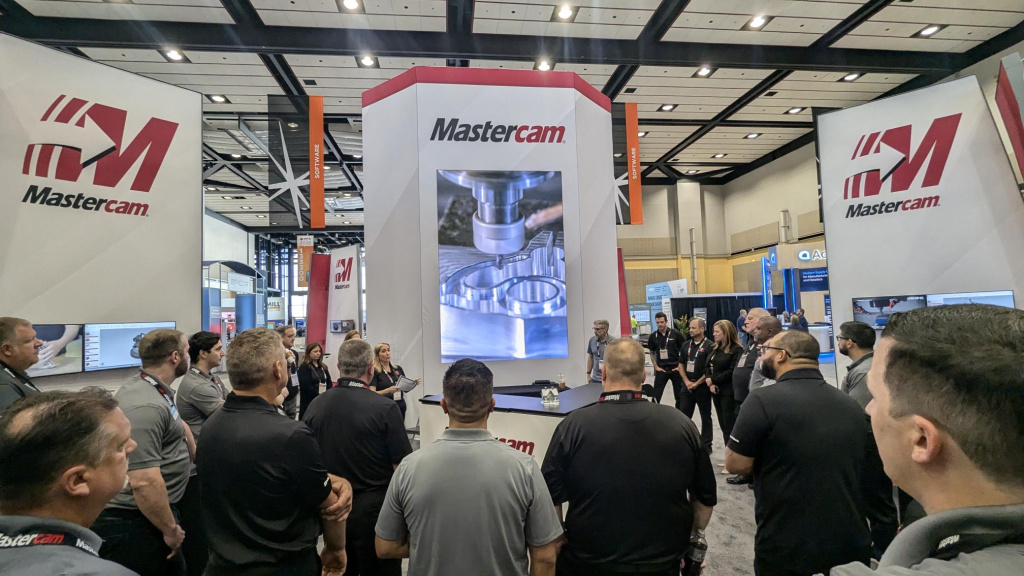
Mastercam’s business footprint today is truly global, and by many measures, it is the market leader in CAM. The software has the largest installed user base of any CAM product in the world. As of the early 2020s, Mastercam has been ranked the #1 CAM software worldwide for around 25–30 years running, according to CIMdata, an independent NC industry analyst firm. In practical terms, this means more shops and schools use Mastercam than any other competing CAM system. The company reported over 270,000 installations of Mastercam by 2021 and has since been approaching an estimated 300,000 active seats globally. In fact, by 2022 Mastercam topped CIMdata’s rankings in both industrial and educational categories, holding nearly double the number of installed seats as the nearest competitor. This dominant position in education is strategic – it suggests that the next generation of CNC programmers are likely to enter the workforce already familiar with Mastercam, reinforcing the cycle of its widespread use.
The financials behind Mastercam reflect steady growth as well. CNC Software, the developer of Mastercam, had approximately $60 million USD in revenue in 2020 with healthy profitability (an EBIT margin around 25-30%) and a majority of its revenue coming from recurring sources (like maintenance contracts and subscriptions). Achieving consistent sales growth even through economic cycles – 2020 marked the 26th consecutive year of positive revenue results despite the pandemic – underscores the resilience of Mastercam’s business model and the loyalty of its customer base. By 2021, the company employed around 220 people, including software engineers, support staff, and a management team with deep roots in manufacturing technology.
One of the pillars of Mastercam’s business success is its extensive global reseller network. Mastercam is distributed through authorized resellers in about 75 countries worldwide. These local partners provide sales, training, and technical support to end-users in their regions, often in local languages and with knowledge of local industry needs. This model has allowed Mastercam to reach users from North America and Europe to Asia, Latin America, and beyond, without needing large direct offices everywhere. The company does maintain international offices in Switzerland and China to support key markets, but much of the day-to-day customer interaction is handled by its resellers. “One of the biggest reasons for our success is our global Reseller network – probably the largest and most experienced in the CAM industry,” CEO Meghan West has noted. “They are true partners with our customers, offering advice, training, and applications experience to Mastercam users around the world. We’re also extremely proud to be the number one CAD/CAM program taught by technology teachers in schools, colleges, and universities. Helping to train the next generation of skilled manufacturing personnel is an important mission of ours.” This strategy – focusing on customer support and education through a knowledgeable reseller channel – has ensured that users not only buy Mastercam, but can effectively implement and stay loyal to it over the long term.
Mastercam’s ubiquity is also a selling point in itself. In industry, if a machine shop is looking to hire a programmer, there’s a high likelihood the candidate will have Mastercam experience given its prevalence. Conversely, if a programmer is seeking work, they know many shops will have Mastercam in place. This network effect has created a robust community of Mastercam users and a rich talent pool, which in turn reinforces why new companies might choose Mastercam as their CAM solution. In sum, Mastercam’s market presence is characterized by a vast global user community, strong brand recognition in manufacturing, and a track record of stability and reliability that gives even conservative industries confidence in the software.
Mergers, Acquisitions, and Partnerships
The Mastercam story also includes strategic business moves through mergers and acquisitions. The most significant change came in 2021 when CNC Software (the company behind Mastercam) was acquired by the Swedish industrial group Sandvik AB. Sandvik, a large engineering company known for its metal-cutting tools and mining equipment, had been expanding into the industrial software space. Mastercam represented an attractive asset: it was the world’s leading CAM software with a huge install base, exactly the kind of digital manufacturing foothold Sandvik sought. Sandvik’s CEO Stefan Widing noted at the time that bringing Mastercam into Sandvik would “make Sandvik a leader in the overall CAM market measured in installed base,” complementing Sandvik’s existing portfolio of machining solutions. The deal positioned Mastercam as a cornerstone of Sandvik’s new Design & Planning Automation division.
Although terms of the acquisition were not publicly detailed, Sandvik did disclose some context: CNC Software had about 220 employees and roughly $60 million in annual revenue in 2020. The acquisition fit into a wave of consolidation in the CAD/CAM industry, as larger tech and industrial firms were buying niche software companies to offer more comprehensive digital manufacturing platforms. Importantly for Mastercam users, CNC Software was a family-owned business for decades, so being bought by a multinational was a big shift. However, the leadership sought to reassure customers that Mastercam’s direction would remain focused. “We at CNC Software are extremely excited to be joining the Sandvik family. The two companies share many of the same values and objectives, but above all we share a passion for manufacturing,” said CEO Meghan West in announcing the deal. “Together we will harness our joint resources to accelerate the development of Mastercam, while continuing to maintain our unique standards of local support through our experienced global Reseller channel.” In other words, by teaming up with Sandvik, Mastercam hoped to innovate even faster while keeping its close-to-the-customer approach intact. The acquisition was finalized in late 2021, and Mastercam became an independently managed unit under Sandvik Manufacturing Solutions.
Under Sandvik’s ownership, Mastercam has continued to grow and even pursue acquisitions of its own. In recent years, Mastercam acquired several of its longtime independent resellers in the United States – for example, ShopWare Inc., MCAM Northwest, and the CAD/CAM division of OptiPro Systems were all brought in-house. These moves (announced in 2025) aimed to strengthen Mastercam’s direct presence in key regions and ensure consistent service, effectively integrating some of the best-performing distribution partners into the Mastercam corporate structure. Mastercam also integrated new technology through acquisition: a notable example is the 2023 acquisition of a software tool for CNC probing and inspection, originally developed by CIMCO. That technology, used as an add-on for tool setting and part measurement on machines, was rebranded as Mastercam Probing and incorporated into Mastercam’s product lineup. By folding in complementary tools and expertise, Mastercam has been expanding its ecosystem beyond traditional CAM programming into related aspects of the manufacturing process.
Partnerships have long been a part of Mastercam’s strategy as well. The company has cultivated relationships with major machine tool builders and cutting tool manufacturers over the years. These collaborations ensure that Mastercam’s software stays up-to-date with the latest machine capabilities and optimizes toolpaths for the newest cutting tools. For instance, Mastercam often works closely with toolmakers (like Sandvik itself, or others) to fine-tune machining strategies for specific cutting tool geometries. Mastercam has also partnered with CAD software vendors; one example was “Mastercam for SOLIDWORKS,” a product that embedded Mastercam’s CAM engine inside the popular SOLIDWORKS CAD program, reflecting a cooperative effort to offer integrated CAD/CAM for users of that platform. Additionally, Mastercam invests heavily in educational and skills partnerships. It has been an official Global Partner of WorldSkills International (a worldwide vocational skills competition) and supports countless local competitions, workshops, and training initiatives to promote careers in manufacturing. Through sponsorships and providing software to learning institutions, Mastercam collaborates with educators to ensure that curricula align with real-world manufacturing needs. All these partnerships and collaborative efforts have helped Mastercam remain not just a software vendor, but a key stakeholder in the broader manufacturing technology community.
Innovations, Key Features, and Strengths
Mastercam’s longevity and popularity can be attributed in large part to its innovations and strengths as a CAD/CAM system. At its core, Mastercam offers a comprehensive suite of machining strategies that allow users to tackle everything from simple 2-axis cutting to complex 5-axis simultaneous milling. The breadth of its toolpath options is a major strength: users have access to dedicated routines for contour milling (profiling edges), pocket milling (clearing out cavities), drilling and tapping operations, multi-surface 3D sculpting, engraving, and more. These strategies are backed by advanced algorithms that optimize how the machine moves. For example, the aforementioned Dynamic Motion technology is a highlight – by calculating toolpaths that keep cutting conditions constant, Mastercam enables what’s known as high-efficiency machining. The result is often markedly reduced cycle times (production runs faster) and extended tool life (cutters stay sharp longer), which directly translates to cost savings on the shop floor. Dynamic Motion has given many Mastercam-using shops a competitive edge, especially when machining difficult metals like titanium or when trying to boost output on existing machines.
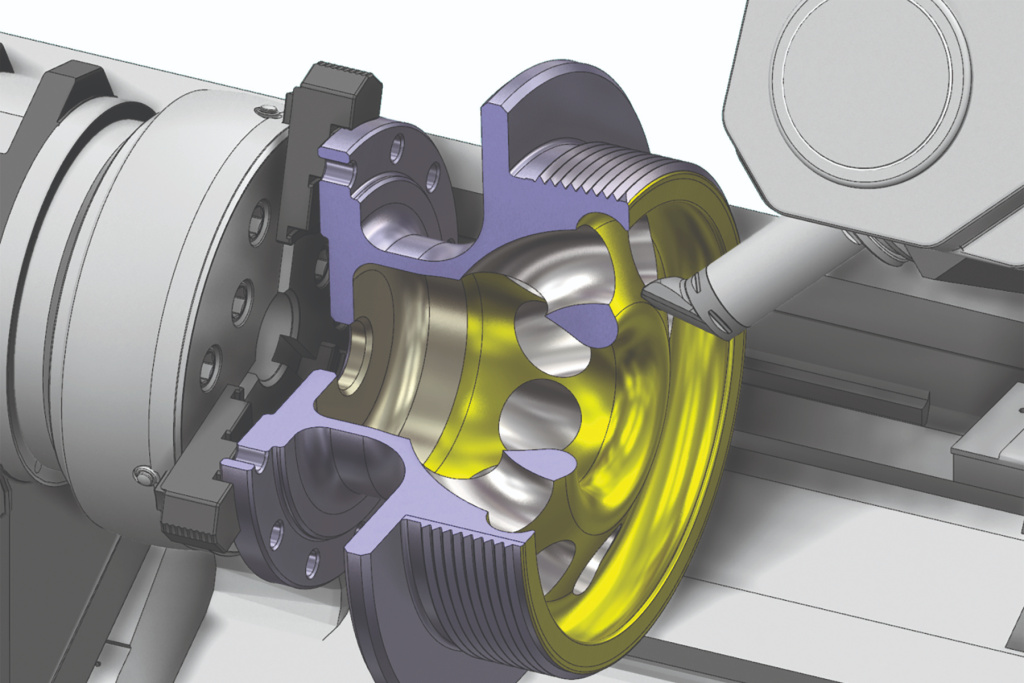
Another innovation Mastercam prides itself on is robust multi-axis machining support. Not all CAM software handles 4-axis or 5-axis machining gracefully, but Mastercam has developed user-friendly ways to program these complex movements. For instance, machining an impeller or a propeller blade that requires the cutter to smoothly tilt and maneuver around a part can be set up in Mastercam with advanced toolpath types that account for tool angle, avoiding collisions and gouges. The software provides simulation of multi-axis motion so programmers can verify that their 5-axis moves will run correctly before they cut metal. Mastercam also introduced specialized Mill-Turn strategies as multi-tasking CNC machines (which combine milling and turning in one) became more common; the software can coordinate cutting and part transfer in such machines, which is a non-trivial programming challenge.
Mastercam’s CAD features, while perhaps not as elaborate as a full-blown dedicated CAD program, are nonetheless a key feature that strengthens the system. Users can import models from virtually any major CAD format (SolidWorks, Solid Edge, CATIA, AutoCAD, STEP, IGES, etc.), and then use Mastercam’s tools to prepare those models for machining – for example, by fixing geometry, creating setup stock models, or slicing geometry to create machinable features. Moreover, Mastercam has its own modeling tools that let users draw wireframe geometry, create surfaces, and even do solid modeling and assemblies. This means a user can design a simple part or fixture directly in Mastercam, eliminating the need to bounce between separate CAD and CAM programs for many tasks. Especially for small shops, having design-and-manufacturing in one package adds convenience.
The software’s simulation and verification features are also an important strength. Mastercam provides toolpath verification where the system will render a 3D model of the part being cut away by a virtual tool. This helps the programmer catch any mistakes, such as a tool cutting too deeply or a collision with a fixture, in a safe virtual environment. There is also machine simulation for many machine models, showing how the machine’s axes and tool changers will move. This capability reduces the trial-and-error that historically plagued CNC programming – users can achieve “first part correct” more often, saving time and material.
Another notable strength of Mastercam is its support network and training resources. Beyond the official reseller support, there is a large user community (forums, user groups, and social media communities) where people share tips, post custom scripts or tool libraries, and help each other troubleshoot. CNC Software has long offered training materials such as books, video tutorials, and the Mastercam University online learning platform. They also maintain certification programs for both users and instructors. All of this means a new user has a wealth of help available to become proficient, and a company can more easily find experienced Mastercam programmers for hire.
Innovation at Mastercam isn’t slowing down. As part of Sandvik, the development team is exploring how to integrate more of the digital thread of manufacturing. This could mean tighter connections between Mastercam and cloud-based tool data management (Sandvik, as a tooling company, is keen on providing digital tool libraries and optimization services), or greater use of data analytics to inform machining strategies. Mastercam’s developers have hinted at leveraging emerging technologies like artificial intelligence and machine learning to further automate CAM programming – for example, by analyzing past projects to suggest optimal setups and tools, or by using AI to adjust toolpaths in real-time for adaptive machining. The software is also likely to play a role in the burgeoning Industry 4.0landscape: one can envision Mastercam feeding into smart factory systems where CNC programs, machines, and sensors are interconnected for real-time monitoring and optimization. And as hybrid manufacturing (combining additive 3D printing and subtractive machining) gains traction, Mastercam may evolve to plan not just cutting paths but also additive deposition paths in a single unified process plan. While those future developments are on the horizon, Mastercam’s current strength lies in a proven, comprehensive CAM feature set that continues to get refined each year.
A Lasting Impact on Manufacturing
From a small barn in 1983 to tens of thousands of shops today, Mastercam’s journey reflects the broader transformation of manufacturing technology. It took what was once the domain of a few specialists and made it accessible to many, helping countless businesses improve how they produce parts. In a journalistic sense, Mastercam’s story is one of continuous adaptation – a software product that has stayed relevant by closely following (and often leading) the needs of the manufacturing world. By consistently introducing new features, fostering a community of users, and making strategic partnerships, Mastercam has managed to hold onto a top spot in a competitive industry for decades.
As manufacturing enters an era of smart automation and digital integration, Mastercam finds itself under the umbrella of a global engineering group and poised for the next chapter. Yet the essence of the software – solving practical machining problems – remains its anchor. Whether it’s a student learning their first CNC programming lesson on Mastercam, or a seasoned programmer optimizing a 5-axis cut for a rocket engine part, the software continues to be a trusted tool. Mastercam’s leadership likes to say they are “shaping the future of manufacturing,” a phrase that encompasses not just their technical innovations but also their commitment to training and supporting the people in the industry. After 40 years, with a solid foundation and new resources behind it, Mastercam is set to continue shaping that future, one toolpath at a time.
Vendor: Sandvik