
NCSimul: Pioneering CNC Simulation from Shop Floor to Smart Factory
Application Areas
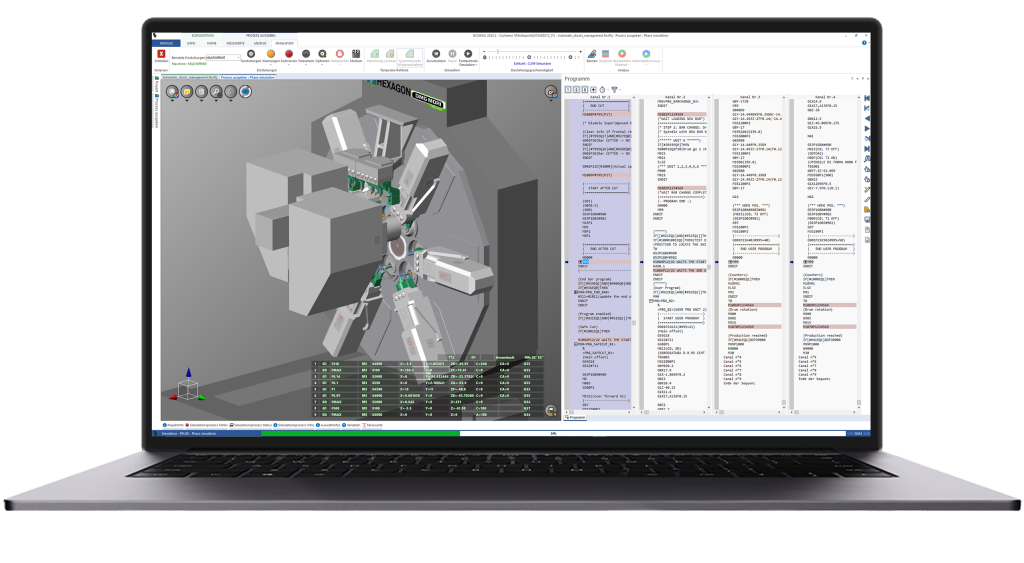
NCSimul is employed across a range of industries that rely on advanced manufacturing and precision machining. Its primary application is in CNC program verification – ensuring that the toolpaths generated for CNC mills, lathes, and other machine tools will execute safely and correctly. Sectors such as aerospace and defense have been early adopters, using NCSimul to validate complex multi-axis machining of critical components (for example, jet engine or aircraft parts) where a single programming error could cause a costly crash or scrap an expensive workpiece. Automotive and transportation manufacturers use the software to optimize high-volume machining operations, reducing cycle times on production lines. In the energy and heavy equipment industries, where very large parts are machined on expensive equipment, simulation with NCSimul helps avoid downtime and tool breakage. The system is also applied in medical device manufacturing and general industrial machinery, anywhere that precision and first-time-right machining are priorities.
Beyond these industry verticals, NCSimul’s flexibility means it can be used with virtually any CNC machine or controller. The software supports simulations for milling, drilling, and turning operations (from 3-axis up to complex 5-axis and mill-turn machines). It is machine-agnostic, covering equipment from different OEMs and control systems, and CAM-agnostic, meaning it can work with G-code coming from any CAM programming software. This broad compatibility allows it to fit into existing CAD/CAM workflows: programmers generate CNC code using their CAM system of choice, then run that code through NCSimul for an independent check and optimization before sending it to the physical machine. Some companies also use NCSimul as a training tool for CNC operators – the 3D simulation provides a visual understanding of the machining process, which can help less experienced operators gain confidence in running new programs (though unlike some training simulators, NCSimul focuses on the machining process itself rather than emulating machine control panels).
Notably, NCSimul’s capabilities have expanded to cover emerging manufacturing processes as well. For instance, the software offers a module for composite material layup simulation (NCSIMUL Composites) to support industries like aerospace that use automated fiber placement and tape laying machines in addition to traditional cutting machines. This indicates that NCSimul’s application scope includes not just metal cutting but other CNC-driven processes, reflecting the evolving needs of modern manufacturing.
History and Evolution
SPRING Technologies (an acronym standing for Société de Programmation et de Recherche en Informatique Numérique et Graphique) was founded in 1983 by Gilles Battier and his associates in Paris. The company’s mission from the outset was to develop software that bridges digital programming with real-world machining on the factory floor. In the 1980s, CNC machines were becoming increasingly prevalent, and SPRING’s founders recognized the need for better programming tools and verification to make the most of this technology. Early development of what would become NCSimul began in that decade, initially focusing on 3-axis milling simulation and progressively incorporating more complex machining operations as computing power grew. By the 1990s, SPRING Technologies had introduced successive versions of NCSimul (often referred to as NCSIMUL Solutions in marketing) that added support for multi-axis machines and improved graphical simulation.
During the 2000s, NCSimul evolved into a comprehensive platform and started gaining international traction. SPRING Technologies opened new offices and formed partnerships to reach global markets. A significant expansion came in 2009 when SPRING launched its U.S. subsidiary in Boston, establishing a local presence in the large North American manufacturing market. The company also extended its reach to Asia (with an office in China) and across Europe (such as a branch in Germany) to better support customers in those regions. By 2013, SPRING Technologies reported a consolidated revenue of about €10 million, with its software and services being used in aerospace, defense, shipbuilding, automotive, and energy sectors. At that time the firm employed roughly 100 people – mostly engineers – across its sites in France (Paris/Montreuil and Toulouse) and subsidiaries in Germany, China, and the United States.
In 2014, SPRING Technologies secured a €5 million investment to accelerate its growth. This funding (from investors including CM-CIC and Aerofund III) was aimed at boosting international expansion and R&D for NCSimul’s continued development. It also positioned the company to explore acquisitions of its own in the European market, though ultimately SPRING did not pursue a major acquisition prior to being acquired itself a few years later.
A pivotal moment in NCSimul’s product evolution occurred in the mid-2010s. In 2016, SPRING Technologies launched a new module called NCSIMUL 4CAM (also referred to as NCSimul CAM) as part of NCSIMUL version 10. This innovation allowed users to automatically convert an existing CNC program to run on different machines without needing to reprogram it in a CAM system. In essence, NCSIMUL 4CAM could take G-code that was prepared for one machine (with specific kinematics and controller language) and adapt it to another machine with a different configuration, recalculating motions and optimizing code as needed. This capability was seen as a breakthrough in simplifying CNC programming workflows – shops could more easily switch a job to an available machine or upgrade to a new machine tool and reuse programs, saving significant time. The introduction of 4CAM was recognized with an innovation award at the INDUSTRIE 2016 trade show in Paris. Upon receiving that award, SPRING’s CEO Gilles Battier highlighted the significance of this advancement. “Programmers have been dreaming of this for 30 years; Spring has done it,” Battier said, referring to the long-standing desire to seamlessly transfer NC programs between different machines. “Of all the innovations SPRING has developed since we established the company in 1983, NCSIMUL CAM is the one I am most proud of. His remarks underscored how this feature embodied the company’s mission of bringing agility and flexibility to CNC workshops as part of the emerging Industry 4.0 paradigm.
Throughout its history, SPRING Technologies also engaged in collaborative industry initiatives that influenced NCSimul’s evolution. The company participated in France’s Factory of the Future programs; for example, it was an associate member in the “Usine Aéronautique du Futur” project led by the aerospace industry consortium CORAC, alongside major manufacturers like Airbus, Safran, Dassault Aviation and Zodiac Aerospace.
These collaborations gave SPRING insight into the cutting-edge requirements of aerospace manufacturing, such as integrating simulation more deeply into the end-to-end digital thread of production. SPRING also partnered with leading machine tool builders and automation providers. One notable partnership was with DMG MORI, a global machine tool manufacturer, which chose to offer NCSimul as part of its digital solutions portfolio for customers (highlighting the software’s compatibility with DMG MORI’s CNC machines). Such partnerships and feedback from industrial end-users helped guide new features in NCSimul, from enhanced high-speed machining simulations to real-time machine monitoring capabilities.
By the time of its acquisition in 2018, NCSimul had matured into a robust system with a worldwide user base. SPRING Technologies had reportedly built up a network of 140 distribution and technology partners across the globe, and over 2,000 licenses of NCSimul were in use at customer sites internationally. The company’s steady growth and niche expertise made it an attractive target for larger industrial technology firms looking to expand their smart manufacturing offerings.
Business Footprint and Market Presence
As a mid-sized CAD/CAM software vendor, SPRING Technologies maintained a focused but global business around NCSimul. The company’s revenues were modest compared to industry giants, reflecting its specialized market. In 2013, SPRING’s sales were about €10 million (roughly $13 million USD at the time), and in subsequent years annual revenue was estimated in the single-digit millions of euros. Despite its size, the company served a prestigious clientele. NCSimul’s users included major OEMs and suppliers in aerospace and defense, automotive manufacturers, and other high-tech industries. For example, Airbus and Safran (France’s leading aircraft and engine makers) partnered with SPRING on advanced manufacturing R&D and also deployed NCSimul in their production workflows. The software was likewise adopted by automotive and transportation firms, energy equipment makers, and precision manufacturing job shops. By the late 2010s, SPRING Technologies had more than 2,000 active software licenses installed worldwide, indicating a substantial user community given that each license could correspond to a machine or programmer seat.
With its headquarters and core development team in France, SPRING relied on international branches and reseller partners to reach customers abroad. Its subsidiary SPRING Technologies Inc. in the U.S. helped land clients in North America, and a similar presence existed in China to support Asian clients. The network of 140+ global partners provided local sales, support, and integration services for NCSimul in various regions. SPRING Technologies was also active in industry associations: it joined AMT – The Association for Manufacturing Technology (the U.S. machine tool industry group) in 2017 to increase its visibility in the American market, and became a member of NCDMM (National Center for Defense Manufacturing and Machining) to collaborate on best practices for the defense sector. These affiliations further embedded NCSimul in the global manufacturing community.
After the 2018 acquisition by Hexagon AB, the business metrics of NCSimul became part of Hexagon’s larger financial reporting. Hexagon did not disclose the purchase price, but noted that SPRING Technologies employed around 100 people at the time and that the acquisition would have no significant impact on Hexagon’s earnings – implying the deal was relatively small for a company of Hexagon’s scale. Under Hexagon, NCSimul was integrated into a portfolio alongside other manufacturing software (such as the CAM brands of Vero Software, acquired by Hexagon in 2014). This move potentially broadened NCSimul’s reach further, as Hexagon could cross-sell it to customers of its metrology and production software divisions worldwide. The Hexagon umbrella also provided more resources for development and support, ensuring NCSimul’s viability for the long term in a competitive market.
Acquisitions, Partnerships, and Collaborations
The most significant corporate development for NCSimul was its acquisition by Hexagon in 2018. Announced in June of that year, the deal saw SPRING Technologies become part of Hexagon’s Manufacturing Intelligence division. Hexagon, a Swedish conglomerate known for measurement technology and industrial software, acquired NCSimul to strengthen its smart factory offerings. Ola Rollén, Hexagon’s President and CEO, framed the move in the context of Industry 4.0: “Manufacturing must be ‘smart’ if it’s to produce the next generation of products at reduced costs... Machining simulation is essential to connecting the physical world with the digital and achieving autonomy – both of which are prerequisites to delivering smart factory solutions,” Rollén said at the time.
By bringing NCSimul’s simulation and verification capabilities into its portfolio, Hexagon aimed to offer customers a more complete digital manufacturing ecosystem – from design and CAM programming (where Hexagon already had solutions) to virtual simulation and on through to production and quality control. The integration meant that NCSimul would continue development under Hexagon’s wing, and indeed Hexagon has since incorporated NCSimul into its Production Software business unit, ensuring compatibility with other Hexagon products and aligning it with the company’s vision of autonomous, data-driven manufacturing.
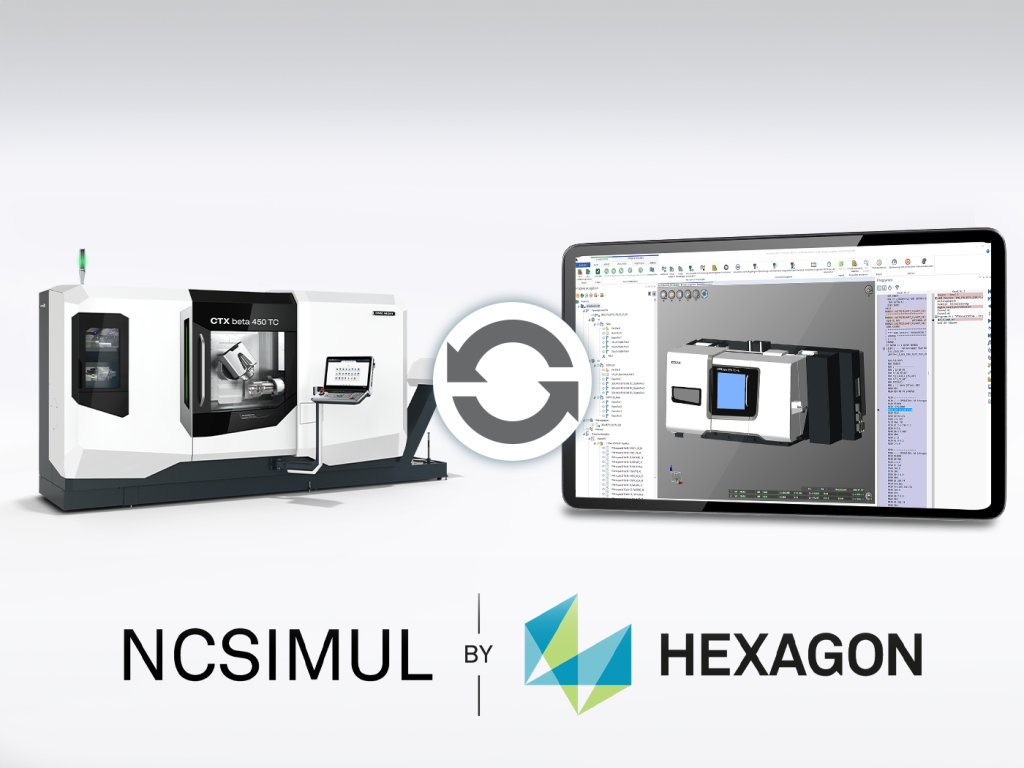
Prior to being acquired, SPRING Technologies had not merged with other companies, but it did engage in various partnerships and collaborative projects. On the commercial side, SPRING established reseller agreements in numerous countries to distribute NCSimul, as mentioned earlier. It also worked closely with CNC machine tool builders. An example is the collaboration with DMG MORI, one of the world’s largest machine tool manufacturers, which selected NCSimul for inclusion in its digital solutions portfolio. DMG MORI’s technology group began offering NCSimul to its customers as a recommended simulation platform, underscoring trust in the software’s ability to simulate and optimize programs for even the most complex DMG MORI machines. SPRING and DMG MORI often demonstrated their integrated solutions at trade shows, showing how NCSimul’s digital machine models could precisely match the kinematics and controls of real equipment to provide accurate virtual test-runs of NC programs.
Similarly, SPRING maintained technical partnerships with major CAD/CAM software vendors to ensure NCSimul could seamlessly import data (such as tool libraries and 3D models) from systems like CATIA, Mastercam, Siemens NX, and others. These integrations were critical for users who needed a smooth workflow from toolpath generation to G-code verification.
On the R&D front, SPRING Technologies collaborated with aerospace and defense companies through France’s competitiveness clusters (such as ASTech and EMC2) to drive innovation in CNC simulation. CEO Gilles Battier often emphasized “open innovation” efforts with industrial partners. For instance, the development of the NCSIMUL CAM/4CAM module was aided by input from aerospace giants and smaller machine shops alike.
By working with companies like Airbus and Safran on pilot implementations, SPRING could tailor NCSimul’s features (like machine swapping and automated optimization) to real-world needs, which in turn helped the software stay ahead of the curve. These collaborations culminated in recognition such as the 2016 Digital Tools Innovation Trophies award, which was judged by Industry 4.0 experts and validated SPRING’s approach of bridging the gap between the virtual and physical machining worlds.
Under Hexagon’s ownership, partnerships have continued in a new form. NCSimul is now one piece of a larger solution set, so it often features in Hexagon’s joint offerings. For example, Hexagon may partner with a machine tool company to provide an end-to-end “digital twin” solution where NCSimul handles the CNC simulation aspect. Hexagon has also been aligning NCSimul with its smart manufacturing platforms – connecting it with data from shop-floor monitoring systems and using its simulation output to improve production planning and automation. While the core collaborative philosophy remains, it is now backed by Hexagon’s global reach and resources.
Innovations, Features, and Strengths of NCSimul
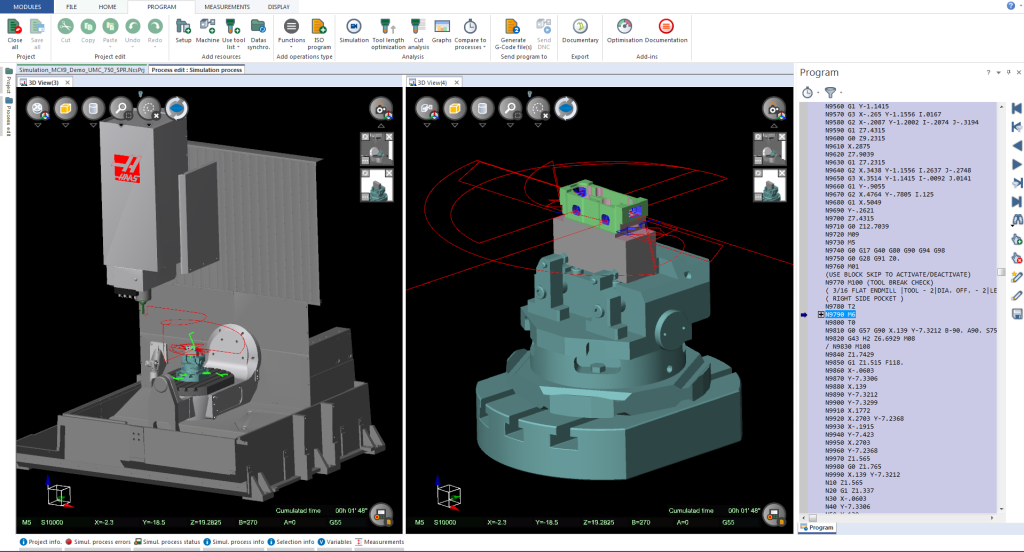
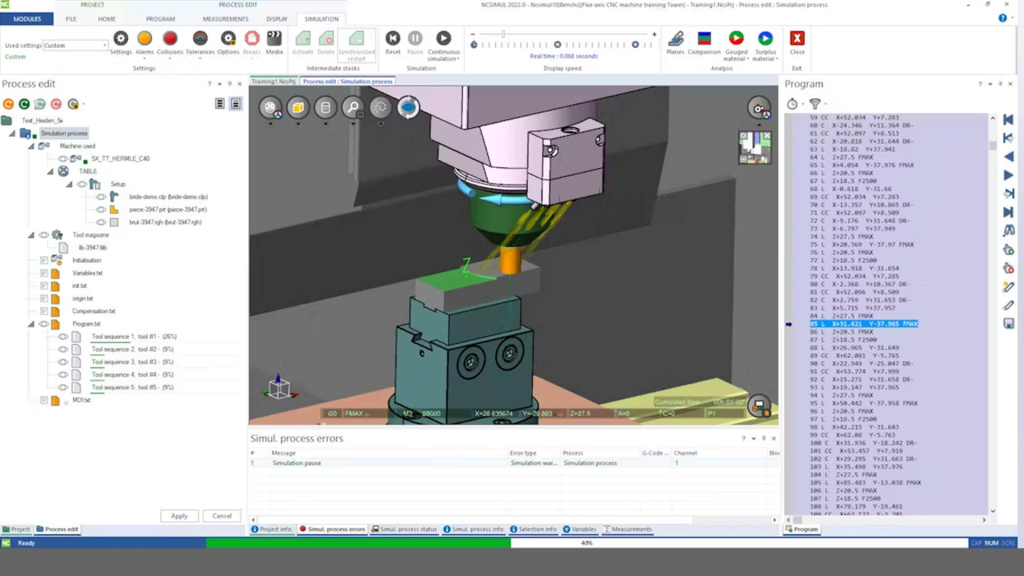
NCSimul’s longevity in the market has been driven by continuous innovation and a set of strong features that address key challenges in CNC machining. At its core, NCSimul is known for high-fidelity G-code simulation and an emphasis on practical, shop-floor-oriented functionality. Unlike some CAM-integrated simulators that approximate toolpaths, NCSimul works with the actual G-code (including machine-specific cycles and controller syntax) to produce a realistic simulation of how a CNC machine will behave.
This approach ensures that issues like syntax errors or machine-specific quirks can be caught in software before reaching the shop floor. The simulation includes the full machining environment – the machine tool model with all its moving axes, the cutting tools and holders, the workpiece stock, fixtures, and even auxiliary devices. By modeling everything from tool changes to part probing routines, NCSimul can warn if, for example, a fixture will collide with a spindle head or if a tool is too short and might cause a crash. Such comprehensive verification greatly enhances process safety and has made NCSimul a trusted tool in industries where mistakes are extremely costly.
Another key strength of NCSimul is its ability to optimize and streamline machining processes after the initial CAM programming. The software not only checks NC programs but can also improve them. One feature, called Optitool, automatically analyzes cutting conditions and adjusts feed rates to eliminate inefficiencies like air-cutting (when a tool is moving without removing material). By speeding up motions where the tool isn’t engaged in material and optimizing feed speeds when the cutting load is light, Optitool can shorten cycle times while maintaining safe machining. This often results in smoother operations and extended tool life, contributing to lower production costs.
NCSimul’s introduction of the 4CAM capability (as discussed in the History section) is another standout innovation. With NCSIMUL 4CAM, a manufacturer gains flexibility on the shop floor: they can take a program proven on one machine and with a few clicks re-target it to a different CNC machine with a different axis configuration or control, without going back to the CAM stage.
The software handles translating the toolpaths to suit the new machine’s geometry (for example, converting a 5-axis tool motion to 3+2-axis moves if switching to a 3-axis machine with two additional rotary axes) and outputs a new optimized G-code program. This was a unique feature that distinguished NCSimul from other simulation tools, addressing the common scenario of needing to balance workloads across various machines. In essence, 4CAM provides a form of post-processor-independent reprogramming, which can dramatically reduce downtime when a machine is unavailable or if a shop wants to leverage a more convenient piece of equipment for a job.
Over the years, NCSimul has expanded into a modular suite encompassing various aspects of CNC process management. Key components of the NCSimul Solutions suite include:
- NCSIMUL Machine – the core simulation and verification module. It provides high-end 3D simulation of CNC machining based on G-code, detecting collisions, gouges, syntax errors, and other issues before a program is run on a real machine. NCSIMUL Machine ensures that a program is “right first time” by emulating the exact machine movements and material removal virtually. It also features capabilities for simulating multi-channel machines (e.g. complex mill-turn centers with simultaneous operations on multiple spindles) in synchronized motion, and it supports all major CNC controller languages. This module is also where toolpath optimization (like Optitool’s feed rate adjustments) is applied to refine the G-code.
- NCSIMUL 4CAM – an extension of NCSIMUL that allows machine-to-machine code conversion and flexible re-use of programs. 4CAM provides the ability to change the target machine for a given operation without any CAM reprogramming. It performs the necessary recalculation of tool motions across different kinematics and adapts code to different control dialects. In practical terms, a shop can program a part once and easily deploy it on various CNC machines (different models or brands) by letting 4CAM generate a verified, optimized NC program for each, all within NCSimul. This greatly improves agility in production scheduling.
- NCSIMUL Optitool – a specialized optimization tool focused on cutting efficiency. Optitool reduces “air-cutting” time, optimizes feed rates, and enables users to implement better cutting strategies automatically. It scans the toolpath and identifies where the cutting tool is not under load or where it could move faster safely. Then it adjusts the feed in those segments, or conversely slows down in areas of heavy engagement to maintain consistent cutting conditions. These optimizations result in shorter cycle times, reduced wear on tools, and often improved surface finish due to steadier cutting loads.
- NCSIMUL NCdoc – a documentation and technical content module. NCSIMUL NCdoc creates detailed instruction sheets and setup documents for machine operators, directly from the simulation and G-code data. For example, it can produce a step-by-step setup sheet with images showing each operation stage, list all tools required for the job, and capture key parameters. Because NCdoc pulls information from the verified program, it ensures consistency between what programmers intended and what operators see in their instructions. This saves time in preparing documentation and reduces miscommunication on the shop floor.
- NCSIMUL Player – a 3D viewer for sharing simulation results. NCSIMUL Player allows anyone (such as a machine operator, engineer, or customer) to replay the CNC simulation on their computer without a full NCSimul license. It preserves the look and feel of the simulation, enabling rotation, zoom, and inspection of the part and machine movements. If any collisions or warnings were detected in NCSIMUL Machine, those can be viewed in the Player as well. This tool is used for program reviews, training, or even marketing (to show a machining process visually).
- NCSIMUL WYSIWYC – standing for "What You See Is What You Cut," this module provides real-time, synchronized simulation alongside actual machine execution. WYSIWYC offers a unique user experience by streaming a live 3D visualization of the machining process in sync with the CNC machine’s operations. In practice, as a machine runs a program on the shop floor, an operator can watch a virtual model of the machine cutting the part in real time on a screen. This real-time digital twin helps in monitoring and verifying that the process is going as expected. It also has applications in training and troubleshooting – an operator can, for instance, practice or visualize a new program in real time mode to gain confidence. WYSIWYC integrates with machine controllers and can leverage sensor data, and it even supports virtual reality for an immersive viewing experience.
- NCSIMUL Composites – a module tailored for composite machining and fiber placement processes. NCSIMUL Composites makes simulation of 3D material lay-up more realistic and efficient. It allows manufacturers working with composite tape laying machines or automated fiber placement systems to simulate the addition of material (instead of removal) and check for issues like gaps, overlaps, or collision of the layup head with the mandrel. This broadens NCSimul’s applicability to modern aircraft manufacturing and other composite-intensive production.
Another strength is performance and speed. Hexagon claims that NCSimul can process large CNC programs and complex machine models faster than competing solutions, translating to faster simulation times for the end user. In a busy manufacturing environment, this means programmers can iterate quickly – making a change in the CAM system, re-running the simulation, and validating the result without much delay.
Perhaps the most tangible benefit of NCSimul is the risk reduction and cost savings it provides. By debugging and proving out NC code virtually, companies avoid many of the expensive mistakes that can occur during machine setup or initial test runs. Crashes in simulation cost nothing but time; crashes on a real machine can break spindles or tools and scrap parts worth thousands of dollars. By some estimates, implementing NCSimul for program validation can save a manufacturer up to $25,000 per machine per year in reduced downtime, fewer scrapped parts, and improved productivity. The software essentially allows shops to conduct dry-runs digitally, freeing up machines for actual production work and instilling confidence that when a program is finally executed on real equipment, it will perform as intended.
In terms of innovation trajectory, NCSimul has continually updated its feature set to keep pace with industry trends. As CNC machines incorporate more automation and connectivity (for instance, integrated tool monitoring or adaptive control), NCSimul has added hooks to tie into those systems. Its concept of the digital twin of the machine aligns well with Industry 4.0 principles, enabling deeper analysis and even predictive insights (e.g., simulation data could help predict cutting forces or potential maintenance needs). The company’s ongoing development (now under Hexagon) suggests that NCSimul will further integrate with upstream design and downstream inspection processes, perhaps leveraging Hexagon’s strengths in metrology to create a closed-loop manufacturing feedback system.
Finally, the official website provides numerous case studies and technical resources that highlight NCSimul’s strengths. Manufacturers have shared stories of using NCSimul to ramp up production faster or to standardize processes across global facilities with the help of simulation. These accounts reinforce that NCSimul is not just a theoretical tool but a practical enabler of efficient, smart manufacturing. As one Hexagon description succinctly puts it: NCSIMUL CNC simulation software helps validate G-code and optimize machining processes in a virtual environment – a simple statement that captures the essence of why this software has become a mainstay in modern CNC workshops.
Conclusion
From its origins as a pioneering French start-up in the early 1980s to its position today as a component of a global tech conglomerate’s portfolio, NCSimul exemplifies how niche engineering software can influence an entire industry. It has empowered manufacturers to adopt a more digital, simulation-driven approach to machining, effectively bringing the mantra “measure twice, cut once” into the virtual realm. Direct quotes from its leadership convey the vision behind the product – as Gilles Battier put it, NCSimul has been about bridging technological gaps and pushing factories “into the Workshop of the Future”. Now backed by Hexagon, NCSimul is poised to continue that vision on an even larger scale. In an era where connectivity, automation, and intelligence are key to manufacturing competitiveness, NCSimul’s comprehensive CNC simulation capabilities form a critical piece of the smart factory puzzle.
Vendor: Hexagon