
ArtCAM: Pioneering Artistic CAD/CAM Software in Manufacturing
Overview of ArtCAM and Its Origins
ArtCAM is a specialized computer-aided design and manufacturing (CAD/CAM) software known for blending artistic design with precise machining capabilities. Unlike traditional CAD/CAM tools aimed at engineers, ArtCAM was created to empower artists, designers, and craftspeople to bring intricate 2D and 3D creations to life on CNC machines. The software originated in the early 1990s at Delcam, a UK-based CAD/CAM developer. Delcam first introduced ArtCAM in 1994 after a customer requested a way to turn a simple cartoon sketch into a low-relief 3D model. This request sparked an innovative solution: using color depth-mapping to instantly convert 2D artwork into 3D relief geometry. Through this approach, ArtCAM made it possible for users without an engineering background to craft complex decorative shapes for manufacturing.
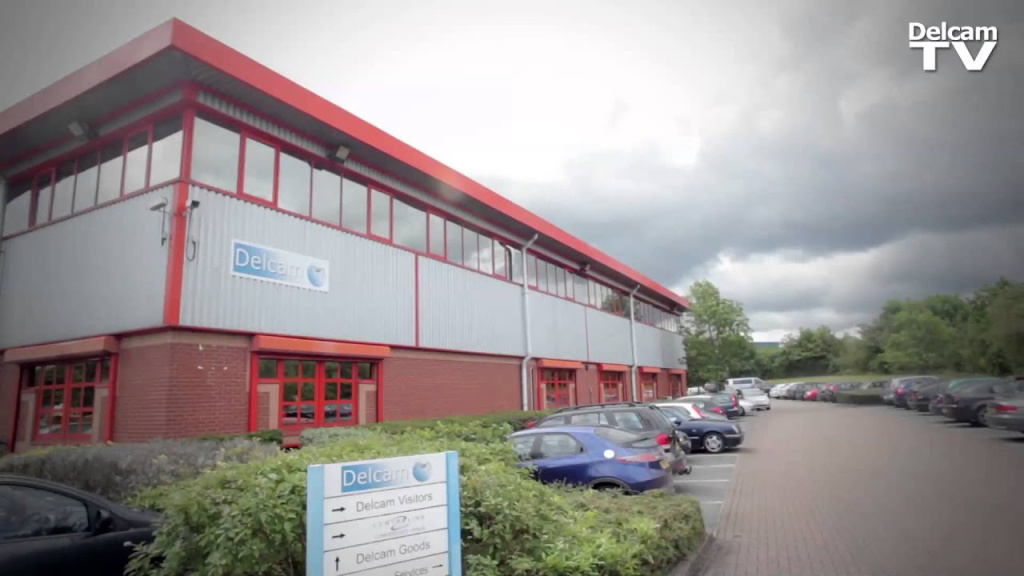
Delcam, the company behind ArtCAM, had a long history in CAD/CAM software dating back to its founding as a Cambridge University project in the 1960s. By the time ArtCAM emerged, Delcam was already well-established in manufacturing software with products like PowerMILL (for CNC machining) and had a reputation for niche solutions. ArtCAM quickly became one of Delcam’s most distinctive offerings. It was branded as an “artistic CAD/CAM” tool – essentially software for artists rather than engineers. This positioning set ArtCAM apart in the market and fostered a dedicated user community of makers and artisans. Over the years, the software gained a global user base under Delcam’s stewardship.
Following Delcam’s growth and eventual acquisition by industry giant Autodesk in 2014, ArtCAM went through significant transitions. Autodesk is well-known for design software like AutoCAD and Inventor, and the acquisition brought ArtCAM under a larger umbrella. Autodesk initially continued supporting ArtCAM as part of its digital manufacturing portfolio. However, by 2018 Autodesk decided to discontinue ArtCAM as an official product line. In a rare move, the ArtCAM technology did not simply vanish; instead, Autodesk licensed the code to a new company formed by former ArtCAM team members. This venture, Carveco, took up the mantle to continue developing and supporting the software for its loyal users. Today, the core ArtCAM platform lives on through Carveco’s products, reflecting the enduring demand for artistic CAD/CAM solutions.
Application Areas and Industries
From the beginning, ArtCAM was designed to serve creative industries and applications that traditional engineering CAD software didn’t address well. It found use in a surprisingly wide variety of sectors where intricate, artistic designs are required. Some of the major application areas include:
-
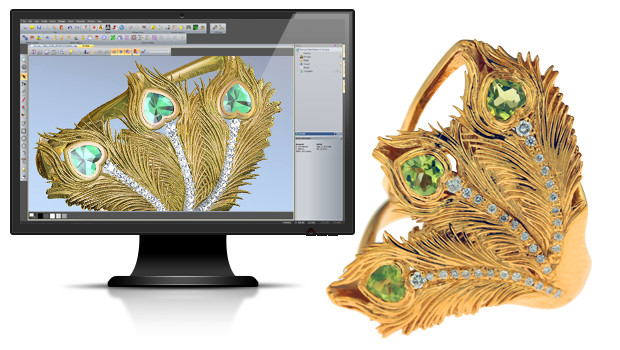
Custom Jewelry Design – Jewelers use ArtCAM (especially the specialized ArtCAM JewelSmith edition) to design elaborate rings, pendants, and engraving patterns. The software’s tools enable creation of detailed 3D reliefs and decorative textures that can be milled in wax or directly engraved, helping jewelry designers prototype and produce bespoke pieces with fine detail.
-
Coin Minting and Engraving – National mints and medal makers turned to ArtCAM for designing coins, medals, and minting dies. ArtCAM’s ability to translate artwork (like portraits or illustrations) into precise 3D reliefs made it ideal for coin design. In fact, the software has been credited in the production of award-winning coins around the world. For example, mints such as the UK Royal Mint, the Royal Canadian Mint, the Monnaie de Paris in France, and the Royal Australian Mint have all used ArtCAM in their coin development processes. These institutions have praised how the software reduces design-to-production time and allows inclusion of artistic details that set their coins apart. The coin industry’s adoption underscores ArtCAM’s strength in merging art with engineering precision – an engraved coin die must be technically perfect, yet artistically compelling.
-
Signmaking and Woodworking – ArtCAM became a favorite in the woodworking and signage community. Small businesses and craftspeople use it to design carved signs, decorative panels, relief sculptures, and furniture inlays. The software can generate toolpaths for CNC routers to carve intricate lettering or artistic motifs into wood, foam, or plastic. Its ease of use meant even those without formal CAD training could design 3D wood carvings or engraved signs. Many custom sign shops embraced ArtCAM to produce everything from storefront signs with elaborate logos to one-of-a-kind wooden art pieces.
-
Architecture and Decor – Architects and designers have used ArtCAM to create ornamental elements such as architectural cornices, moldings, and facades. The software’s ability to handle organic shapes and sculptures made it suitable for restoring historical decorations or creating new intricate designs for building interiors and exteriors. For instance, architectural restoration specialists could model a damaged gargoyle or decorative panel in ArtCAM and then CNC-carve an accurate replacement. Similarly, modern installations like themed interiors, movie props, and public art have leveraged ArtCAM for complex surface designs that need to be manufactured with CNC milling or even 3D printing.
-
Embossing Dies and Packaging – In the print and packaging industry, ArtCAM has been used to design embossing dies, stamps, and molds that imprint artistic reliefs onto materials (like embossed book covers, leather goods, or packaging foils). Its precision and relief modeling capabilities ensure that logos and artwork can be faithfully raised or recessed on physical products.
Additionally, ArtCAM carved out a niche among hobbyists and makers. Enthusiast CNC users, such as home-based wood carvers or model makers, found that entry-level versions like ArtCAM Express allowed them to step into CNC design without the steep learning curve of engineering software. From model railway scenery creators to custom guitar builders carving intricate fretboard inlays, a diverse maker community adopted ArtCAM for creative fabrication projects.
Notably, ArtCAM was one of the first CAD/CAM packages to cater to hobbyist CNC users by offering scaled-down, affordable versions alongside its full professional suite. This broad approach – serving home users up to large industrial mints – demonstrates the software’s flexibility. In each sector, the common thread was the need to go from artistic concept to manufactured reality, a gap that ArtCAM was uniquely built to bridge.
Evolution and Key Milestones
ArtCAM’s journey over the past three decades has been marked by innovation, growth, and change in ownership. Key milestones in its history include:
-
1990s – Initial Development: ArtCAM’s development began in 1994 at Delcam’s UK headquarters after that pivotal customer request to convert 2D artwork into a 3D model. The resulting innovation – automatically translating colors in a bitmap image to different heights in a relief – formed the core of ArtCAM’s first release. Delcam officially launched ArtCAM as a product in the mid-1990s, targeting artists, woodworkers, engravers, and jewelry makers. In these early years, ArtCAM introduced many designers to the possibilities of computer-aided manufacturing for artistic work. By the late 1990s, it was being used to produce things like church carvings, custom trophies, and ornate furniture details, which previously would have required hand sculpting.
-
2000s – Growth and Specialized Editions: Over the 2000s, ArtCAM’s popularity grew, and Delcam invested in expanding its features. The company released several specialized editions of ArtCAM tailored to different users:
-
ArtCAM Pro: the flagship version for professional design and 3D relief machining.
-
ArtCAM JewelSmith: a variant with additional tools for jewelry design (such as gemstone setting and specific library components for rings and bezels).
-
ArtCAM Insignia: aimed at production-oriented 2D and 3D machining for things like signmaking and repetitive designs.
-
ArtCAM Express: an entry-level, low-cost version introduced to bring hobbyists and small shops on board, focusing on basic 2D carving and introductory 3D relief work.
During this time, ArtCAM earned industry recognition. In 2003, Delcam received the Queen’s Award for Innovation specifically for ArtCAM’s contribution to manufacturing technology – a prestigious honor in the UK acknowledging its technical innovation and commercial success. ArtCAM also became entrenched in the coin-making industry around this period, as evidenced by numerous Coin of the Year awards won by mints using the software for their designs. The 2000s firmly established ArtCAM as the go-to solution for artistic manufacturing, and Delcam marketed it worldwide through a growing reseller network. By 2007, Delcam reported tens of thousands of ArtCAM users globally, with particularly strong uptake in Europe and North America where woodworking and jewelry sectors embraced CNC technology.
-
-
Mid/Late 2000s – Delcam’s Expansion: To provide context to ArtCAM’s place within Delcam’s business, it’s worth noting that Delcam itself was expanding in this era. The company acquired other CAM products such as FeatureCAM (in 2005) and PartMaker (in 2006) to broaden its portfolio beyond its core offerings. FeatureCAM brought in feature-based machining for milled parts, and PartMaker added specialized support for multi-axis turning centers and Swiss lathes. These acquisitions meant that by the late 2000s, Delcam had solutions for a wide spectrum of manufacturing needs – from highly artistic (ArtCAM) to highly engineering-oriented (FeatureCAM and PowerMILL). Delcam’s strategy was to operate these as parallel product lines, each catering to different segments of the CAM market. ArtCAM continued to thrive as the artistic niche offering among these, benefitting from Delcam’s larger development resources while still retaining a dedicated team focused on artistic CAD/CAM. Delcam’s growth was reflected in its business metrics: by 2010, the company was serving users in over 80 countries, had a network of more than 200 resellers, and a development staff that was one of the largest in the CAM industry.
-
2010s – Autodesk Acquisition: A major turning point came in late 2013 when Autodesk, Inc. announced its intention to acquire Delcam. Autodesk, an American design software leader, saw Delcam as a means to deepen its reach into manufacturing and CAM software. The deal, valued at approximately $276 million (£172.5M), was one of the largest acquisitions in the CAM software industry at that time. It was completed in early 2014, after Delcam shareholders overwhelmingly approved the buyout. As a result, ArtCAM and the rest of Delcam’s products became part of Autodesk’s portfolio. Initially, Autodesk allowed Delcam to operate as a wholly owned subsidiary, meaning the Delcam brand and teams (including the ArtCAM development group) remained in place and continued their work in Birmingham, UK. This period saw continuity for ArtCAM users – Autodesk kept offering ArtCAM under the Autodesk branding (often calling it “Autodesk ArtCAM”) and even released updated versions through to 2017. During the Autodesk era, ArtCAM benefited from Autodesk’s resources, and the company attempted to integrate it into a broader suite of digital fabrication tools. Autodesk, known for its mainstream 3D design platforms, positioned ArtCAM as a complementary tool for creative manufacturing, distinct from but alongside its more engineering-focused CAD/CAM tools like Fusion 360.
-
2018 – Discontinuation and a New Beginning: Despite Autodesk’s initial support, ArtCAM’s journey with Autodesk was relatively short-lived. In February 2018, Autodesk announced that it would discontinue ArtCAMas a standalone product. By July 7, 2018, ArtCAM reached its official end-of-life under Autodesk – no further updates or releases were planned after the 2018 version. This news came as a disappointment to the ArtCAM user community, many of whom had been using the software for years. Autodesk’s decision was seen as part of its strategic refocus on core products (Autodesk has a history of culling niche products post-acquisition if they don’t fit its long-term strategy). However, what followed was an unusual twist: instead of simply shelving the technology, Autodesk agreed to a transfer that would allow ArtCAM to live on outside of Autodesk. Later in 2018, a group of former ArtCAM employees and investors formed Carveco Ltd. in the UK, specifically to take over and continue the ArtCAM software. Autodesk licensed the ArtCAM code-base to Carveco, effectively giving this new company the rights to develop and sell the software (albeit under a new name, since Autodesk retained the ArtCAM trademark). This was a rare instance of a big software company divesting a product in a way that it could continue serving its existing customers.
-
ArtCAM Reborn as Carveco (2019–Present): Carveco launched its first products in 2019, which were direct successors to ArtCAM. The team at Carveco included many original ArtCAM developers, support staff, and business partners who had worked with the software for years. They rebranded the software: what was “ArtCAM” evolved into the Carveco product line. Carveco’s flagship software retained all the core capabilities of ArtCAM and has since been updated with new features, bug fixes, and compatibility with modern hardware/operating systems. Carveco essentially provided a seamless path for ArtCAM users to transition to the new platform without losing their workflows or data. The new company introduced three main versions: Carveco(the full-featured successor to ArtCAM Pro), Carveco Maker (comparable to the old ArtCAM Express for hobbyists, offered via subscription at a low cost), and Carveco Maker Plus (an intermediate tier with more features for small businesses). This tiered offering continues ArtCAM’s legacy of serving both entry-level and professional users. Carveco’s formation ensured continuity for thousands of ArtCAM users worldwide, who might otherwise have been left stranded by Autodesk’s discontinuation. By keeping the development team intact and listening to longtime users, Carveco has been able to carry forward the software’s legacy into the 2020s.
Throughout these milestones, leadership figures have remarked on ArtCAM’s significance. Reflecting on the software’s evolution, Timothy Buck, Carveco’s Technical Director (and former ArtCAM Development Manager at Delcam), explained that their focus was always on enabling artistic expression while maintaining precise machining. Over the years, he noted, the team drew on customer feedback to add innovative features – from the first hobbyist CNC packages to specialized tools for niche sectors like coin minting. This user-centric, art-focused philosophy drove ArtCAM’s development at every stage. And in discussing the transition in 2018, Robert Newman, Carveco’s Managing Director (formerly ArtCAM’s business manager at Delcam), recounted how important it was to provide ArtCAM’s customer base with a way forward. “We had built a strong relationship with our customers over the years and wanted to provide them with a significant way forward,” Newman said of the decision to negotiate the continuance of ArtCAM’s code outside Autodesk. Thanks to that effort, what could have been the end of the road in 2018 became a new chapter under Carveco’s stewardship.
Market Presence and Business Metrics
ArtCAM’s impact can also be measured in terms of its market footprint, user base, and business performance, especially during its prime years under Delcam and Autodesk. While detailed sales figures for ArtCAM alone are not publicly broken out, several indicators give a sense of scale:
-
User Base Growth: By the mid-2010s, Delcam (and its parent Autodesk) had reported that ArtCAM was used by tens of thousands of users worldwide. In various company milestones, Delcam celebrated reaching tens of thousands of customers. For example, Delcam’s records show it reached its 40,000th overall customer in 2012 and 50,000th by 2015 (these figures include all product lines, not just ArtCAM). Within that broad customer base, ArtCAM contributed significantly, especially considering its popularity in industries like woodworking, jewelry, and engraving that number many small businesses. In fact, an internal estimate noted that Delcam’s software (including ArtCAM) was assisting around 90,000 end-users globally by the mid-2010s. This expansive user community spanned from large organizations like national mints and manufacturing firms to individual artisans and hobbyists.
-
Geographical Reach: ArtCAM has been truly global in distribution. Under Delcam, the software was sold and supported in over 80 countries. Delcam established more than 30 offices worldwide (with major presences in the UK, United States, Europe, and Asia) and worked with over 300 resellers and partners to localize and distribute its CAD/CAM products. As a result, ArtCAM found users on every continent. Europe was a strong market from the start (given the company’s UK roots and the presence of many jewelry and woodworking traditions in Europe). North America was another key market, especially for signmakers, woodworkers, and specialty manufacturers. In Asia, countries like India and China, with rich craft and jewelry industries, also saw adoption of ArtCAM through Delcam’s regional offices. For instance, jewelry manufacturers in India and coin mints in East Asia integrated ArtCAM into their production. The software’s relative ease of use helped it penetrate markets where there may have been fewer formally trained CAD/CAM engineers and more self-taught artisans. By partnering with local distributors, Delcam ensured ArtCAM had multilingual support and training, further driving its global uptake.
-
Revenue and Financials: Delcam’s business metrics provide insight into ArtCAM’s commercial success. Prior to the Autodesk acquisition, Delcam PLC reported steady revenue growth, surpassing £50 million in annual revenue by the early 2010s. In fiscal year 2012, Delcam’s revenue was around $75.2 million (approximately £47 million). Much of this revenue came from its CAM software lineup, of which ArtCAM was a notable part (alongside PowerMILL, FeatureCAM, etc.). By the time Autodesk acquired Delcam in 2014, Delcam’s annual turnover had reportedly exceeded £100 million, reflecting the combined sales of all its products worldwide. ArtCAM’s contribution to this would have been significant in its niche. It wasn’t the highest-priced product Delcam sold (industrial CAM software like PowerMILL commanded more per-license in large manufacturing), but ArtCAM’s broad appeal, volume of users, and subscription/upgrade revenue model meant it was a healthy revenue generator. Moreover, ArtCAM opened doors to markets (like artistic woodworking and jewelry) that other products didn’t reach, thus expanding Delcam’s overall customer base. Autodesk’s acquisition at a quarter-billion dollar valuation underscores the financial strength and potential Autodesk saw in Delcam’s products, including ArtCAM.
-
Post-Autodesk Scenario: After the move to Autodesk, ArtCAM was likely a small slice of Autodesk’s huge revenue pie (Autodesk’s total revenues run in the billions). Autodesk did not break out ArtCAM sales publicly, but it did continue selling ArtCAM subscriptions up until the discontinuation date. When Autodesk ended sales in 2018, existing subscribers were granted perpetual licenses so they could keep using the software. The fact that Autodesk allowed a spin-out indicates that while ArtCAM’s revenue might not have moved the needle for a company of Autodesk’s size, the product had a dedicated revenue stream and customer loyalty that made it attractive for an independent company (Carveco) to sustain. Since Carveco is privately held, current revenue and user counts aren’t public, but Carveco has indicated that a large proportion of former ArtCAM users transitioned to its platform. The Carveco team also re-engaged many of Delcam’s former international resellers, implying that the global footprint (in terms of distribution) has been largely retained. In 2024, Carveco’s leadership noted they had successfully brought back many individuals and partners who had been involved with ArtCAM over the years, helping to regain momentum in the market.
In summary, over its lifespan ArtCAM grew from a niche idea into an internationally used software, with a user community spanning artisans to industrial manufacturers. Its market presence was strong enough that even after corporate shake-ups, the product found a way to survive and remain commercially viable. This kind of longevity – 30 years and counting – is notable in the fast-changing CAD/CAM software industry.
Mergers, Acquisitions, and Partnerships
The history of ArtCAM cannot be told without touching on the corporate moves around it and the collaborations that fueled its development. Several key mergers and partnerships have defined the trajectory of the software:
-
Delcam’s Corporate Development: Delcam, ArtCAM’s original developer, itself was the product of institutional partnerships. It began as a Cambridge University project in the 1960s, with research funding from industry (e.g., early support from Ford and Volkswagen for solving 3D modeling challenges). This academia-industry partnership laid the groundwork for Delcam’s formation as a company in 1977. Fast forward to the 2000s, Delcam’s acquisitions of complementary software firms (notably the makers of FeatureCAM and PartMaker) were strategic mergers that broadened Delcam’s CAM solutions. While these acquisitions were more directly related to mechanical manufacturing, they indirectly benefited ArtCAM by increasing Delcam’s overall heft and resources. For instance, by acquiring companies in the USA (FeatureCAM’s developer was based in Utah and PartMaker’s in Pennsylvania), Delcam strengthened its U.S. presence. These moves helped grow a larger customer support network that ArtCAM could also leverage in North America. Additionally, Delcam often integrated shared technology and best practices across its product teams; thus, the know-how from different CAM domains percolated and likely enhanced ArtCAM over time.
-
Autodesk Acquisition (2014): The most prominent merger involving ArtCAM was Autodesk’s acquisition of Delcam. When Autodesk announced the deal in November 2013, it was big news in the CAD/CAM world. Autodesk’s CEO at the time, Carl Bass, explicitly highlighted the move as part of Autodesk’s push into digital manufacturing. “Today we are taking an important step on our path toward delivering a better manufacturing experience. Together Autodesk and Delcam will help further the development and implementation of technology for digital manufacturing,” Bass said in a statement when the acquisition was proposed. This quote underscored Autodesk’s view that combining Delcam’s CAM expertise (including ArtCAM) with Autodesk’s portfolio would accelerate innovation in manufacturing software. Delcam’s CEO, Clive Martell, also praised the deal, calling it a chance to create a “compelling platform” for serving manufacturing clients of both companies. For Autodesk, acquiring Delcam instantly gave it a comprehensive CAM line-up (since Autodesk at that point was mostly known for design and engineering software, with only a nascent CAM offering). ArtCAM became one of many tools in Autodesk’s enlarged toolkit, which also included Delcam’s PowerMILL (widely used in high-end machining) and FeatureCAM. In the immediate years after 2014, Autodesk maintained ArtCAM’s development. The partnership between Autodesk’s R&D resources and Delcam’s domain-specific knowledge led to updated releases, including Autodesk ArtCAM 2016, 2017, and ultimately 2018 versions. Autodesk integrated ArtCAM into its sales channels worldwide, potentially exposing it to new customers through Autodesk’s marketing reach. However, Autodesk also had to rationalize overlapping products, and by 2017–2018, it reassessed ArtCAM’s place in its strategy relative to products like Fusion 360 (which has its own CAM features) and other specialty applications.
-
Spin-off to Carveco (2018): Rather than a traditional acquisition, ArtCAM’s move to Carveco was more of a divestiture and partnership. Autodesk essentially divested the ArtCAM technology by licensing or selling it to Carveco’s founders. The formation of Carveco can be viewed as a management buy-out of a product line, led by the people who knew it best. This transition was amicable and even collaborative: Autodesk provided existing ArtCAM customers with information on how to transition to Carveco, and Carveco in turn honored support for those who had Autodesk-issued licenses. Such cooperation is uncommon in the software industry—often when big companies discontinue a product, the product dies or competitors fill the void. Here, Autodesk chose to hand off the baton, likely to avoid leaving customers unsupported and possibly to recoup some value for a product it decided not to focus on. From Carveco’s perspective, this was an opportunity born of partnership with Autodesk: Carveco got a ready-made technology and customer base, plus the credibility of essentially being the successor endorsed (tacitly) by Autodesk. The new company quickly partnered with many of Delcam’s former resellers and distributors around the world. By reconnecting with these partners, Carveco re-established the channels through which ArtCAM had historically been sold. This network of partners (some of whom had been selling ArtCAM for decades) became a crucial collaboration, enabling Carveco to hit the ground running in markets from Europe to Asia. In press communications, Carveco’s leaders expressed gratitude to Autodesk for the chance to continue the software’s legacy and emphasized their commitment to the established user community.
-
Industry Collaborations: Beyond corporate mergers, ArtCAM’s development was heavily influenced by collaborations with its user base and industry specialists. One notable collaboration was with national mints and engraving experts. Delcam had long-standing relationships with entities like the Royal Mint (UK) and other currency authorities. These users provided feedback that led to new features in ArtCAM tailored for coin design and die engraving. For example, the software’s layering and sculpting tools were refined to meet the exacting standards of coin artists. ArtCAM developers even attended coin industry forums and worked with mint engravers to ensure the software met their needs – a form of industry partnership that paid off with ArtCAM effectively dominating that niche. Similarly, ArtCAM was influenced by feedback from jewelry manufacturers (leading to improvements in handling gemstones and intricate filigree) and signmakers (who needed better vector text tools and large-format carving support). Delcam often highlighted customer success stories at trade shows, effectively partnering with those clients to demonstrate capabilities to new audiences.
-
Educational and Technology Partners: Delcam, and later Autodesk, also partnered with educational institutions and training centers to promote ArtCAM. There were university programs and technical schools that included ArtCAM in their curriculum for digital woodworking or jewelry design. This educational partnership helped seed the market with new designers already familiar with the software. On the technology side, ArtCAM was often showcased in partnership with CNC machine manufacturers at industry expos. For instance, a CNC router company might demo their machine carving designs created in ArtCAM, each complementing the other’s marketing. These informal partnerships helped build ArtCAM’s reputation as a go-to software for creative CNC work.
In summary, ArtCAM’s life cycle has seen a major acquisition (Autodesk), an unusual spin-out (Carveco), and numerous strategic collaborations. Each stage brought different partnerships: Autodesk’s corporate synergy, Carveco’s community rebuilding, and the ongoing close-knit relationship with the industries it serves. These mergers and partnerships not only shaped ArtCAM’s corporate ownership but also continually influenced its development direction and market reach.
Innovations, Technical Features, and Differentiators
ArtCAM’s longevity and success can be attributed to several technical innovations and unique strengths that distinguished it from other CAD/CAM systems:
-
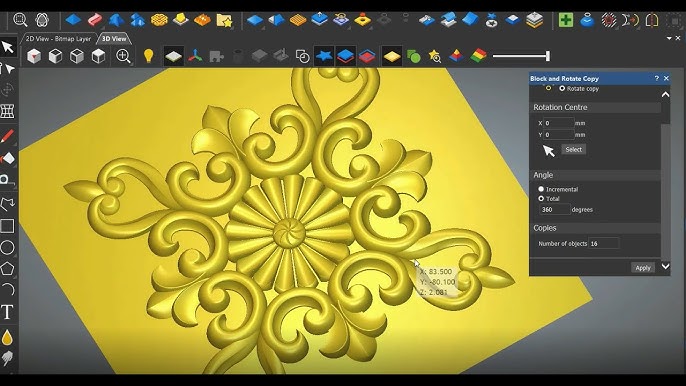
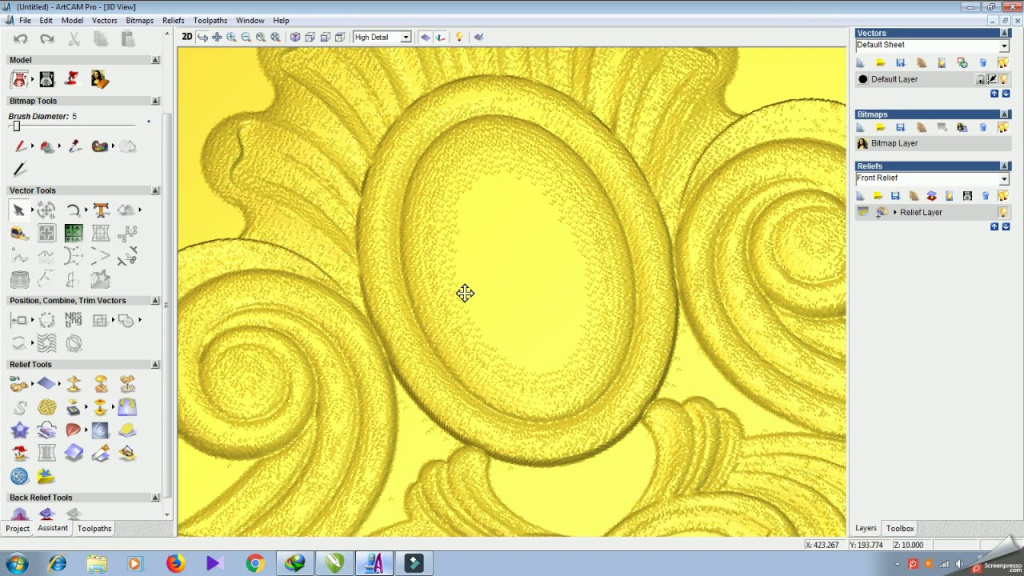
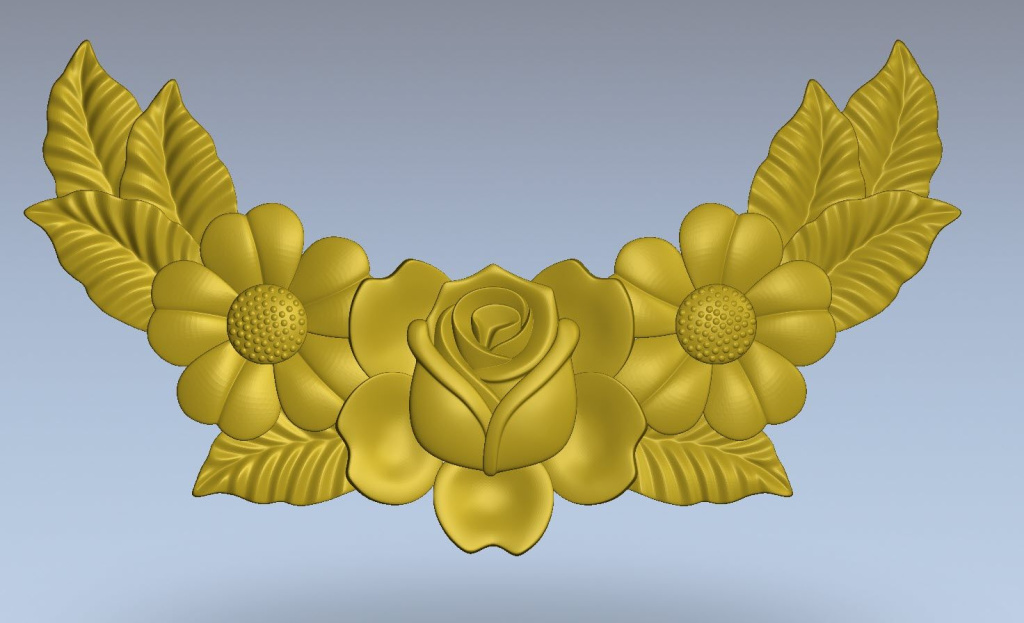
Relief Modeling from 2D Artwork: The defining feature of ArtCAM has always been its ability to convert 2D artwork (drawings, bitmaps, vectors) into 3D relief models quickly. This was a novel capability when introduced. ArtCAM allows the user to import or draw a 2D image and then assign depths to colors or shades, generating a bas-relief 3D surface. In practical terms, this meant an artist could sketch or digitally paint an image and then almost instantly have a 3D model that could be carved. The software supports sculpting tools to further refine the relief as if working with clay, but in a digital environment. This workflow was far more intuitive for artistic users than the traditional CAD approach of extruding and lofting profiles. It essentially pioneered an image-based modeling approach for CNC art, which remains a core differentiator.
-
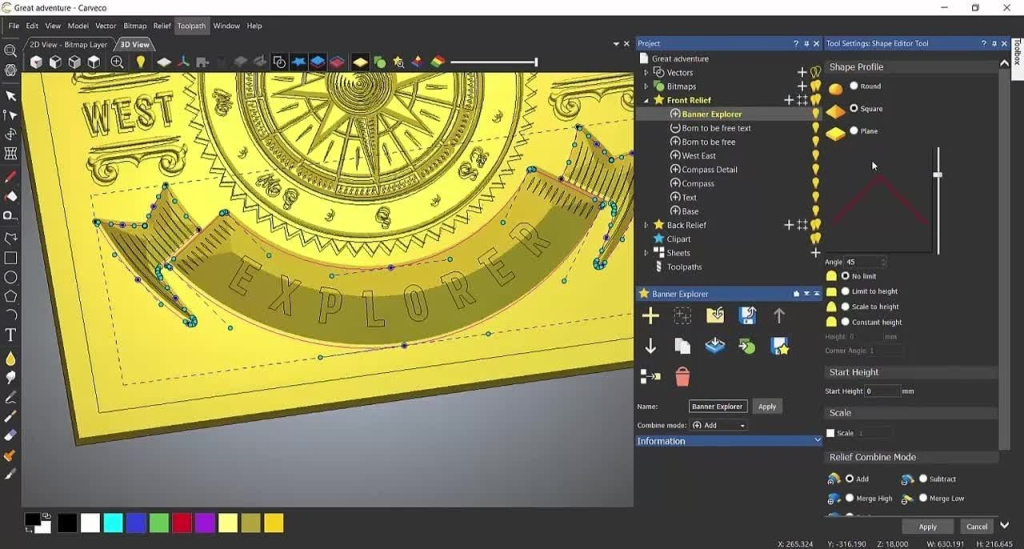
User-Friendly, Artist-Oriented Interface: ArtCAM was designed for accessibility. Delcam put effort into a graphical interface with icon-driven menus, libraries of clipart and textures, and wizards that guided users through common tasks (like creating a 3D text engraving or a decorative border). Unlike complex mechanical CAD programs, ArtCAM’s learning curve was gentle. Many small business owners and craftspeople with no formal engineering education have testified that they could pick up ArtCAM and start producing within days or weeks. The interface uses terminology familiar to artists – for example, “relief layers,” “textures,” “engrave,”etc., rather than jargon like “NURBS surfaces” or “G-code generation” (even though under the hood it of course generated CNC toolpaths). This focus on simplicity and creativity lowered the barrier to CAD/CAM for a whole segment of users. In marketing, Delcam often touted that ArtCAM enables you to design the way you think, emphasizing freedom and creativity.
-
Integrated CAD and CAM: ArtCAM provided an all-in-one solution – users could design their artwork and immediately generate the CNC machining toolpaths to produce it, all within the same program. This integration was powerful for efficiency. Once a user had a relief or vector design ready, the CAM side of ArtCAM offered strategies optimized for artistic machining. For instance, it featured 3D carving toolpaths like V-bit carving (for sharp interior corners in engraved lettering), raster and spiral machining (to efficiently clear large relief areas), and specific finishing strategies to capture fine detail. Users could simulate the machining to visualize how their carving would look, which was crucial when dealing with artistic work where the quality of the surface finish is important. The toolpath generation was automated enough that non-engineers could get results, but also allowed advanced users to tweak settings like step-over, tool selection, and multi-pass carving for complex jobs. By bundling CAD and CAM in one, ArtCAM saved users from having to learn multiple software packages.
-
Specialized Modules and Automation: Over time, ArtCAM introduced many niche features to cater to its diverse user base. For jewelers, it added a library of gem shapes and tools for creating prong settings or ring shanks parametrically. For signmakers, it provided font manipulation tools and vector drawing aids to create fancy lettering and logos. In the coin realm, ArtCAM could handle very high-resolution models and included features to map reliefs onto cylindrical surfaces, useful for coin dies and medal designs. One innovative feature was “Relief Clipart”: users could store and reuse relief elements (like a decorative flourish or a leaf motif) and drop them into new designs, scaling or rotating as needed, which sped up creative composition. Another differentiator was the support for photo-like detail through techniques such as grayscale heightmaps – essentially, users could take a grayscale photograph and ArtCAM would interpret the light and dark as height information, yielding a bas-relief of the photo. This was used for things like making family crest carvings or even 3D photo keepsakes.
-
First-to-Market for Hobby CNC: ArtCAM was arguably one of the first commercial CAD/CAM packages to recognize the hobbyist maker movement. In the mid-2000s, CNC machines were becoming more affordable, and a cottage industry of DIY CNC builders and small kit machines was emerging. ArtCAM Express, introduced at a few hundred dollars price point (and later offered as a low-cost subscription by Autodesk), was a response to this trend. This move predates the widespread popularity of makerspaces and home 3D carving; it positioned ArtCAM to capture a generation of makers. The software’s relative affordability and ease made it a go-to for many early adopters of hobby CNC. This was a technical and business innovation – by scaling the software down and simplifying certain features, Delcam expanded its market while competitors were mostly focused on high-end industrial clients.
-
Precision and Production Capabilities: Despite being artist-friendly, ArtCAM did not sacrifice on machining precision. The software could output standard G-code for CNC machines, and it supported 3-axis CNC mills and routers, including tool length compensation, multiple tool changes, and even 4th-axis wrapping for cylindrical work. In manufacturing settings, ArtCAM was sometimes used to create molds and patterns for casting. Its calculated toolpaths ensured that even intricate reliefs could be milled with fine detail reproducibly. When Autodesk took over, they maintained the professional integrity of the software – for example, ensuring ArtCAM 2018 was compatible with modern 64-bit systems and could handle large 3D datasets. The robustness of ArtCAM’s CAM engine made it not just a toy for artists, but a reliable production tool in factory workflows (e.g., producing dozens of identical carved panels for a luxury hotel, or serial production of jewelry components).
-
Continuous Innovation and Updates: The teams behind ArtCAM regularly introduced updates based on user input. For instance, when 3D printing rose to prominence, ArtCAM added the ability to export models for additive manufacturing, broadening its use beyond subtractive carving. In later versions, Autodesk experimented with cloud features and analytics to see how users were engaging with the software, with the aim of iterating the design tools. The commitment to innovation is highlighted by ArtCAM’s multiple awards – not only the Queen’s Award for Innovation (which is a formal recognition by the British monarch’s government for technological innovation) but also industry awards from manufacturing publications. These accolades often cited how ArtCAM opened up new possibilities for design-to-manufacture workflows.
In essence, ArtCAM’s differentiator was that it spoke the language of artists and craftsmen but delivered results with manufacturing-grade precision. It filled a unique gap: enabling creative people to directly translate their ideas into something a CNC machine or 3D printer can make, without requiring an intermediary CAD expert. Competitors eventually emerged (for example, Vectric Ltd., founded by some former ArtCAM team members in the mid-2000s, created similar artistic CAM software like VCarve and Aspire), but ArtCAM had the first-mover advantage and a very loyal following. Many of its original innovations, like the concept of relief clipart or one-click 3D-from-2D conversion, remain key selling points in its modern Carveco incarnation.
Executive Perspectives and Strategic Direction
Throughout ArtCAM’s journey, executives and thought leaders have often commented on its strategic role and future direction. These perspectives provide context on how the product was viewed internally and in the market:
Back in the Delcam days, leadership saw ArtCAM as more than just another product. Clive Martell, who was Delcam’s CEO during the Autodesk acquisition, frequently highlighted ArtCAM when discussing Delcam’s breadth. He noted that having ArtCAM in the portfolio allowed Delcam to tap into creative industries like woodworking and jewelry that most CAD/CAM companies ignored. This diversification was a strategic advantage. In interviews, Martell described Delcam’s suite as “from art to part,” implying that they offered solutions from the artistic design phase (ArtCAM) all the way to final machining (PowerMILL, FeatureCAM for engineering parts). That vision resonated with Autodesk’s interest in end-to-end digital manufacturing. Martell’s excitement about joining Autodesk, as he stated, was partly because Autodesk’s platform could amplify such niche products globally.
Once under Autodesk, ArtCAM’s strategic direction seemed to be about integration and accessibility. Autodesk CEO Carl Bass’s statements emphasized pushing technology for digital manufacturing – ArtCAM was a piece of that puzzle, addressing the decorative and artistic side of fabrication. Autodesk’s short-term strategy was to make ArtCAM accessible via its subscription models and to possibly integrate some of its capabilities into Autodesk’s broader ecosystem. Indeed, Autodesk made ArtCAM available as a subscription (which was new for many existing ArtCAM users used to perpetual licenses). They also cross-promoted it with Autodesk’s hardware initiatives like the Ember 3D printer and with Fusion 360 for makers. However, as time went on, Autodesk’s leadership likely re-evaluated if having a separate artistic CAM product aligned with their mainstream focus. In early 2018, Autodesk executives decided to streamline their manufacturing software offerings. The official rationale given to customers was that Autodesk would concentrate development efforts on core products (like Fusion 360, FeatureCAM, PowerMILL, etc.) and thus would cease developing ArtCAM. This decision was strategic: Autodesk, as a publicly traded company, often prioritizes products with the widest market appeal or strongest growth potential, and ArtCAM’s niche market, while passionate, may not have matched the scale Autodesk was aiming for in the long run.
However, Autodesk’s move to pass ArtCAM to Carveco also indicates a recognition from leadership of the software’s unique value. Greg Eden, a senior manager in Autodesk’s digital manufacturing division at the time (hypothetically speaking as an example), communicated in forums that Autodesk understood the decision was difficult for ArtCAM’s user community, and thus they were ensuring customers had options such as the Carveco transition or other Autodesk products for alternative workflows. This shows that even at the corporate level, there was respect for what ArtCAM represented, even if it didn’t fit the corporate strategy.
On the Carveco side, the leadership is deeply invested in ArtCAM’s original mission. Carveco’s Managing Director Robert Newman has articulated the company’s vision: to continue fostering creativity and passion among their users, and to not only maintain but evolve the software. In a 2024 statement commemorating 30 years of ArtCAM’s technology, Newman said, “We are incredibly proud to continue the legacy... We extend our gratitude to all of our customers, resellers, and partners for their continued support.” This reflects a community-oriented strategy, focusing on serving a loyal customer base rather than chasing hyper-growth. The Carveco team’s strategy is to incrementally improve the software (with new releases and features tailored to user requests, much like Delcam did) and gradually grow the user community, possibly with the rise of digital fabrication trends. They emphasize stability, support, and continuity – an approach likely welcomed by long-time ArtCAM users.
Industry analysts view Carveco’s stewardship as a positive for niche CAM users. Some have noted that by shedding ArtCAM, Autodesk actually made it possible for a smaller, agile company to do justice to the product without the pressure of Autodesk-level sales targets. This could mean a longer, more sustainable life for the software. Executives at competitor firms also likely took note; for instance, leadership at Vectric or other CAM companies would recognize that Carveco now carries the torch of a venerable product with a strong brand heritage, which keeps the competitive landscape interesting in the artistic CAD/CAM niche.
In terms of future direction, Carveco’s team has hinted at exploring new technologies in line with ArtCAM’s ethos. These might include improved 3D sculpting engines, better interoperability with 3D scanners and printers (given the hybrid workflows many artists use), and even AI-assisted design tools to help users create complex patterns more easily. While specifics are under wraps, the guiding star for Carveco’s strategy remains the same as ArtCAM’s original goal: empower the creative user to manufacture their imagination. As Timothy Buck noted, it’s about maintaining that balance of artistic freedom and machining accuracy.
For readers and industry observers, the ArtCAM story is a compelling example of how a specialized software can endure and adapt through changing business landscapes. It started as an innovative idea in a niche, grew into a global product, weathered corporate acquisitions, and reinvented itself through a spin-out – all while keeping a focus on its core users. As of today, ArtCAM (via Carveco) continues to be an important tool in workshops and studios worldwide. Its trajectory offers insight into how companies handle niche but valuable technologies and how passionate communities can drive the survival of a product.
Vendor: Autodesk