
SolidCAM: The Integrated CAM Solution Powering Modern Manufacturing
The information is currently being reviewed and updated. If you notice any errors or inaccuracies, please let us know.
From aerospace components and automotive parts to consumer electronics and medical devices, chances are that a product you use was manufactured with the help of SolidCAM. This advanced computer-aided manufacturing (CAM) software has become an essential tool for tens of thousands of machine shops and manufacturers worldwide, helping them save significant machining time and costs.SolidCAM is known for its seamless integration with popular CAD systems and its patented high-efficiency machining technology. In this report, we take an in-depth look at the SolidCAM software and its vendor – covering what it is, the industries it serves, its history and evolution, business footprint, key partnerships, technological innovations, and insights from company leadership.
Company Overview
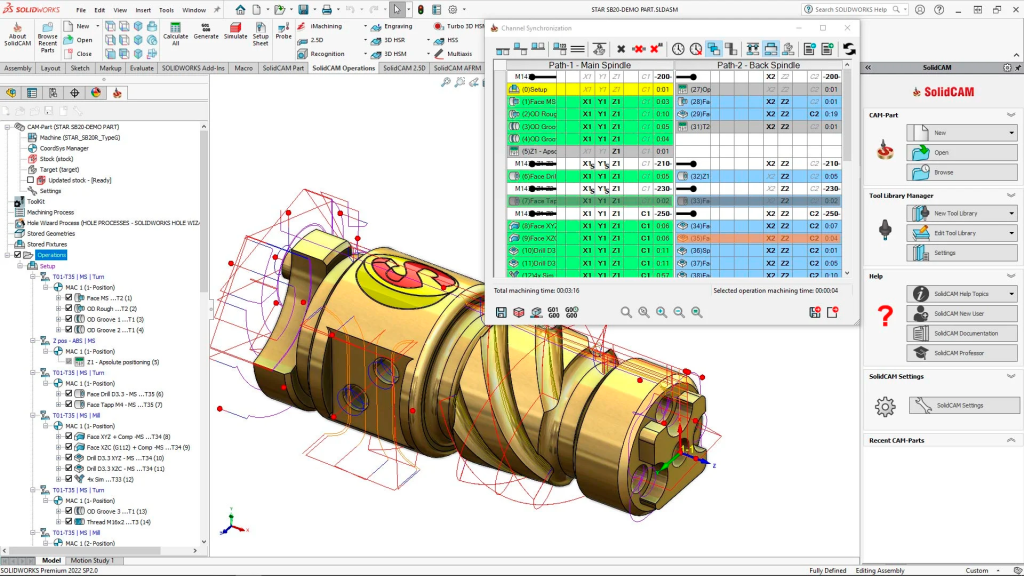
SolidCAM is a professional CAM software package used to program CNC (Computer Numerical Control) machining operations such as milling and turning. Developed by the company SolidCAM Ltd., the software is distinguished by its single-window integration into mainstream CAD platforms. It operates as an add-in to 3D CAD systems – notably SOLIDWORKS, Autodesk Inventor, and even supports Solid Edge – allowing engineers to perform CAM programming directly within their familiar CAD environment. This tight CAD/CAM integration means toolpaths and machining setups are fully associative to the 3D design model, so any design change automatically updates the machining operations. By eliminating the need for data import/export between separate CAD and CAM programs, SolidCAM streamlines the workflow from design to manufacturing.
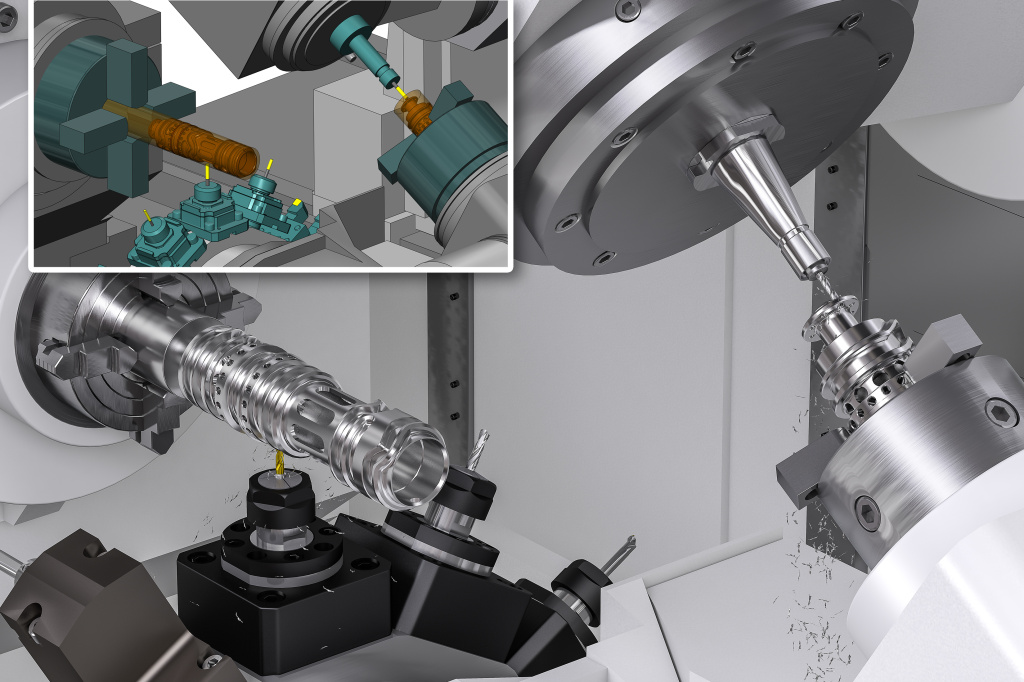
In terms of capabilities, SolidCAM offers a comprehensive suite of modules to handle the full range of CNC applications. It supports 2.5D machining for prismatic parts, 3-axis surface machining for molds and complex shapes, high-speed machining strategies, multi-sided (4/5-axis indexial) machining, and full 5-axis simultaneous milling for intricate geometries. It also includes modules for CNC turning, multi-axis mill-turn machining centers, and Swiss-type lathes, addressing the needs of complex multi-channel mill-turn machines. Additionally, SolidCAM provides tools for probing, automated feature recognition, and even an additive manufacturing interface (developed in recent years). This breadth of functionality positions SolidCAM as an all-in-one CAM solution capable of programming everything from simple two-axis jobs to the most advanced multi-axis CNC equipment.
SolidCAM’s vendor, SolidCAM Ltd., is a privately held company headquartered in Or Yehuda, Israel. The company was founded in 1984 by Dr. Emil Somekh, who remains its CEO and guiding force. From the start, Dr. Somekh’s vision was to develop an easy-to-use CAM system that would be fully integrated with the leading CAD software of the day. “I established the company with the aim of developing an easy-to-use and learn CAM system, fully integrated in the most popular CAD systems,” says Dr. Somekh, reflecting on SolidCAM’s founding mission. Under his leadership, SolidCAM has stayed focused exclusively on CAM software innovation for decades. This singular focus – without diversifying into CAD or other fields – has made SolidCAM a specialist in manufacturing software. Today, the company is recognized as one of the world’s leading independent CAM vendors and a pioneer of integrated CAD/CAM. SolidCAM is an official SOLIDWORKS Certified Gold Product (a status it achieved back in the early 2000s) and an Autodesk Inventor Certified Application, validations that underscore its close integration and technical alignment with those CAD platforms.
Main Applications and Industry Adoption
SolidCAM is used in a wide array of application areas wherever there is a need for CNC machining. Its user base spans industries including aerospace, automotive, defense, industrial machinery, consumer electronics, medical device manufacturing, and more. In aerospace, for example, SolidCAM helps program the 5-axis machining of complex components like turbine blades and aircraft structural parts. In the automotive sector, it is used for everything from engine components to molds and dies for car body parts. Companies in the high-tech electronics realm (for instance, manufacturers of computer hardware and consumer gadgets) use SolidCAM for precision machining of enclosures, heat sinks, and prototypes. The medical industry relies on it for machining surgical instruments, orthopedic implants, and other high-precision parts. Even manufacturers of heavy equipment and tooling find applications for SolidCAM in producing things like cutting tools, injection molds, and jigs/fixtures.
Notably, a number of the world’s largest manufacturing enterprises have utilized SolidCAM in their production processes – either directly or through their supply chain. It has been reported that aerospace leaders such as SpaceX and Airbus, automotive OEMs like Toyota, Honda, Volkswagen and Skoda, and tech giants including Intel and HP have had parts made with SolidCAM programming. In the defense sector, systems like Israel’s Iron Dome anti-missile system involve components machined with SolidCAM. Industrial conglomerates like Bosch, Michelin, and Procter & Gamble are also cited among the major companies whose products involve manufacturing steps programmed by SolidCAM. This broad adoption speaks to the software’s versatility and reliability in demanding production environments.
Crucially, SolidCAM is not just for large corporations – it is extensively used by small and mid-sized machine shopsaround the globe. Job shops and contract manufacturers form a substantial portion of SolidCAM’s customer base. These shops often handle diverse projects and need CAM software that is flexible, efficient, and easy to use on the shop floor. By integrating directly with popular CAD programs (which many clients use for part design), SolidCAM makes it straightforward for a small CNC shop to take a customer’s CAD model and go straight into toolpath programming without translation hassles. The software’s focus on ease-of-use and its Technology Wizard (which suggests optimal cutting parameters) are particularly valued by smaller manufacturing teams that may not have dedicated CAM experts for tweaking feeds and speeds. Whether it’s a high-volume production run at an automotive supplier or a one-off prototype at a local job shop, SolidCAM provides the tools to program CNC mills and lathes efficiently, with a consistent interface across all these use cases.
Beyond industry and commercial use, SolidCAM also has a strong presence in technical education. Universities, vocational schools, and training centers in many countries use SolidCAM in their CNC machining curricula to teach the next generation of machinists and manufacturing engineers. In fact, SolidCAM offers an educational version of its software and has reported tens of thousands of installations in schools worldwide. This includes widespread adoption in technical school networks in its home country of Israel and beyond. By being part of engineering and manufacturing education programs, SolidCAM helps familiarize new users with its platform early on, which in turn supports industry adoption as students graduate and bring those skills into the workforce.
History and Evolution of the Product
SolidCAM’s story stretches back over 40 years, marked by continuous evolution alongside the CAD/CAM industry. The company was founded in 1984 by Dr. Emil Somekh, a mechanical engineer who had a vision of bringing powerful CAD/CAM capabilities to the emerging era of personal computers. In the early 1980s, CAD/CAM software was largely confined to expensive workstations or mainframe computers, but Dr. Somekh foresaw that the PC would democratize 3D design and manufacturing software. He started the company (initially in Israel after relocating from Canada) to create a PC-based CAM system that could work in tandem with CAD software. The product was named “SolidCAM” reflecting a philosophy of providing solid, integrated CAM functionality for solid modeling CAD systems.
Throughout the late 1980s and early 1990s, SolidCAM grew modestly as CAD/CAM technology advanced. A pivotal turn came in the mid-1990s, when mainstream 3D CAD software for Windows PCs – such as SOLIDWORKS – entered the market. SolidCAM’s team recognized an opportunity to tightly integrate their CAM solution with these popular CAD platforms. They shifted their strategy to “integration in the most popular CAD systems”, which proved to be a key to the company’s growth. By the early 2000s, SolidCAM had achieved Certified Gold Partner status with SOLIDWORKS, meaning the software could run fully inside the SOLIDWORKS environment with complete associativity to the CAD models. Around the same period, SolidCAM also introduced a version of its product for Autodesk’s Inventor CAD system (branded as “InventorCAM”), which likewise attained Autodesk-certified status. These integrations allowed SolidCAM to ride the wave of the rapidly growing mid-range CAD market, piggybacking on the user bases of SOLIDWORKS and Inventor.
As SolidCAM integrated into these CAD platforms, it expanded its global reach by building a reseller network often in conjunction with CAD resellers. For instance, many authorized SOLIDWORKS resellers around the world began offering SolidCAM to provide their customers with a complete CAD/CAM package. In 2002, a dedicated SolidCAM UK subsidiary was established (SolidCAM UK Ltd.) to serve the United Kingdom and Ireland, reflecting the company’s strategy of setting up local presence in key markets. Over the 2000s, SolidCAM entered other markets across Europe, Asia, and the Americas through distributors or branch offices. By the mid-2000s, the company had a growing international footprint and an expanding base of users, while continually adding new machining capabilities to the software (such as 4-axis and 5-axis machining modules).
A major milestone in SolidCAM’s product evolution was the launch of its revolutionary iMachining technology in 2011. After years of R&D, SolidCAM introduced iMachining as a module that could automatically generate highly optimized toolpaths and cutting conditions, dramatically increasing machining efficiency. The technology was protected by multiple patents. It consisted of two key components: the iMachining Tool Path generator, which creates advanced morphing spiral toolpaths with a controlled, variable cutting angle to maintain constant tool load; and the iMachining Technology Wizard, which automatically calculates optimal feeds and speeds based on the toolpath, material, tool geometry, and machine specifications. This innovation addressed longstanding problems in CNC programming by removing much of the guesswork in setting machining parameters and by producing toolpaths that both reduce cycle time and prolong tool life. When iMachining was unveiled, SolidCAM demonstrated upwards of 70% savings in machining time in benchmark tests, capturing industry attention. As Dr. Somekh put it, “We accomplished a revolution in machining by developing the iMachining toolpath, that saves 70% and more in machining time and extends cutting tool life dramatically.” This bold claim was backed by real-world case studies, and iMachining quickly became SolidCAM’s flagship differentiator in a competitive CAM market.
Following the introduction of iMachining, SolidCAM entered a period of rapid growth in the 2010s. The CAM industry at large was undergoing consolidation – many independent CAM developers were being acquired by larger CAD or PLM companies – yet SolidCAM chose a different path. The company remained privately owned and independent, declining acquisition offers from big industry players. During this time, SolidCAM also strengthened its technology through partnerships. In 2003, anticipating the rise of 5-axis machining, SolidCAM partnered with ModuleWorks, a specialist in multi-axis toolpath algorithms and machine simulation. This partnership led to the integration of ModuleWorks technology and the release of SolidCAM’s simultaneous 5-axis milling module by 2004. That move kept SolidCAM at the cutting edge of multi-axis machining capabilities. Over subsequent years, the software expanded to cover advanced mill-turn (multi-turret, multi-spindle) machines and Swiss-type lathes, which were increasingly important in industries like aerospace and medical. By the end of the 2010s, SolidCAM could credibly claim to support the entire range of CNC machine types and complexity, from simple 2-axis cuts to multi-channel CNC systems.
In recent years, SolidCAM has continued to evolve with industry trends. In 2020, the company introduced a revamped module for advanced mill-turn and Swiss-type machining, along with an overhauled tooling database system to better handle the complex tool setups of these machines. In 2021, a new simulation engine (often referred to as the “SolidCAM Simulator”) was launched, offering more realistic and high-fidelity machine simulation and verification, which is critical for catching collisions in complex CNC programs. The company also began exploring the emerging intersection of subtractive and additive manufacturing. In 2022, SolidCAM formed a partnership with metal 3D printer manufacturer Desktop Metal to create combined “CNC + Additive” technology centers, indicating SolidCAM’s interest in positioning itself in the broader digital manufacturing ecosystem. By 2024, SolidCAM even announced SolidCAM Live and SolidShop systems aimed at shop-floor integration (e.g., CNC machine monitoring, production management), moving beyond just CAM programming into providing a more holistic manufacturing software platform for machine shops.
From a small startup in the ’80s to a global CAM leader today, SolidCAM’s journey is marked by a consistent thread of integration and innovation. The choice to remain independent through decades of industry consolidation stands out in its history. “Innovation is best done by us staying independent and growing,” Dr. Emil Somekh asserted, highlighting that SolidCAM believes its freedom to focus on customer-driven development has been key to its longevity. After four decades, the SolidCAM software has gone through countless version releases and upgrades, yet the core identity remains: a CAM solution tightly unified with CAD, continually pushing technology (like iMachining) to simplify and accelerate the machining process.
Business Footprint and Growth
Over its lifespan, SolidCAM has grown into a company with a significant global footprint in the manufacturing software market. While exact financial figures are not publicly disclosed (as the firm is privately held), SolidCAM’s scale can be gauged by its user base and geographic reach. As of the early 2020s, SolidCAM reported that it had over 24,000 commercial seats of its software installed at industrial customers worldwide. These are licenses used in production by manufacturing businesses of various sizes. What’s even more impressive, the company estimates an additional 60,000+ installations in educational institutions globally – a testament to its strong presence in engineering and CNC training programs. This widespread educational use also feeds the pipeline of trained SolidCAM users entering industry.
In terms of customer count, SolidCAM serves on the order of 20,000+ companies and machine shops across more than 50 countries. A sizable portion of its user community is concentrated in major manufacturing economies in Europe, Asia, and North America. SolidCAM’s home base in Israel accounts for a few hundred of these customers, but the vast majority are overseas in markets like Germany, where the company has a large install base, and the United States, which in recent years has become its fastest-growing market. Other countries with significant SolidCAM usage include the UK, Turkey, China, India, South Korea, Japan, Italy, France, Czech Republic, and many more – truly spanning every continent where CNC machining is prevalent.
To support this global customer network, SolidCAM has established a robust presence internationally. The company has branch offices or subsidiaries in several key regions: for example, SolidCAM GmbH in Germany (which hosts a major technology center and demo facility), SolidCAM UK in Great Britain, SolidCAM Inc. in the United States (with offices in Pennsylvania and California), and SolidCAM India in Bangalore (a joint venture there). In total, SolidCAM directly employs about 250 people worldwide, including software developers, application engineers, technical support staff, and sales and marketing teams. These employees are distributed across Israel and these branch offices, as well as additional offices in countries like Spain, China, Japan, and Serbia. The company prides itself that many of its application engineers and support personnel are experienced machinists or manufacturing professionals, which helps in providing hands-on, knowledgeable support to customers.
Augmenting its direct staff, SolidCAM relies on a global reseller network that covers over 65–70 countries. Many of these resellers are the same firms that sell CAD software (especially SOLIDWORKS), leveraging the synergy of offering an integrated CAD/CAM package. This reseller model has enabled SolidCAM to penetrate local markets and provide local language sales and support without having to open a fully owned office in every country. For instance, in Southeast Asia, independent resellers distribute SolidCAM in countries like Indonesia, Malaysia, and the Philippines. In Eastern Europe and South America, a similar network of partners brings SolidCAM to local industries. SolidCAM regularly conducts training, certification, and an annual global reseller conference to keep this extended sales force up-to-date. In 2023, the company held a “SolidCAM World” summit in Istanbul that gathered over 300 staff from its branches and reseller partners, highlighting the scale of its worldwide team.
SolidCAM’s business performance has often been highlighted by industry observers as robust. The company has been recognized at times as one of the fastest-growing CAM software vendors, especially following the launch of iMachining which drove a surge of new customers. While precise revenue figures are not public, third-party estimates suggest SolidCAM’s annual revenues are in the high tens of millions of dollars, reflecting its large user base and enterprise software price points. SolidCAM’s growth has been primarily organic. It has not required external venture funding in its later years and has no institutional investors, a somewhat uncommon trait for a tech company of its size. This organic growth has been fueled by software license sales, subscription maintenance fees, and services such as training and post-processor customization. The company’s decision to offer a free “SolidCAM Maker” version for hobbyists and a startup program (providing discounted software to young companies under certain revenue thresholds) is a newer strategy to broaden its user community and feed the pipeline of future paying customers.
In summary, SolidCAM today stands as a mature, globally entrenched player in the CAM market. It boasts a worldwide user community, a network of offices and partners on multiple continents, and a healthy business built on decades of steady expansion. Importantly, despite the company’s growth and international scope, it remains under the leadership of its original founder and retains the agility of an independent company – factors often cited as contributors to its customer-centric approach.
Partnerships, Collaborations, and Industry Relations
Over the years, SolidCAM has engaged in numerous partnerships and collaborations rather than mergers or acquisitions. In fact, one hallmark of the company is that it has never been acquired despite the wave of consolidation in the CAM software industry. During the 2000s and 2010s, many CAM developers were bought by larger firms – for instance, Autodesk acquired HSMWorks, 3D Systems acquired GibbsCAM (via Cimatron), and Hexagon acquired Vero CAM products. SolidCAM, however, remained independent, reportedly turning down multiple acquisition offers. By staying independent, SolidCAM has been able to forge its own path and partner as needed with both customers and would-be competitors. For example, Autodesk, despite having its own CAM tools, still maintained a partnership with SolidCAM as the provider of InventorCAM for Inventor users, even as the two competed in the SolidWorks market. This unusual dynamic of partner-competitor relationships is a result of SolidCAM’s unique standing and focus.
SolidCAM’s most significant collaboration is with Dassault Systèmes’ SOLIDWORKS division. As a Gold Certified Partner for over two decades, SolidCAM has worked closely with the SOLIDWORKS API and product teams to ensure tight integration. This partnership has effectively made SolidCAM an unofficial CAM arm in the SOLIDWORKS ecosystem, and many SOLIDWORKS resellers worldwide include SolidCAM in their offerings. The mutual benefits are clear: SolidCAM gains access to SOLIDWORKS’ large user base, and SOLIDWORKS can offer its customers a proven integrated CAM solution. A similar collaboration exists with Autodesk for Inventor, where SolidCAM’s product (branded as InventorCAM) is marketed to Inventor users seeking CAM capabilities. SolidCAM achieved “Autodesk Certified” status, demonstrating compliance and compatibility with Inventor’s requirements.
On the technology side, the partnership with ModuleWorks (initiated in 2003) stands out. Instead of reinventing the wheel for certain complex toolpath calculations and machine simulation, SolidCAM chose to integrate ModuleWorks’ specialized CAM components. Through this collaboration, SolidCAM was able to rapidly enhance its 5-axis simultaneous machining module and machine verification simulation. The successful integration meant that by the mid-2000s, SolidCAM could offer state-of-the-art multi-axis machining strategies on par with much larger competitors. The two companies celebrated their partnership’s milestones (for example, a five-year partnership anniversary was marked in 2009, noting SolidCAM’s rise in the 5-axis market). SolidCAM continues to partner with ModuleWorks to leverage the latest in simulation technology, ensuring its users can simulate complex CNC operations with full machine kinematics and avoid collisions before running a program on expensive equipment.
SolidCAM has also cultivated relationships with CNC machine tool manufacturers and cutting tool vendors. While not formal ownership-based partnerships, these collaborations involve working together on machine demonstrations, trade show presentations, and ensuring post-processor and software support for new CNC machine models. SolidCAM, for instance, works closely with companies like Haas, DMG Mori, Mazak, and others to develop reliable post-processors (the code translation needed to run on each specific machine controller). It’s common to see SolidCAM teaming up with a machine builder and a cutting tool manufacturer at industry events to showcase high-speed machining live – a scenario where each party benefits by displaying a combined solution (machine + CAM software + tooling) that yields exceptional results. These technical partnerships help SolidCAM stay aligned with the latest machine innovations, such as 5-axis mill-turn centers and Swiss screw machines, and demonstrate the software’s capabilities on cutting-edge equipment.
In terms of distribution and reach, SolidCAM has formed strategic alliances with major CAD resellers. A recent example is the partnership with TriMech, one of North America’s largest SOLIDWORKS resellers. Announced in 2022 and expanded in 2023–2024, this partnership made TriMech a key distributor of SolidCAM in the United States, Canada, and the UK. By teaming up with an established reseller that already has deep penetration in the CAD market, SolidCAM significantly bolstered its sales and support network in those regions. The TriMech team gained training in SolidCAM’s products and began offering SolidCAM to their CAD customer base, effectively broadening SolidCAM’s market access. The collaboration was highlighted by joint appearances at events like IMTS (International Manufacturing Technology Show) in Chicago, where SolidCAM and TriMech presented integrated solutions together. This is indicative of SolidCAM’s partnership strategy: rather than grow solely by acquisition, it prefers to partner with strong local players to accelerate adoption.
Another noteworthy collaboration for SolidCAM is in the realm of additive manufacturing. In 2021, SolidCAM started a partnership with Desktop Metal, a leader in metal 3D printing systems. Initially, SolidCAM became a reseller of Desktop Metal’s 3D printers in certain markets (such as Germany). By 2022, that partnership expanded globally, with SolidCAM set to distribute Desktop Metal systems in the US, UK, Israel, and India. Moreover, SolidCAM began establishing combined demo centers (billed as “CNC + AM Centers of Excellence”) where both subtractive (CNC machining) and additive (metal printing) processes are showcased side by side. This partnership illustrates SolidCAM’s recognition that the future of manufacturing will blend multiple processes, and the company is positioning itself to be a provider of integrated solutions in that space. While CAM software and 3D printing software are different domains, SolidCAM’s move to collaborate with an additive manufacturing firm suggests a forward-looking approach to remain relevant as manufacturing technology evolves.
In summary, collaborations have been central to SolidCAM’s strategy. The company has built a web of partnerships – with CAD giants, with specialized tech providers, with resellers, and with hardware companies – to enhance its product and expand its reach without sacrificing its independence. Unlike many competitors, SolidCAM has not grown through mergers or acquisitions of other software companies; instead, it grew organically and through synergy with allies. As Dr. Somekh noted, building a winning team and finding key technology partners have been crucial to SolidCAM’s success. This collaborative ethos has enabled SolidCAM to punch above its weight in an industry often dominated by much larger corporations.
Technological Innovations and Competitive Advantages
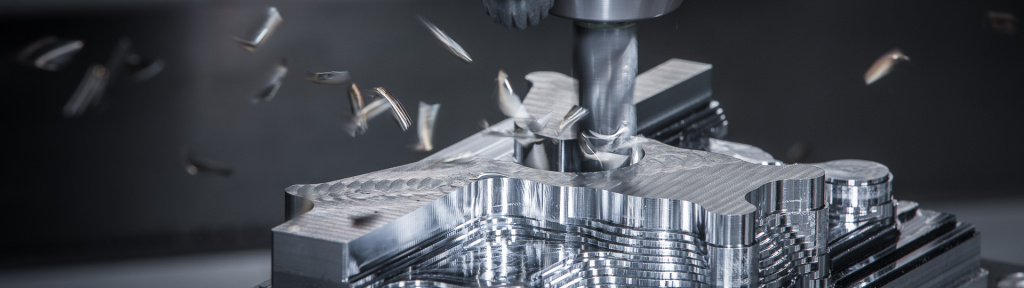
SolidCAM’s longevity and success can be attributed in large part to its technological innovations and the competitive advantages those innovations confer. Chief among these is the aforementioned iMachining technology – arguably the crown jewel of SolidCAM’s offerings. Introduced in 2011, iMachining was a game-changer for CAM software. It tackled a fundamental challenge in machining: how to maximize material removal rates (for efficiency) without breaking tools or overstressing machines (for safety and cost). The solution was a combination of smarter toolpath patterns and an expert system for cutting parameters. Unlike conventional CAM toolpaths that often result in uneven tool loading (for example, a cutter might suddenly take a heavy cut in a corner and then air-cut in other zones), iMachining generates a smooth, morphing toolpath that maintains a consistent chip load on the tool. It achieves this through a variable cutting angle approach – the toolpath adjusts its trajectory so that the engagement angle of the cutter in the material stays within an optimal range at all times. This avoids spikes in cutting forces. In tandem, the iMachining Wizard computes optimal spindle speeds, feed rates, step-down depths, and so on, based on a vast built-in knowledge base of machining best practices and material properties. As a result, even users without deep machining expertise can let the wizard set the complex parameters, typically yielding far better outcomes than a less experienced user would manage manually.
The benefits of iMachining are striking: SolidCAM claims (and customers have corroborated) cycle time reductions of 70% or more in many cases, along with dramatically extended tool life (often 2x to 10x longer tool longevity). For manufacturers, this translates to major cost savings and productivity gains. What makes iMachining particularly powerful is that it effectively encodes the collective wisdom of many machining experts into the software. Dr. Somekh often describes it in vivid terms, saying it’s like “putting the knowledge and experience of hundreds of CAM and CNC masters in the palm of your hand.” This level of built-in expertise is a strong differentiator against competitors. Other CAM systems have since developed advanced high-speed machining toolpaths (the industry trend often called “adaptive clearing” or “dynamic milling”), but SolidCAM’s integrated wizard and patented algorithms were ahead of the curve and remain highly regarded. For many customers, iMachining is the feature that tips the scales in favor of choosing SolidCAM over another CAM package. It essentially allows shops to use their existing CNC machines much more effectively, often postponing the need for new machine purchases because of the throughput increase on current equipment.
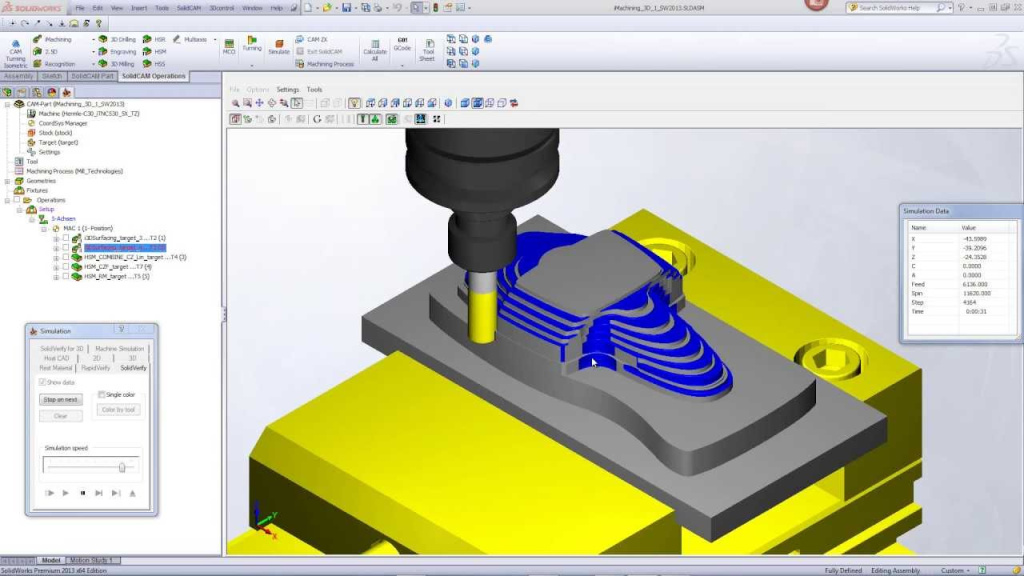
Another key technological strength of SolidCAM is its integration with CAD, which has been a cornerstone from early on. While not as flashy as iMachining, the seamless CAD integration provides day-to-day productivity benefits that set SolidCAM apart from standalone CAM systems. Users operate within one unified interface, using the CAD system’s native menus and design tools in conjunction with SolidCAM’s machining operations tree. This not only reduces learning time (since the look-and-feel matches the CAD software), but it also prevents translation errors and geometry issues. The full associativity means engineers can iterate designs and manufacturing processes in parallel – if a part’s design changes, SolidCAM will flag which toolpaths are affected and allow quick regeneration. This tight link is a competitive advantage especially in environments where design changes are frequent. It also aids in collaboration between design engineers and NC programmers, since they’re effectively working on the same digital model. SolidCAM’s long partnership with CAD vendors means its integration is deep and refined; for example, SolidCAM can use SOLIDWORKS assembly files to account for fixtures and tooling in simulations, and it supports direct selection of CAD features (like holes or pockets) for machining strategies.
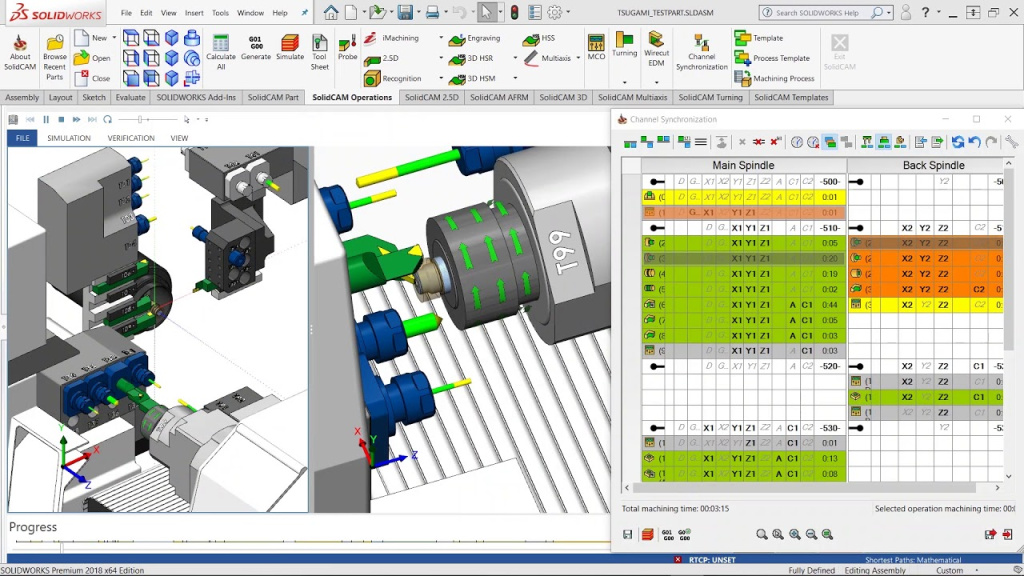
In terms of breadth of features, SolidCAM’s comprehensive module set has been a competitive selling point. Some CAM software excel only in certain areas (for instance, one might be very good for 3-axis milling but lack robust turning, another might handle multi-axis well but be weak in ease of use). SolidCAM aims to cover all major CNC operations in one product, giving it a “one-stop shop” advantage. A machine shop that does milling, turning, and 5-axis work does not need separate software for each – they can do it all in SolidCAM. The introduction of advanced Mill-Turn and Swiss-type machining capabilities in recent versions was crucial, because it opened up new markets (such as the medical industry where Swiss lathes are common for small, precise parts). By offering synchronization of multiple machine channels, live tool support, thread whirling, and other specialized functions for these machines, SolidCAM positioned itself as a competitor to the niche CAM systems that historically dominated the Swiss-turn market. Similarly, the robust 5-axis milling functions (bolstered by ModuleWorks algorithms) make it competitive for aerospace and automotive customers who need complex surfacing and multi-axis motion.
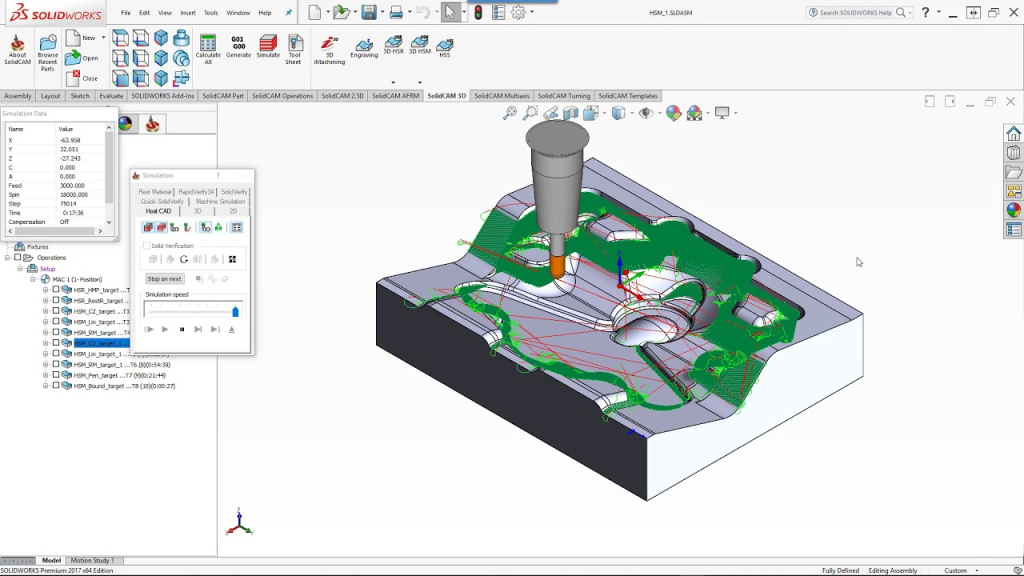
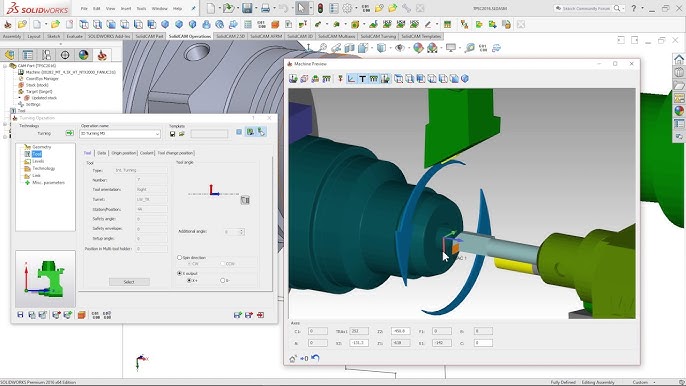
SolidCAM’s simulation and verification tools are another innovation area. Machining simulation has become increasingly important to avoid costly crashes. The SolidCAM Simulator introduced in 2021 provides a high-fidelity 3D simulation of the entire machining process, including the machine tool, workpiece, fixtures, and cutting tool motion. It allows users to visualize material removal and catch any potential collisions or mistakes before they go to the machine. This simulator leverages modern graphics and simulation technology (partly from ModuleWorks) to bring SolidCAM on par with or ahead of competitors in terms of virtual machining accuracy. The new tool table management introduced around the same time gave programmers better control over the definitions of complex tool assemblies (which is especially crucial for multi-spindle and multi-turret machines that may carry dozens of tools). These improvements show SolidCAM’s commitment to continuous technological refinement, addressing the evolving needs as CNC machinery itself becomes more advanced.
Ease of use and user productivity have always been focal points in SolidCAM’s design philosophy. The interface is organized logically for machinists, and features like the ToolKit and the built-in parametric templates help users program typical jobs faster. The company also puts out extensive tutorial content (e.g., the “SolidCAM Professor” video series) to educate users, indicating the value placed on making the technology approachable. In recent developments, SolidCAM went a step further by creating auxiliary applications like SolidCAM for Operators, which allows machine operators on the shop floor to review and simulate CAM programs in a simplified interface. This bridges the gap between the programming office and the machining floor, fostering greater confidence and communication. Few CAM providers offer this kind of tailored tool for operators, which is a nice differentiator for customers who want to involve their machine operators in process proofing and optimization.
In comparison to its competitors, SolidCAM’s competitive advantages can be summarized as: integration, innovation (iMachining), and comprehensiveness. Some well-known CAM systems like Mastercam or GibbsCAM are standalone and might require more manual work to achieve what SolidCAM’s automation can do. Others like Autodesk’s Fusion 360 or Inventor CAM (derived from HSMWorks) do integrate with CAD but may not yet match SolidCAM’s breadth of advanced machine support. SolidCAM’s team points out that while big players (like Autodesk or Dassault) have entered the integrated CAM arena, SolidCAM’s head start and focused development give it a technological edge. In a candid remark a few years ago, Dr. Somekh estimated that it would take a competitor like Autodesk “at least 10 years” to catch up to SolidCAM’s depth of CAM functionality – a bold statement reflecting SolidCAM’s confidence in its technology lead at the time.
Finally, SolidCAM’s competitive stance is reinforced by its reputation for strong customer support, largely enabled by that global network of local experts. Many users have praised the company’s support engineers for being truly knowledgeable in machining (often able to advise on machining strategy, not just software clicks). This practical expertise, combined with the advanced features of the software, helps SolidCAM retain customers in the long run. The company’s close relationships with users often guide the development of new features, ensuring that innovations are aligned with real-world needs.
Leadership and Vision
SolidCAM’s corporate culture and vision have been heavily shaped by its founder and CEO, Dr. Emil Somekh, who has led the company since its inception. Dr. Somekh’s background blends engineering, manufacturing, and software development – he holds a PhD and has practical experience in machining – which has enabled him to steer SolidCAM with a clear understanding of customer challenges. Under his leadership, the company’s mantra has been to focus on CAM excellence and stay responsive to user needs. Internally, SolidCAM is described as being very customer-centric, often implementing feature requests or improvements based on direct feedback from machine shops and CNC programmers using the software daily.
In interviews and public statements, SolidCAM executives frequently emphasize the importance of their team and partnerships (rather than just the raw software). “Building and managing a winning global team, locating important technology partners, and constantly striving to satisfy manufacturing customers’ needs are the main keys for SolidCAM’s success,” Dr. Somekh said, summarizing the company’s formula. Indeed, many of SolidCAM’s core team members have been with the company for years, and the firm has cultivated local leadership in each region that deeply understands those markets. This stability and experience have helped SolidCAM punch above its weight against larger competitors with bigger budgets.
The vision articulated by Dr. Somekh is for SolidCAM to be a “one-stop shop for all advanced CAM solutions” in the market – meaning the company aims to provide a complete ecosystem for manufacturers. This is reflected in their product strategy: rather than focusing on a narrow niche, they’ve built out functionality to cover every aspect of CAM and even adjacent shop-floor needs. From the perspective of the leadership, if a manufacturing customer can get everything from SolidCAM (integrated CAD/CAM, advanced machining modules, training, support, and even connections to additive manufacturing and machine monitoring via partnerships), then SolidCAM has delivered on that one-stop shop vision. It’s a strategy to increase customer loyalty and lifetime value, as a shop that standardizes on SolidCAM for all its needs is likely to stay with the platform.
Dr. Somekh has also spoken about the future of CAM and how SolidCAM intends to stay at the forefront. He notes that CNC machines continue to advance – becoming faster, more precise, with more axes and automation – and CAM software must advance in tandem. For example, as 5-axis and mill-turn machines become more common, the CAM software must simplify the programming of these complex devices. SolidCAM’s mission, as he sees it, is to keep providing “cutting-edge CAM programming for these advanced CNC machines” so that customers can fully exploit the capabilities of modern equipment. There is also recognition of new trends: cloud-based CAD/CAM, Industry 4.0 connectivity, and the convergence of subtractive and additive manufacturing. SolidCAM’s leadership has hinted at developments in cloud technologies (the mention of exploring something with the cloud CAD platform Onshape was one example), though the company has not released a cloud CAM product as of yet. They are also carefully watching how to integrate CAM with the broader digital thread of manufacturing – which is partly why initiatives like SolidShop (for data management and machine monitoring) and the Desktop Metal alliance have emerged.
An interesting aspect of SolidCAM’s vision is the insistence on independence. The executive team takes pride in the fact that SolidCAM remains an independent CAM-focused company in a landscape where most rivals have been absorbed by larger corporate entities. This independence is seen not just as a business fact but as a philosophical advantage: they believe it allows for more innovation and quicker response to user needs without bureaucratic slowdowns. It also means that SolidCAM can work with any CAD or machine tool partner without corporate conflicts of interest. While independence can bring resource constraints, SolidCAM’s leaders feel the trade-off is worth it to maintain agility. They have expressed resolve to continue charting their own course. “SolidCAM believes it can best serve its customers by being 100% in control of what it does,” Dr. Somekh has explained. The company culture thus far has backed this up – focusing on niche excellence and customer relationships instead of being lost in a larger conglomerate’s portfolio.
In terms of company values, SolidCAM management often highlights innovation, quality, and customer success. There is an evident passion for manufacturing technology that runs through the leadership communications. Dr. Somekh himself is an enthusiastic advocate for machining; he regularly appears in webinars, user group meetings, and industry events to demonstrate SolidCAM features (sometimes even programming and cutting parts live in front of audiences). This hands-on leadership style resonates with many customers, who see that the CEO of the company deeply understands the technical side of the product.
Looking ahead, SolidCAM’s leadership envisions the company continuing to grow its global community and adapt to the changing manufacturing landscape. As CNC machining remains central to production in countless industries, SolidCAM’s plan is to keep enhancing their CAM software to make machining faster, smarter, and more accessible. They anticipate greater use of automation within CAM (for example, features like automatic feature recognition and AI-driven optimization might grow in importance) and more integration with shop-floor processes. Yet, even as tools and techniques evolve, the core vision stays constant: to empower manufacturers with CAM software that significantly boosts their productivity. As one SolidCAM slogan puts it, the goal is “manufacturing efficiency and profitability”for users – a direct reflection of what the product aims to deliver.
Conclusion
SolidCAM’s remarkable journey from a 1980s startup to a modern industry leader reflects the company’s ability to innovate and adapt while staying true to its mission. In an industry where technology changes rapidly and consolidation is common, SolidCAM has managed to remain a stable, independent force. The software itself has grown into a robust CAM platform enabling manufacturers large and small to leverage CNC machinery to its fullest potential. By integrating CAM within CAD, SolidCAM helped streamline the CAD-to-CNC workflow; with breakthroughs like iMachining, it tackled the perennial challenges of machining efficiency; through partnerships and global outreach, it ensured those solutions reached a worldwide audience.
As of today, SolidCAM stands as a key enabler in the production of countless products – from the airplane you fly in, to the car you drive, to the electronics on your desk. The company’s commitment to its users is evident in its continuous development of new features and its extensive support network. Real quotes from SolidCAM’s leadership underscore a philosophy of innovation, customer focus, and a bit of daring in doing things differently. With an eye on future trends such as additive manufacturing integration and possibly cloud-based workflows, SolidCAM is positioning itself to remain highly relevant in the years ahead.
In summary, SolidCAM is more than just a CAM software package; it is a company with a four-decade legacy in advancing manufacturing technology. Its general description can be captured as: an integrated CAM solution that simplifies and accelerates CNC programming within CAD. Its main application areas span virtually every industry that does machining. Its history is rich with pioneering moves and steady growth. The business metrics show a healthy, widespread adoption. Its partnerships have extended its capabilities and reach, without sacrificing its independence. Technologically, it continues to offer unique features that give it an edge. And guided by passionate leadership, SolidCAM’s vision remains focused on empowering manufacturers through innovative CAM software. For anyone interested in CAD/CAM or the backbone software behind modern manufacturing, SolidCAM presents a fascinating case of a “solid” past and, by all indications, a solid future.
Vendor: SolidCAM